A practical guide for automation engineers and procurement specialists evaluating self-lubricating linear bearings. Covers how SC-series sliding bearings eliminate recirculating ball failure modes, where they outperform linear bush bearings, and the key specifications to verify before specifying.
TECHNICAL BUYER GUIDE
SC Self-Lubricating Sliding Bearing: Maintenance-Free Linear Motion for Low-Speed High-Load Automation Applications
If your automation line runs linear motion at low speed under heavy load, you have probably seen premature failure in recirculating ball linear bushings. Balls dent the raceway under static load, cages crack from shock, and lubrication intervals become a recurring line-item in your maintenance budget.
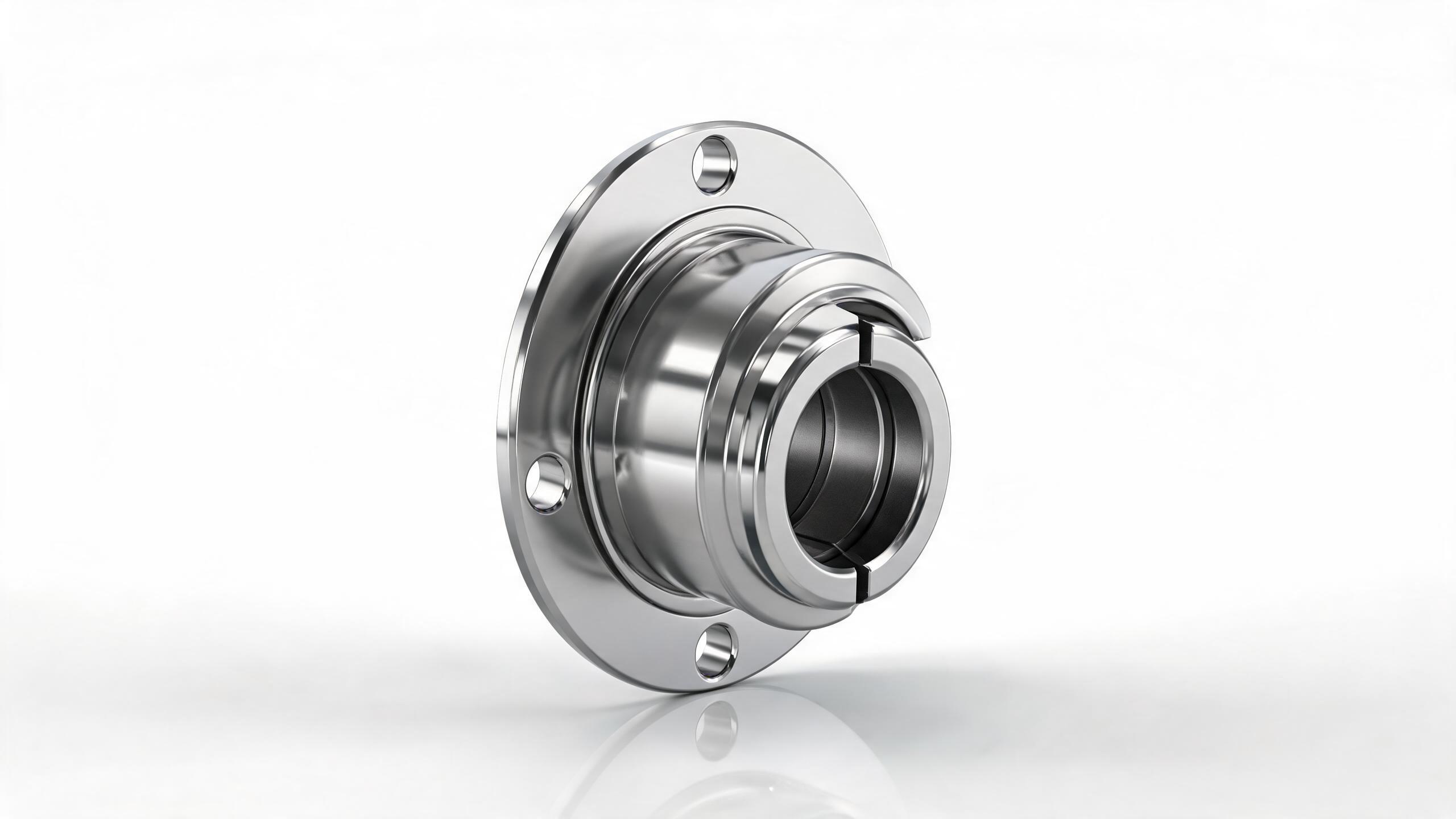
The SC self-lubricating sliding bearing addresses these failure modes with a fundamentally different design: a solid sliding interface with embedded solid lubricant, no rolling elements, and no external grease lines. This article explains where the SC bearing fits, how it compares to a standard linear bush bearing, and what to check before you specify it.
- SC sliding bearings suit low-speed (typically under 1 m/s), high-load, and oscillating linear motion where recirculating ball bearings fail early.
- They run dry — no grease, no oil lines, no lubrication schedule. Maintenance cost drops to near zero.
- They tolerate shock loads, vibration, and contamination better than ball-based linear bush bearings.
- Speed and duty cycle are the limiting factors. If your application runs fast or continuous cycles, a linear ball bearing remains the better choice.
Why recirculating ball linear bushings fail in low-speed, high-load duty
A standard linear bush bearing uses recirculating balls that roll between the shaft and the bearing housing. This design gives low friction at moderate speeds and loads. But it has known weaknesses:
- Brinelling under static load. When a machine stops with a heavy load on the carriage, the balls press into the hardened shaft. Over time, this creates permanent dents. Every subsequent pass over those dents produces vibration and noise.
- Cage failure under shock. The ball retainer is typically a thin polymer or steel cage. Shock loads — common in stamping presses, indexing tables, and clamping mechanisms — crack or deform the cage, and the bearing locks up.
- Contamination sensitivity. Ball bearings need clean, lubricated raceways. Dust, weld spatter, or machining chips mix with the grease and form an abrasive paste that grinds down both the balls and the shaft.
- Lubrication logistics. Grease fittings, oil lines, and scheduled re-lubrication add labor cost and create failure points. In automated cells, a missed lubrication cycle often means a seized bearing.
The SC sliding bearing removes the rolling elements entirely. The shaft slides against a composite bearing surface that contains solid lubricant. There is nothing to dent, no cage to crack, and no grease to wash out.
How the SC self-lubricating bearing works
The SC bearing liner is a composite material — typically a metal backing for structural strength, a porous bronze interlayer, and a PTFE-based sliding layer. The PTFE layer transfers a microscopic film onto the shaft during the first few cycles. From that point, the bearing runs on PTFE-on-PTFE contact.
Key characteristics:
- Dry running. No external lubricant required. The solid lubricant is embedded in the liner.
- Low, stable friction coefficient. Typically 0.03 to 0.08, depending on load and surface finish. It does not rise as the bearing wears.
- High load capacity. The sliding contact area is much larger than the point contact of a ball. Static loads of 100 MPa or more are achievable, depending on the specific grade.
- Wear occurs in the liner, not the shaft. The composite liner is the sacrificial element. Shaft wear is minimal, so you do not scrap expensive hardened shafts.
| Property | SC Self-Lubricating Sliding Bearing | Linear Bush Bearing (Recirculating Ball) |
|---|---|---|
| Motion type | Sliding | Rolling |
| Typical max speed | ~1 m/s (application-dependent) | Up to 2–5 m/s |
| Static load capacity | High (large contact area) | Moderate (point contact, brinelling risk) |
| Shock load tolerance | Good | Poor (cage damage) |
| Lubrication | None (self-lubricating) | Required, periodic re-lubrication |
| Contamination tolerance | Good (particles embed in liner) | Poor (abrasive wear) |
| Maintenance | Inspect liner wear periodically | Lubricate, check ball condition |
Where the SC bearing is the right choice
The SC sliding bearing is not a universal replacement for every linear motion application. It is the right choice when your operating conditions match its strengths.
Typical applications:
- Packaging machinery. Carton erectors, case packers, and palletizers run short strokes at moderate speed with high payloads. Downtime for lubrication is expensive.
- Material handling and transfer systems. Shuttle cars, lift tables, and transfer rails carry heavy loads at low speed. The SC bearing handles the static load without brinelling.
- Automotive assembly fixtures. Welding fixtures and positioning slides see shock and vibration. The SC bearing absorbs these without cage failure.
- Textile machinery. Dust and fiber contamination are common. The self-lubricating liner tolerates particles that would destroy a ball bearing.
- Food and beverage processing. Dry running eliminates the risk of lubricant contamination. Check local regulations for food-grade material options.
- Medical device manufacturing. Clean-room compatibility improves when there is no grease to outgas or collect particles.
Selection criteria to verify before specifying:
- Speed. Confirm the maximum linear speed. Above 1 m/s, the sliding interface generates heat faster than it dissipates. For continuous high-speed motion, a linear ball bearing is safer.
- Duty cycle. Intermittent or oscillating motion is ideal. Continuous reciprocation at high frequency may overheat the liner.
- Shaft hardness and finish. The SC bearing works best with a hardened shaft (typically 60 HRC minimum) and a fine ground finish (Ra 0.4 µm or better). A soft or rough shaft accelerates liner wear.
- Ambient temperature. PTFE-based liners typically operate from -40°C to +200°C, but confirm the specific grade for your environment.
- Load direction. Check whether the load is radial, axial, or combined. The bearing must be sized for the actual load vector.
Comparing the SC bearing to a linear bush bearing: which to choose
There is no single "best" bearing. The choice depends on your duty cycle, load, and maintenance constraints.
| Decision Factor | Choose SC Sliding Bearing | Choose Linear Bush Bearing |
|---|---|---|
| Speed | Low (under 1 m/s) | Moderate to high |
| Load | High static or shock loads | Moderate, steady loads |
| Lubrication access | Hard to reach, or no maintenance crew | Regular access for re-lubrication |
| Contamination | Dust, fibers, particles present | Clean environment |
| Motion pattern | Short strokes, oscillation, indexing | Long strokes, continuous motion |
| Noise sensitivity | Quieter (no rolling elements) | Ball noise at speed |
Installation and shaft preparation
The SC bearing is dimensionally interchangeable with standard linear bush bearings in most metric and inch sizes. You can often retrofit it into an existing housing without redesign.
Installation checklist:
- Shaft straightness. Verify the shaft is straight within the bearing's tolerance. A bent shaft creates edge loading and premature liner wear.
- Shaft surface finish. A ground finish of Ra 0.4 µm or better is recommended. A polished shaft (Ra 0.2 µm) extends liner life further.
- Housing bore tolerance. Follow the manufacturer's recommended fit. An overly tight bore distorts the liner; an overly loose bore allows the bearing to spin.
- Deburring. Remove sharp edges on the shaft end. A chamfered lead-in prevents the liner from being cut during assembly.
- Initial run-in. Run the bearing through several full strokes under light load before applying full load. This transfers the PTFE film onto the shaft and establishes the low-friction interface.
Maintenance: what "maintenance-free" actually means
No bearing is truly zero-maintenance. The SC bearing eliminates lubrication tasks, but it still requires periodic inspection.
What you no longer do:
- No grease fittings to service.
- No oil levels to check.
- No lubrication schedule to track.
- No risk of running dry.
What you should still do:
- Inspect liner wear. Measure the bearing bore periodically. When the liner wears to its specified limit, replace the bearing. The shaft typically remains usable.
- Check for contamination buildup. While the liner tolerates particles, a thick layer of debris on the shaft reduces clearance. Wipe the shaft clean at scheduled intervals.
- Verify shaft condition. Look for scoring or rust. A damaged shaft accelerates liner wear.
The practical result: maintenance intervals measured in months or years, not weeks.
Sourcing and specification: what to ask your supplier
When you contact a bearing supplier for SC self-lubricating sliding bearings, be specific. A vague inquiry gets a vague quotation.
Provide these details:
- Shaft diameter and tolerance (e.g., 20 mm h6).
- Bearing housing bore and length (e.g., 20 mm bore, 30 mm length).
- Radial load (in Newtons or kgf) and whether it is constant or shock.
- Linear speed (m/s) and stroke length (mm).
- Cycle rate (strokes per minute) and duty cycle (percentage of time in motion).
- Ambient conditions — temperature, dust, moisture, chemicals.
- Current bearing type you are replacing, if any. This helps the supplier confirm interchangeability.
Questions to ask the supplier:
- What is the maximum PV value (pressure × velocity) for this grade?
- What shaft hardness and finish do you recommend?
- What is the wear rate at my load and speed?
- Do you offer a PTFE-free grade for food-contact applications?
- What is the lead time for standard sizes? For custom lengths?
Conclusion
The SC self-lubricating sliding bearing solves a specific problem: reliable linear motion at low speed under heavy load, without lubrication maintenance. It is not a universal replacement for linear bush bearings, but in the right application, it eliminates the most common failure modes and reduces total cost of ownership.
If your current linear motion components fail from brinelling, cage damage, or lubrication neglect, the SC bearing is worth evaluating. Confirm your speed and load conditions, prepare the shaft properly, and you can expect long service life with minimal attention.
The SC bearing is not about moving fast. It is about moving reliably, under load, for years — without a grease gun.
NEXT STEP
Need a specification review? Send us your shaft size, load, and speed data, and we will confirm whether the SC self-lubricating sliding bearing fits your application. We can also provide samples for your own testing. Request product details and pricing — include your operating conditions so we can respond with a relevant recommendation.