Vertical linear guide mounting changes the load path, lubrication retention, and carriage safety on a Z axis. This rail-side checklist explains the differences from horizontal mounting, what the HGR series oil groove does for vertical duty, and what to confirm before ordering.
Rail-Side Selection Guide
Mounting a linear guide rail vertically changes the load path, the lubrication picture, and the consequence of a power loss. Buyers specifying a Z axis, lifter, or vertical gantry need a rail-side checklist, not a horizontal one with the same graph rotated. This article covers the guideway side only; the ball screw side of a vertical axis is a separate topic and is covered elsewhere on this site.
Key takeaways
- Vertical duty shifts the load direction on the carriage and changes how linear guide loads are distributed across the ball rows.
- Gravity drains conventional surface lubrication, so rails that retain an oil film over the full length are relevant for vertical axes.
- Carriage retention with power off is a separate check from the screw and brake; confirm the guide's behavior and the machine's fail-safe state.
- Before ordering, match rail size to the actual vertical load case and confirm lubrication, sealing, and mounting orientation with the datasheet or supplier.
1. Load direction shifts on a Z axis
On a horizontal rail, the carriage carries the moving mass and the load direction is largely fixed by gravity in one plane. Mount the same rail vertically and the rear-mounted carriage or the moving structure may now be pulled down along the rail axis, while side loads from the tool, the payload, or a cantilever act in a different direction. The rail is the same product, but the load case is not.
Four-row ball-circuit guideways are designed to distribute radial, reverse-radial, and lateral loads simultaneously. That is the relevant property for vertical axes, because a Z axis rarely presents a single clean load direction. A carriage on a vertical rail can see a radial load, a reverse-radial load when the structure is overhung or the motion reverses, and a lateral load from the gantry frame, possibly all in the same travel.
For sizing, use the vertical load case rather than the horizontal one. The HGR20 rail is listed at 16.7 kN dynamic and 26.7 kN static, which gives a reference point for a compact vertical axis. Sizes 15 through 45 are available in the HGR series, so the rail can be matched to the actual vertical load case. The dynamic and static ratings are catalogue values, and the selection still needs to reflect the real combination of vertical, lateral, and moment loads. If the axis includes an overhung load, check the moment rating in the datasheet or with your supplier.
2. Lubrication drainage and re-greasing
Lubrication is where vertical mounting diverges most from horizontal mounting. On a horizontal rail, surface grease tends to stay in the contact zone and forms a film that is replenished by the carriage as it travels. On a vertical rail, gravity pulls grease down the rail face. Conventional surface lubrication can drain away quickly, leaving the upper portion of the rail and the ball contact less protected between re-greasing intervals.
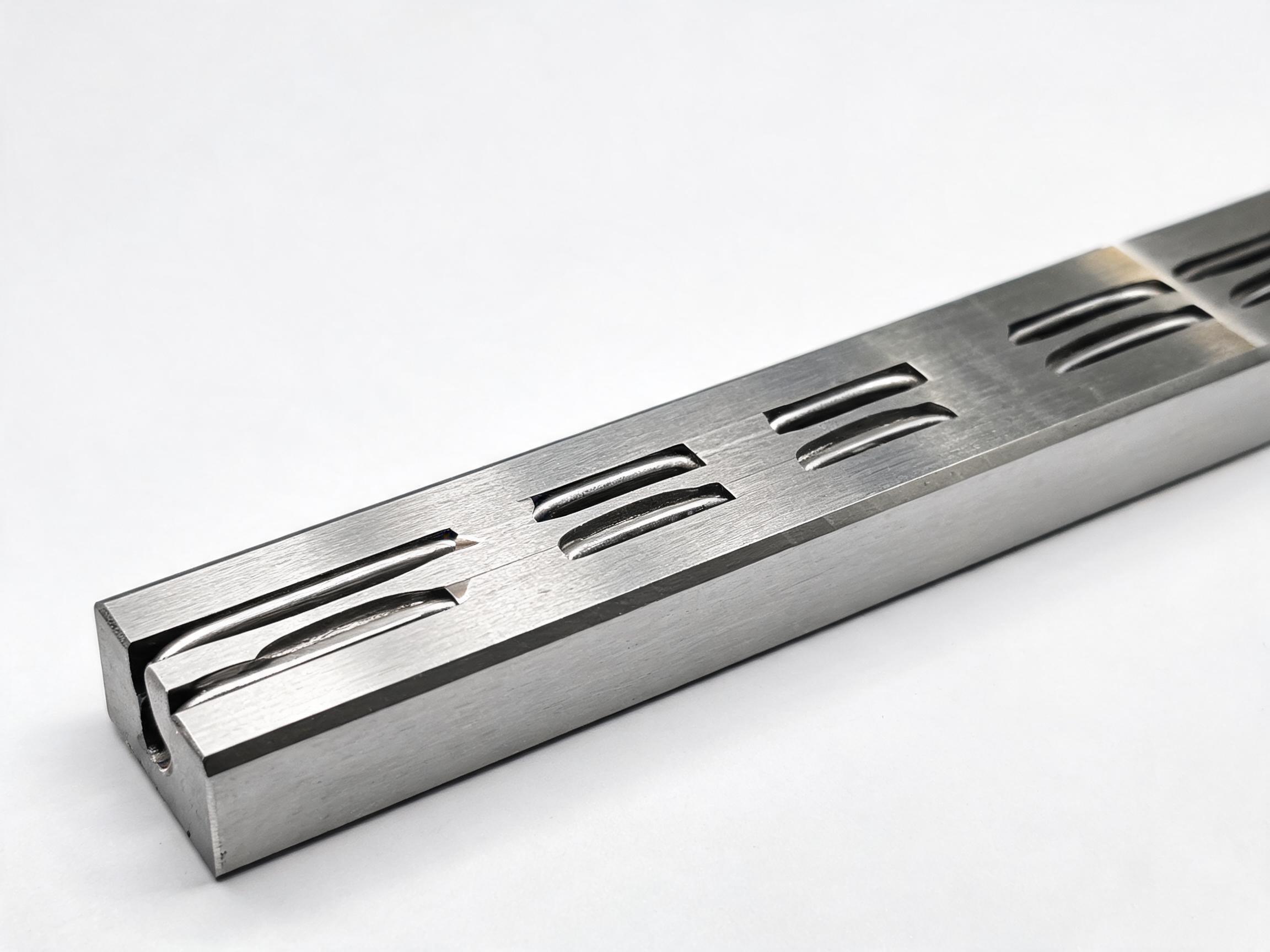
The HGR series rail has a continuous oil groove running the full rail length, and the product record notes that this groove retains a lubricant film between re-greasing intervals. The same record explicitly identifies vertical-axis installations as particularly relevant, because gravity drains conventional surface lubrication quickly. A full-length groove is a rail-side feature; it supports the lubrication strategy on a Z axis, but it does not replace the re-greasing schedule.
Re-greasing intervals, grease quantity, and the grease type for vertical duty depend on load, speed, and environment. Confirm these with the datasheet or your supplier rather than assuming a horizontal-mounting interval applies unchanged. A vertical axis may need more frequent attention to the upper part of the rail, and the supplier can advise whether the standard seal configuration is appropriate for your contamination conditions.
3. Carriage retention when power is off
When a horizontal carriage loses power, it generally stays on its rail. A vertical carriage can be different: the moving structure may want to fall if nothing holds it, and the guideway is part of what the machine designer has to consider. This is a rail-side check only. Self-locking and brake selection on the ball screw are separate topics with existing coverage on this site.
For the rail side, the practical questions are whether the carriage has a retention feature under vertical load and what the machine's fail-safe state is when drive power is removed. Carriage drop-protection ratings and retention options are not a single generic figure; confirm them with the datasheet or your supplier. If the application requires the carriage to stay in position on a vertical rail, that requirement should be stated in the enquiry so the rail configuration can be checked.
4. What to confirm before ordering
Vertical duty is easiest to specify when the enquiry separates the rail requirements from the screw and brake requirements. The table below is a rail-side checklist for a vertical axis. It does not replace the supplier's selection review, but it gives the buyer a clear basis for the questions to ask.
| Check | Why it matters on a Z axis | What to confirm |
|---|---|---|
| Load case | Vertical, lateral, and moment loads combine differently than on a horizontal rail. | Give the actual vertical load, overhang, and travel; match rail size to the dynamic and static ratings in the datasheet or with your supplier. |
| Lubrication path | Gravity drains surface lubricant on a vertical rail. | Confirm whether the full-length oil groove configuration fits the axis; confirm grease type, quantity, and re-greasing interval with the datasheet or supplier. |
| Sealing and contamination | Vertical axes may collect dust or coolant at the lower end. | Confirm seal options and any protective measures with the datasheet or your supplier. |
| Carriage retention | Loss of power can leave the carriage unsupported on a vertical rail. | State the fail-safe requirement and confirm carriage retention and drop-protection with the datasheet or your supplier. |
| Mounting and alignment | Vertical rails are aligned in a different plane, and rail flatness affects carriage life. | Confirm mounting orientation and alignment tolerances with the datasheet or your supplier. |
For buyers who need the rail specification in one place, the HGR series heavy-duty linear guideway rail page lists the available sizes, the four-row ball circuit, and the continuous oil groove. The induction-hardened 58–62 HRC rail surface is listed for the series. Hardness alone does not establish carriage life, but it is a relevant property when the rail is used on a vertical axis with repeated load reversals.
Before ordering, confirm the rail size against the actual vertical load case rather than a horizontal rating, confirm the lubrication and sealing configuration for the environment, and put the carriage retention requirement in writing. The supplier can then check the rail configuration against the datasheet. Do not assume that a horizontal mounting drawing can be rotated without a review of the load and lubrication conditions.
FAQ
Can a standard horizontal linear guide be mounted vertically?
The rail can be mounted vertically, but the load case and lubrication conditions change. Check the vertical load path, the moment loads from any overhang, and the re-greasing interval with the datasheet or your supplier before ordering.
Does the HGR series oil groove replace re-greasing?
No. The continuous oil groove runs the full rail length and retains a lubricant film between re-greasing intervals. It supports the lubrication strategy on a vertical axis, but the re-greasing schedule still applies. Confirm grease type, quantity, and interval with the datasheet or your supplier.
What keeps the carriage from dropping when power is off?
That is a machine-level fail-safe decision. On the rail side, carriage retention and drop-protection should be confirmed with the datasheet or your supplier. The ball screw brake and self-locking behavior are a separate topic with existing coverage on this site.
Which rail size should I use for a vertical axis?
Size the rail against the actual vertical and lateral load case, not against a horizontal rating. The HGR series is available in sizes 15 through 45, with HGR20 listed at 16.7 kN dynamic and 26.7 kN static. The supplier can confirm the selection against your load case and moment loads.