
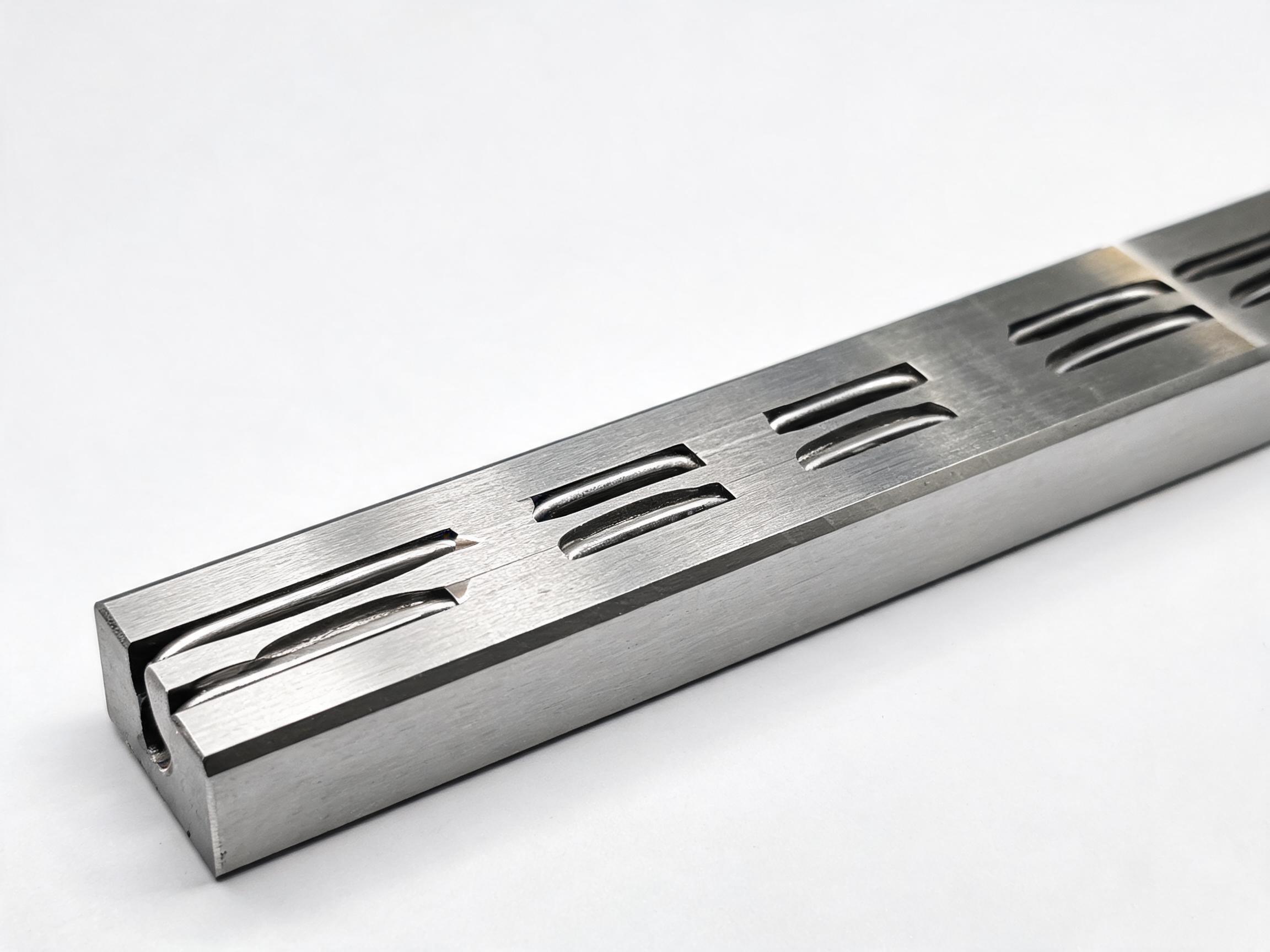
A buyer-focused guide to the 15 mm profile-rail class: how HG15 style naming relates to HGR15 rail sizes, what the HGR series publishes about steel, hardness and accuracy grades, and which points to settle against drawings and datasheets before placing an order.
Key takeaways
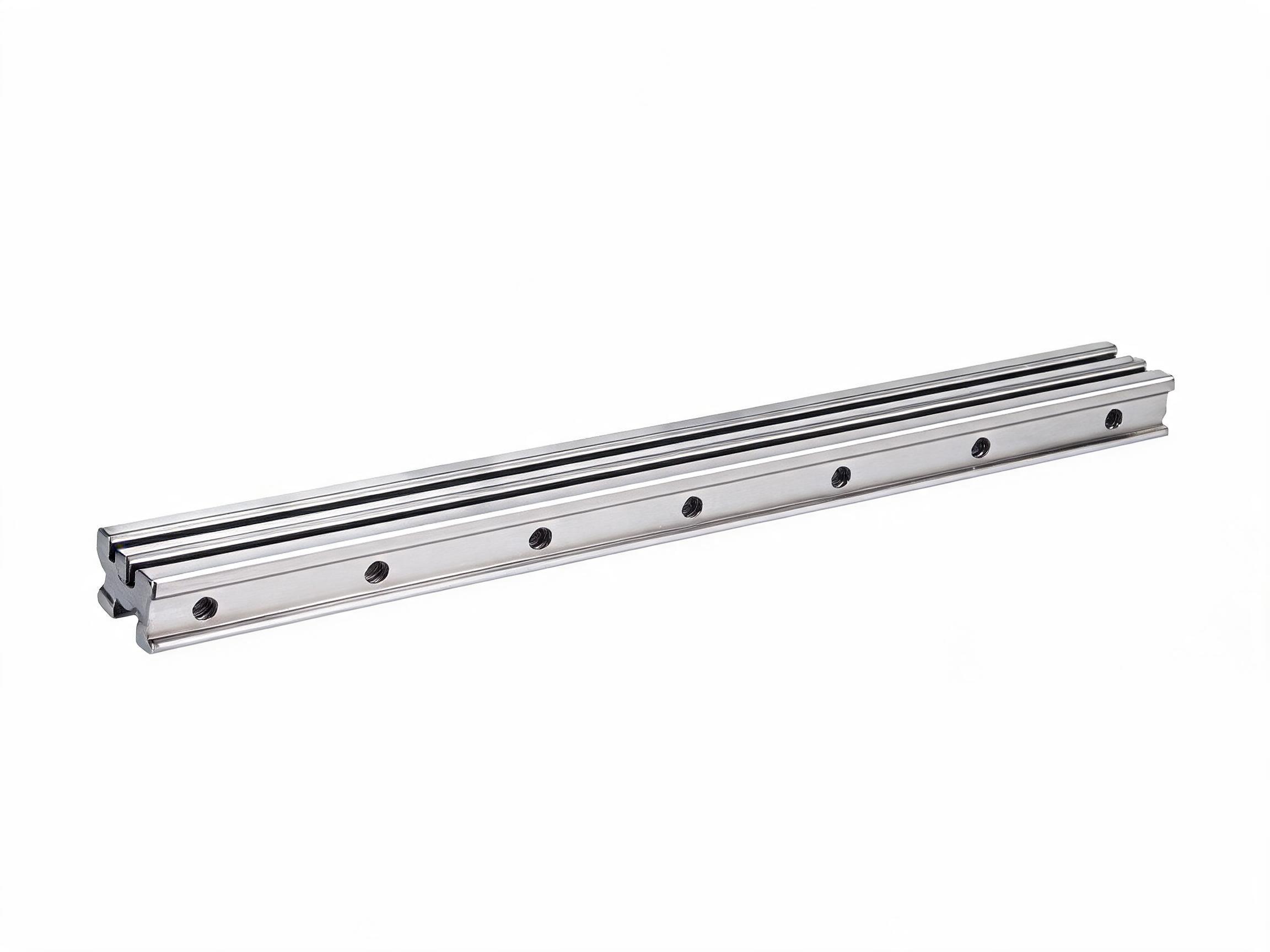
- HG15 is a 15 mm profile-rail class designation used in catalog names and quotes; rail size, carriage series and accuracy grade need to be checked separately on the drawing.
- The HGR series covers rail sizes HGR15 to HGR45 in 55# steel, with induction-hardened raceways at 58-62 HRC, offered in ground H (P5) and rolled N (P7) accuracy grades and standard lengths up to 4000 mm.
- Load ratings for a given HGR15 size must be read from the current datasheet; published figures for other rail sizes do not transfer to the 15 mm rail.
- The XY200 cross slide table shows what a confirmed 15 mm build looks like: HGR15 rails with HGH15CA carriages, 11.2 kN rated load per axis and 200 mm stroke per axis.
On this page
What the HG15 designation covers
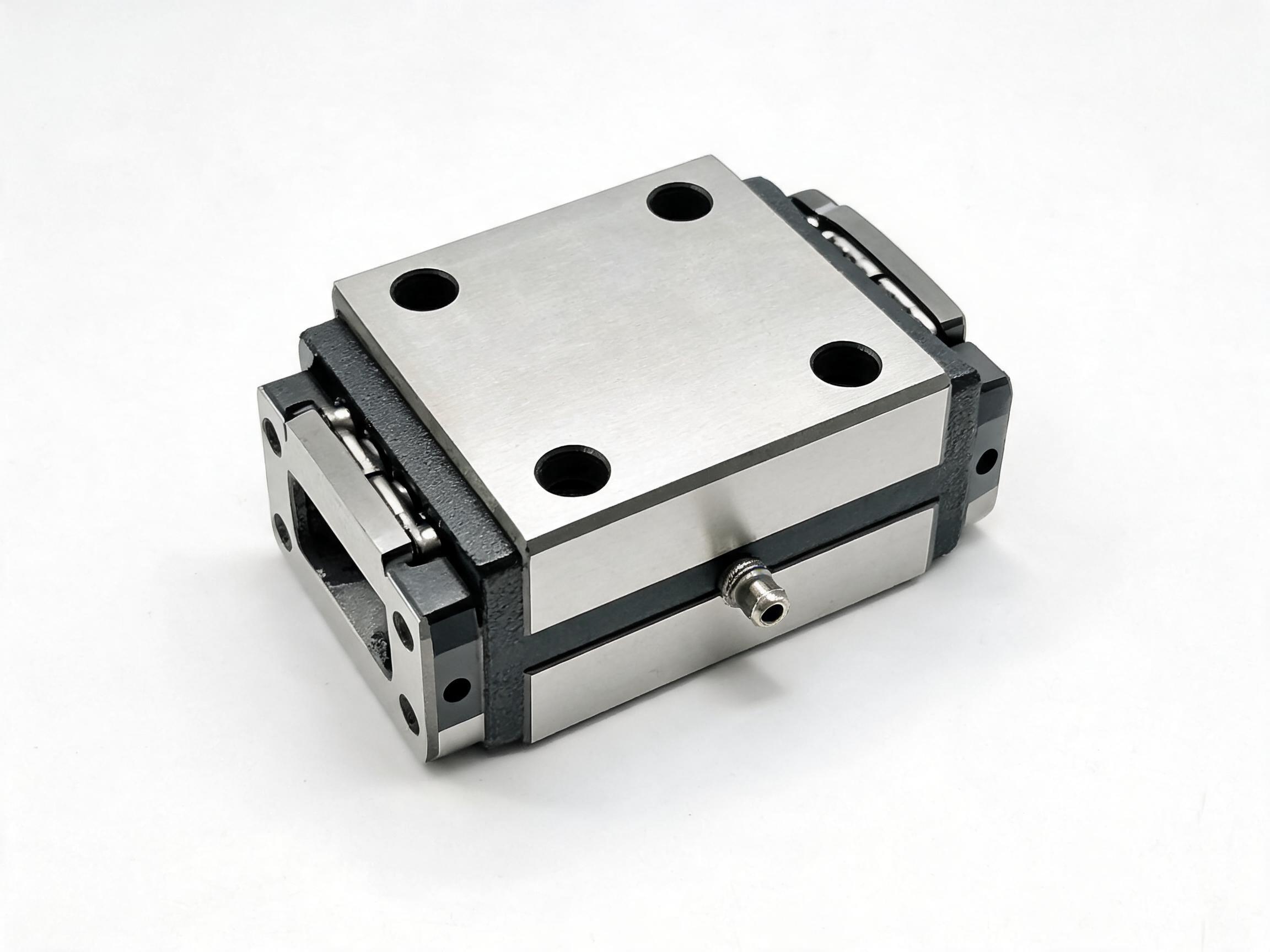
In the 15 mm profile-rail class, buyers usually arrive through one of two naming habits. One habit comes from the popular HG series carriage-and-rail terminology, in which the rail size is carried as a number (15, 20, 25 and so on) behind a series prefix. The other habit follows the HGR naming used for the rail itself, where a 15 mm rail is written HGR15.
The two labels describe overlapping naming habits, not a guaranteed match: HG15 refers to the 15 mm size inside a carriage-and-rail series name, while HGR15 is the rail model written in the HGR family. Whether a specific HG15 request maps onto the HGR15 rail and a particular carriage must be confirmed with datasheets and drawings before ordering. In practice, a buyer who orders against a short hand-written model name is taking a risk on two separate things: which rail size is meant, and which carriage series is to be paired with it. A drawing that fixes the 15 mm rail profile but leaves the carriage code open is not yet an unambiguous order line.
The HGR series, as it is published, runs from HGR15 to HGR45. The rail body is 55# steel, and the raceways are induction-hardened to 58-62 HRC so that the rolling contact surface has the hardness a circulating ball carriage needs. Two accuracy grades are offered: a ground H grade corresponding to P5, and a rolled N grade corresponding to P7. Standard lengths go up to 4000 mm. These are the parameters that travel with every rail order in this family, and they are the right frame for a conversation about a 15 mm size.
Ordering checks, in the order they matter
A short quote can only be accurate if the four items below are settled before it is issued. The sequence matters because each item constrains the previous one.
Match rail size to carriage series
The rail number and the carriage number have to agree. A 15 mm rail pairs with carriage families sized for that rail; the XY200, for example, uses HGR15 rails together with HGH15CA carriages. When you write the request, state the rail size and carriage series as two distinct fields, for instance "HGR15 rail" and "HGH15CA carriage", rather than one blended code. If a drawing or an internal code exists on your side, attach it and label what it is meant to represent.
Confirm load ratings and accuracy grade
Static and dynamic load ratings are tied to the specific rail size and carriage size. Load figures published for other sizes in the same family belong to those sizes only and do not transfer to the 15 mm rail, and they should not be borrowed as a working assumption. For the 15 mm size, request the rating for the exact carriage combination you intend to use and confirm it against the datasheet.
Accuracy grade is the other lever. Ground H (P5) is the precision option; rolled N (P7) is the running option with looser tolerances. What matters is the decision, not a fixed rule about which grade is better. If the assembly carries a measuring probe, a cutting tool path or a positioning function where the rail contributes to the final error, grade should be argued from the tolerance budget. If the rail merely guides a load, P7 may be adequate, but the choice still needs to be made deliberately rather than by default.
Check mounting holes and rail length
Two mechanical details cause most of the back-and-forth at order stage: the mounting-hole pattern and the rail length. The hole pattern includes hole spacing, the distance from the hole to the rail end, and the diameter. On short rails, end-distance tolerance can itself force a revised drawing, so state the nominal length plus the tolerance you can accept.
Standard length goes up to 4000 mm in the HGR series. Anything at or near that limit changes shipping and handling, and a rail cut to a shorter length is not automatically equivalent to a standard-length rail because the hole pattern may no longer be symmetric at both ends. Ask for the length, hole pattern and end-allowance to be shown on the drawing before you sign the order. If the application needs the rail cut in the field, state that too, since it affects the grade you can reasonably expect at the cut end.
| Parameter | What is known for the HGR series | What to confirm against the datasheet |
|---|---|---|
| Rail size | HGR15 to HGR45; 15 mm is the smallest size in the series | Exact profile width, height and section data for HGR15 |
| Rail material and hardness | 55# steel; raceways induction-hardened to 58-62 HRC | Surface treatment options, if any, for the specific rail |
| Accuracy grade | Ground H (P5); rolled N (P7) | Grade-specific tolerance values, including running parallelism |
| Dynamic and static load rating | Published per size and carriage; not listed here for HGR15 | Rating for the selected HGR15 rail and carriage combination |
| Standard length | Up to 4000 mm | Hole pattern, end allowance and length tolerance for the drawing |
On load ratings for the 15 mm size. The verified record behind this page does not include HGR15-specific load ratings. Rather than quote a placeholder, the correct step is to request the rating for the exact carriage pairing. A buyer who accepts a rating copied from a larger rail is comparing a number that no longer describes the selected part.
Ask for the drawing, then compare it to the datasheet
Once rail size, carriage series and grade are fixed, the drawing becomes the controlling document. Check that the drawing and the datasheet agree on hole spacing, rail length and grade before confirming the order. If a diagram or CAD model of the intended assembly exists, ask for the rail to be placed in the drawing context rather than listed on its own; that catches mating errors that a specification table cannot.
If you need to see the full model range, the HGR series heavy-duty linear guideway rail page lists the rail sizes and configurations available in the family.
A 15 mm rail system in use: the XY200
The values that matter most in practical use often come from how the rail performs inside a complete assembly. The XY200 precision cross slide table is built on HGR15 rails with HGH15CA carriages, and it gives a worked example of what a 15 mm system is expected to hold in a positioning application.
The published performance of that table includes measured repeatability of 0.01 mm, perpendicularity of 90 degrees plus/minus 0.02 degrees verified by CMM, 11.2 kN rated load per axis and 200 mm stroke per axis. Repeated here, those figures describe the XY200 as a unit: the axis build, the ball screw drive and the rail system together. They are not a per-rail rating to be applied to an HGR15 rail used on its own.
The perpendicularity figure is worth reading carefully. It is verified by CMM and expressed as an angle, which is a table-level accuracy statement about the relationship between the two axes. On a cross slide, that single number matters more than the rail grade alone because it speaks to what the customer will actually measure after assembly. Buyers choosing between a P5 and a P7 rail for a similar table should read the fidelity of that stacked number as a guide to the kind of tolerance budget the whole assembly was designed toward.
For buyers who need the rail as part of a positioning solution rather than as a component, the XY200 precision cross slide table with dual ball screw drive page carries the full configuration details behind the figures above.
Questions buyers ask before ordering
Is HG15 the same as HGR15?
The 15 mm designation is shared, but the two labels come from different naming habits and are not a guaranteed match. Confirm the mapping with datasheets and drawings before ordering, state the rail size and carriage series explicitly, and check the returned quote against both.
What load can an HGR15 rail take?
The rating depends on the specific rail and carriage combination. Ask for the HGR15 figure against the carriage series you intend to use and compare it with the load you plan to apply, including any overhung or tilting moment.
Should I choose P5 or P7?
Ground H (P5) is the selection for assemblies where rail geometry contributes to final positioning accuracy; rolled N (P7) suits guidance tasks with a wider tolerance budget. Choose against the assembly tolerance, not by default.
How long can a rail be?
Standard lengths in the HGR series go up to 4000 mm. A rail ordered shorter than standard is a drawing-controlled item; confirm the hole pattern and end allowance before ordering.