A bearing-side planning guide for replacing worn plain bushings and tired shaft systems with modern linear ball bearing assemblies, covering shaft assessment, closed versus open types, seal selection, and swap staging.
Linear Bearing Retrofit: Upgrading Older Machine Slides
A worn slide does not always justify a new machine. When the weakness sits in the bearing and shaft system — plain bushings that have fretted, bronze sleeves that have opened up, or a shaft that no longer holds its running clearance — a linear ball bearing retrofit can restore the slide on the existing frame. The work is decided on the bearing side: what the old shaft or slideway will accept, which bearing type fits the load and mounting, what seal the real environment needs, and how to sequence the swap so the machine is not half-modified on the floor.
This guide stays with bearings. Ball screw planning and guideway replacement are separate jobs with their own acceptance checks.
- Measure the existing shaft diameter and tolerance first; h6 is the listed shaft tolerance for the LM series.
- Closed and open bearings in the LM series share identical envelope dimensions, so one housing bore accepts both.
- Seal choice follows the real dust, chip and temperature load — not the cleanest sample of the machine's day.
- Stage the swap one slide or one axis at a time and record what changed.
Start with the shaft or slideway you actually have
A retrofit inherits geometry. The first step is to measure the shaft at several points along the travel, not only at the bearing's parked position. Plain bushings and bronze sleeves wear the shaft where load is applied; a shaft that measures nominal at the ends can still be undersized in the middle of the stroke. Record diameter, roundness and surface condition, and compare the result with the h6 tolerance the LM series expects. If the shaft falls outside that tolerance, the bearing choice is not the source of the problem and the shaft becomes part of the retrofit scope.
The LM series covers 6 mm to 60 mm shaft diameters in one family, so most legacy slide sizes have a direct counterpart. Shaft material matters as well: the series uses GCr15 bearing steel hardened to HRC 60–64. An original shaft in a softer condition may not carry the same running life, which is a question for the supplier rather than a yes/no answer here.
If the old design ran on a flat slideway rather than a round shaft, a ball bearing retrofit is not the route; that case belongs to guideway replacement. Confirm which system is on the machine before ordering anything.
Closed or open: let the housing decide
Closed bearings carry the shaft through a full ring. Open bearings have a relieved section and are used where the shaft is supported along its length or where the housing mounting demands access. In the LM series the closed UU and open OP variants share identical envelope dimensions per JIS B 1185 / ISO 10285 — a housing bored for one accepts the other. That interchangeability is what makes retrofit planning practical: the housing does not have to be remachined to change type later.
Choose by how the shaft is supported and how the load is directed. A closed bearing in a housing that cannot support the shaft over its span can be a poor fit; an open bearing where the customer expects a simple bolt-in replacement of a closed unit is equally wrong. The dimension interchangeability means the decision can be made on mechanics, not on whether the bore will match.
Load check before type selection
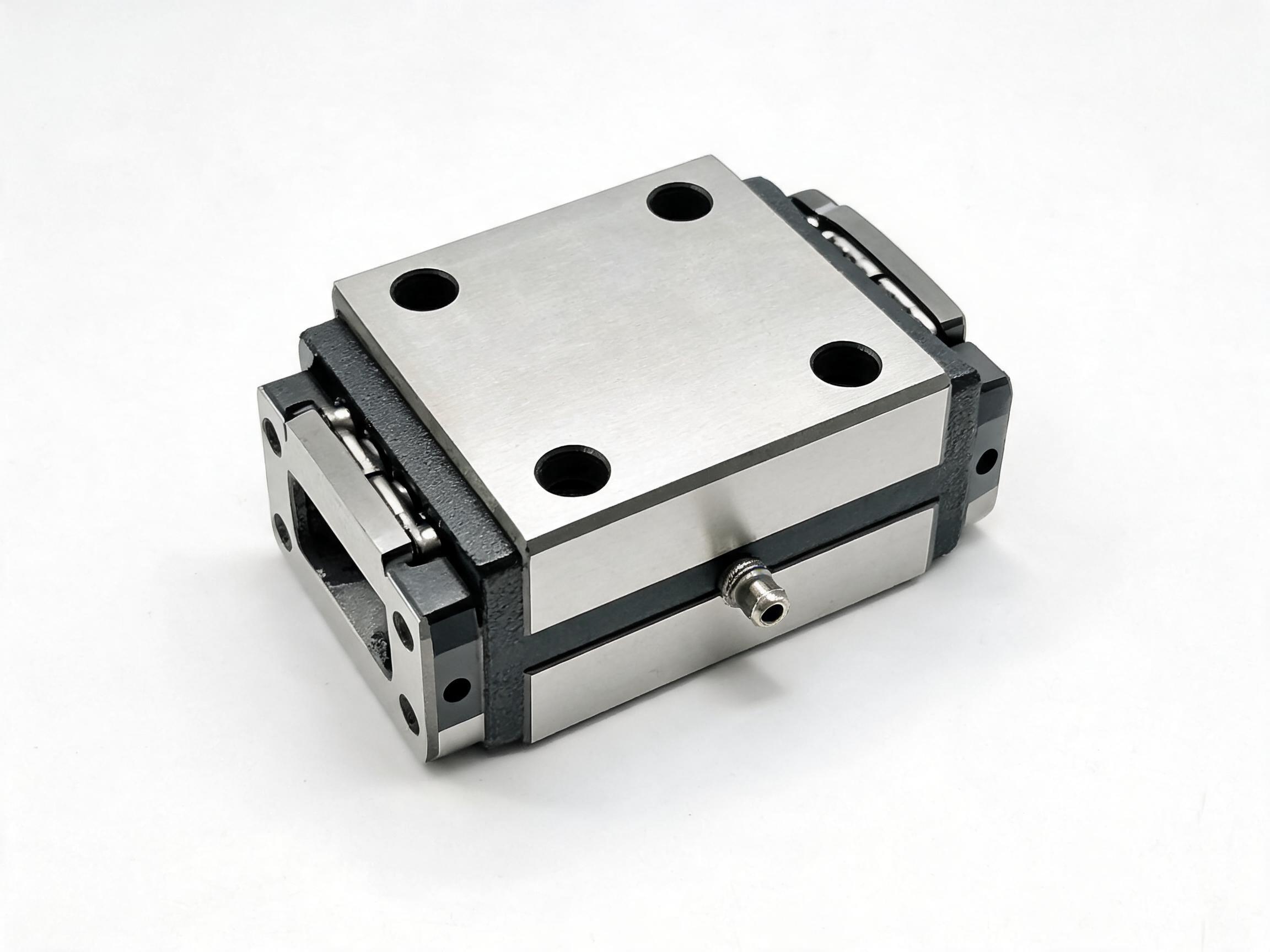
Ratings differ across the family and between the standard and sealed extended designs. As listed, the standard-length LM16UU dynamic rating is 980 N. The sealed extended-length LMUU16 — the 16 mm member of the LMUU series — is listed at 1,580 N dynamic and 2,450 N static. The extended sleeve is 35 mm against 24 mm for the standard length, with 40% more balls than the standard-length design carrying the load. If the old machine's bearing envelope has room along the shaft, the extended version gives more capacity for the same shaft diameter; if the space is tight, the standard length is the constraint.
Compare the application load against these figures with the machine builder's factors for shock and duty. The listed ratings are catalog values for the bearing, not a statement about the whole slide's capacity.
Seals: match the environment, not the brochure
Most failed retrofits fail on contamination. The sealed extended-length design uses double-lip NBR seals plus a labyrinth groove, and the product record states a 95% dust-ingress reduction versus the open type. That figure describes the seal comparison in the listed configuration, under the record's stated comparison conditions; it is not a service-life guarantee for a given machine.
Temperature decides the seal compound. NBR is rated −30 °C to +110 °C. An FKM (Viton) seal option is available where operating temperature runs above that. Woodworking, stone and bulk-material machines are the usual high-dust cases; coolant-rich machining and washdown areas are wet cases where lip condition and re-lubrication interval need their own review.
The product record includes a customer case of 18,000 sealed LM16UU bearings supplied to an Italian woodworking CNC maker, averaging 18 months in high-dust duty where open types failed within 6 weeks. That is the customer's reported experience in their duty, not a prediction for another machine.
| Planning item | What to establish | Where it leads |
|---|---|---|
| Shaft diameter and condition | Measured diameter along the stroke; roundness; hardness evidence | Fit to LM series 6–60 mm range and h6 tolerance |
| Housing arrangement | Shaft support along span; mounting access; bore size | Closed UU or open OP — identical envelope per JIS B 1185 / ISO 10285 |
| Load | Applied load with shock and duty factors | Standard length versus sealed extended LMUU16; check listed ratings |
| Environment | Dust, chips, coolant, washdown, ambient temperature | NBR or FKM seal; sealed versus open |
| Commercial terms | Quantity, delivery, price | MOQ 100 for the LM series; confirm rest with the supplier |
Staging the swap
A slide retrofit is easier to control when the machine stays recognizable between steps.
- Baseline the old slide. Record clearances, runout and the positions where wear is worst. Photograph the housing and shaft ends. This baseline is what tells you after the swap whether the geometry was restored.
- Decide the shaft scope. If the shaft is within h6 and sound, keep it. If not, plan the replacement before bearings are ordered, because the bearing size follows the final shaft.
- Fix the bearing type and seal. Use the housing and environment findings. Keep a note of why each choice was made; the next slide on the same machine may differ.
- Install and align. Check housing bore cleanliness and shaft entry before fitting. Alignment of multiple bearings on one shaft is a setup task, not a bearing property.
- Run in and recheck. Re-lubricate per the supplier's instruction and repeat the baseline measurements. Compare against the recorded figures rather than against feel.
Ordering detail sits at the end because it depends on the other steps: the LM series carries a MOQ of 100, and delivery terms and price should be confirmed with the supplier or the datasheet for the specific configuration.
Honest limits
A bearing retrofit restores the bearing and shaft system. It does not compensate for a bent frame, a misaligned drive, or a slideway that has already lost its geometry. If the old machine's weakness is in those areas, the bearing swap will expose it rather than solve it. Confirm the frame and drive condition before committing, and confirm any cost, downtime or payback expectation with the datasheet or your supplier — those figures depend on the machine and are not part of the bearing specification.
Product references
The closed and open variants described here are listed in the LM series linear ball bearing bush range. The sealed extended-length design with double-lip NBR seals and the FKM option is listed in the LMUU series sealed extended-length linear bearing range.
FAQ
- Can I replace a closed bearing with an open one without remachining the housing?
- In the LM series, closed UU and open OP share identical envelope dimensions per JIS B 1185 / ISO 10285, so the same housing bore accepts either. The change is a mechanical decision about shaft support and mounting access, not a bore-size problem.
- My shaft measures slightly under nominal in the middle of the stroke. Is that acceptable?
- Compare it with the h6 tolerance the LM series expects. A shaft outside that tolerance is a shaft issue, not a bearing selection issue; plan the shaft scope before ordering bearings.
- Do I need the sealed extended-length version for a dusty workshop?
- The sealed extended design lists a 95% dust-ingress reduction versus the open type and more load capacity in the same 16 mm size (LMUU16 at 1,580 N dynamic against 980 N for the standard-length LM16UU), but the right choice depends on your measured load and the available space along the shaft. Check the listed dynamic and static ratings against your application.
- What seal compound do I need for a high-temperature area?
- NBR is rated −30 °C to +110 °C. Above that, an FKM (Viton) seal option is available; confirm the operating temperature at the bearing with the datasheet or your supplier.