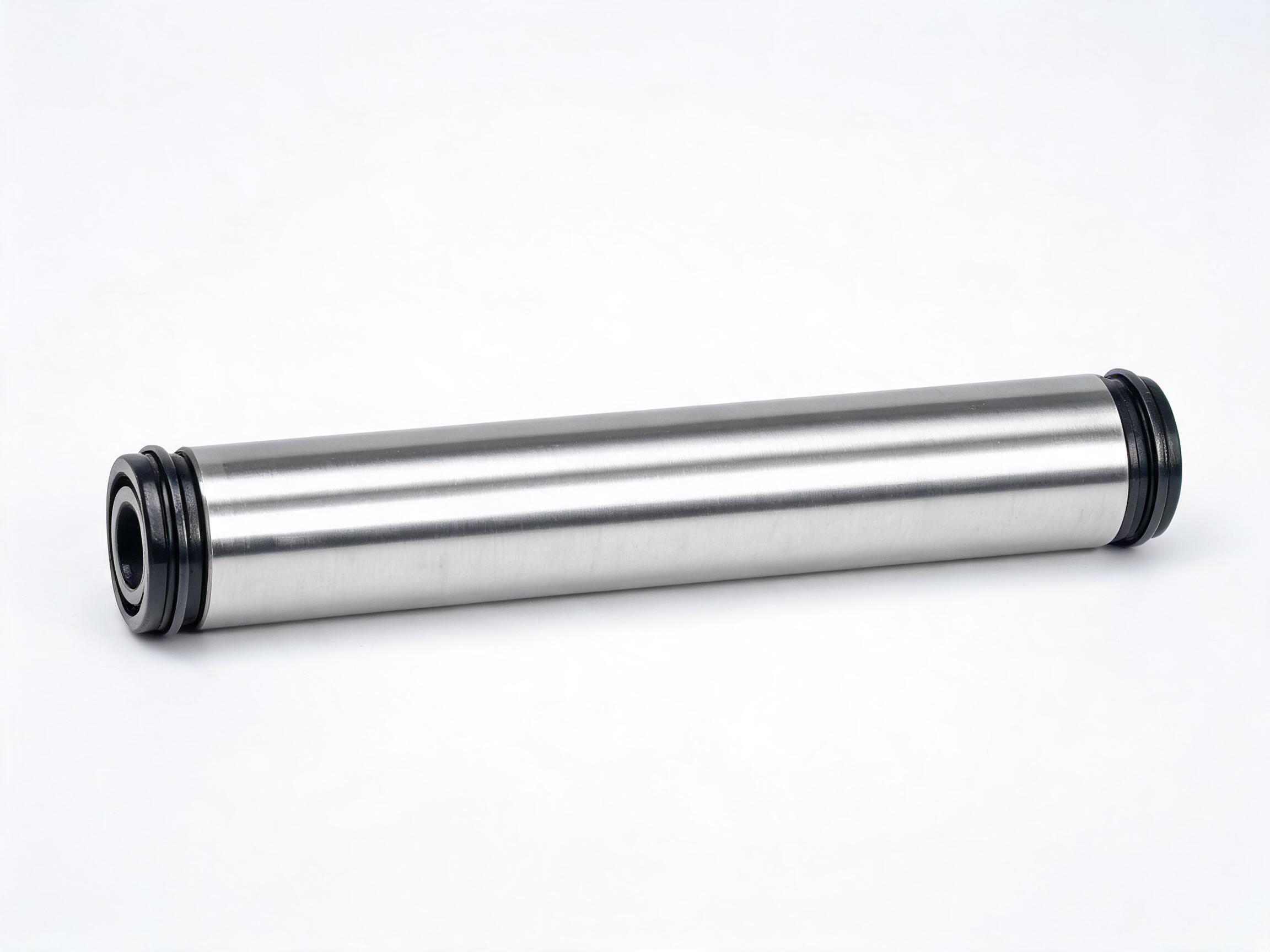
A selection guide for equipment buyers running linear motion in dusty shops: what the double-lip seal and labyrinth groove on LMUU sealed extended-length bushings actually change, when the longer sleeve earns its place over standard open LM bushings, and when a plain self-lubricating bushing is still the better answer.
Linear motion selection
A dusty shop floor punishes an open linear bushing faster than almost anything else. The question most equipment buyers face is not whether to protect the bearing, but how: a sealed extended-length bushing, a standard open LM bushing, or in some positions a plain self-lubricating bush. The linear bearing LMUU series sits in that first category, and this guide explains what its seal and sleeve actually do so you can decide where it belongs on your machine.
Key takeaways
- The double-lip NBR seal and labyrinth groove at both ends reduce dust ingress by 95 percent versus open-type LM bearings, per supplier seal testing with dust ingress simulation.
- The extended sleeve carries 40 percent more recirculating balls than standard LM, with the LM16UU body measuring 35 mm against 24 mm for the standard size.
- Outer dimensions follow the JIS B 1185 LM envelope, so the bushing drops into standard LM housings without modification.
- LMUU covers 11 sizes from 6 to 60 mm shaft diameter, in GCr15 chrome steel with a PA66-GF retainer.
Why dust decides the bushing, not the other way round
In woodworking CNC, stone cutting and recycling machinery, the failure pattern is consistent. Abrasive particles reach the ball raceway, mix with whatever lubricant is present, and the recirculating path starts to grind. The bearing may still turn freely by hand while radial clearance has already opened up, and by the time the cut wanders or the carriage knocks, the damage is done.
Sealing is therefore the first selection criterion in a dusty environment, and load capacity is the second, because a sealed bearing is only useful if it carries the axis it is fitted to. The LMUU series addresses both on the same part: a seal package at each end of the sleeve, and a longer body that holds more balls.
What the double-lip seal plus labyrinth groove changes
Each end of an LMUU bushing carries a double-lip NBR rubber seal backed by a labyrinth groove. The two features work in sequence. The outer lip wipes coarse debris from the shaft as it enters the sleeve. The labyrinth groove creates a tortuous path that slows fine dust before it reaches the inner lip and the ball track. A single lip alone gives dust one chance to be stopped; the combination gives it several.
The supplier's seal testing, run with a dust ingress simulation, reports a 95 percent reduction in dust ingress compared with open-type LM bearings. That figure describes the seal test, not the service life of any particular machine, but the direction is what matters in practice: far less abrasive material reaching the raceway in the same operating hours.
The seal material sets the temperature window. Standard NBR seals operate from minus 30 to plus 110 degrees C. Where the application runs hotter, an FKM (Viton) seal option is available for high-temperature applications up to 200 degrees C. Buyers specifying for a heat-adjacent axis should confirm which seal is quoted before ordering, because the two are not interchangeable in a bill of materials.
The seal does not change your housing
One practical point for anyone retrofitting an existing machine: LMUU outer dimensions follow the JIS B 1185 LM envelope. The bushing fits standard LM housings without modification, so a sealed extended-length part can replace an open standard part of the same shaft size in the housing you already have. Check the sleeve length against your available housing bore depth and shaft travel, since the body is longer than standard.
What the extended sleeve adds
The longer body is not cosmetic. It carries 40 percent more recirculating balls than a standard LM bearing of the same shaft size, which spreads the load over more contact points. Take the LM16UU as the reference size in the range:
- Sleeve length: 35 mm, against 24 mm for the standard LM equivalent
- Dynamic load rating: 1,580 N
- Static load rating: 2,450 N
Those ratings are per bushing. An axis using two bushings shares the load between them, but the published figures are the ones to use when checking a design. The extra sleeve length also increases the guidance span slightly, which helps resist cocking under an offset load, a common source of edge loading in carriage designs.
LMUU versus standard open LM versus plain bushings
The three options are not ranked; they suit different positions on the same machine. The table below summarises the decision as it usually appears in a dusty plant.
| Option | Dust protection | Load and guidance | Where it fits best |
|---|---|---|---|
| Sealed extended-length LMUU | Double-lip NBR seal plus labyrinth groove at both ends; 95 percent less dust ingress than open LM in supplier seal testing | 40 percent more recirculating balls than standard LM; longer sleeve improves guidance span | Dusty but load-bearing axes: woodworking CNC, stone cutting, recycling machinery |
| Standard open LM | No integral seal; relies on external protection such as bellows or wipers | Standard ball complement and sleeve length | Clean, enclosed or well-protected axes where external sealing already exists |
| Plain self-lubricating bush | No rolling elements to contaminate; the sliding surface tolerates debris differently | Sliding friction; guidance and stiffness differ from a ball bushing | Lower-speed, lower-precision or maintenance-averse positions |
Plain self-lubricating bushes remain a sound answer for some positions, and the existing site article on wood dust covers plain SC bushings in depth. The short version for this comparison: a plain bush has no recirculating balls to jam, but it also does not offer the rolling-element load ratings or the low-friction guidance of a ball bushing. If the axis needs precise, low-effort motion under load in a dusty shop, the sealed extended-length ball bushing is usually the stronger starting point; if the motion is slow, the loads modest and lubrication access poor, a plain bush may still be the simpler answer.
Where the LMUU choice pays off
Three environments appear repeatedly in the applications this series is built for.
- Woodworking CNC. Fine dust plus chips, often with an oil film on the shaft. The wiping lip removes the chip fraction and the labyrinth handles the fines.
- Stone cutting. Abrasive slurry and grit. Seal condition matters more here than anywhere, and the FKM option is relevant where the axis runs hot.
- Recycling machinery. Mixed debris, variable particle size, frequent stop-start cycles. The higher ball count helps with the shock loads typical of this duty.
In each case the argument for the sealed extended-length part is the same: it handles the dust at the bearing instead of asking the machine builder to add an external seal package, and it carries more load while doing so.
Sizes, materials and ordering facts
The series runs from LMUU 6 to LMUU 60, covering 11 sizes and shaft diameters from 6 to 60 mm. Balls and sleeve are GCr15 chrome steel, and the retainer is PA66-GF. A full specification for the range is on the LMUU series sealed extended-length linear bearing page.
For buyers planning a trial, the minimum order quantity is 100 pieces per size, and samples of 10 to 20 pieces are available for qualified buyers. That structure suits a first fitment on one axis before rolling the part out across a machine range.
What to check before you order
- Confirm the seal compound for the axis: NBR for the standard temperature window, FKM if the duty runs above it.
- Verify available housing bore depth against the longer sleeve length at your shaft size.
- Check the shaft surface condition. A worn or corroded shaft will damage a new lip seal; the seal protects against dust entering, not against a shaft that has already lost its finish.
- Confirm the load case per bushing against the published dynamic and static ratings for your size.
The 95 percent dust reduction figure comes from supplier seal testing using a dust ingress simulation. It is a comparative seal result, not a guaranteed service life for a specific machine. Use it to compare sealed against open construction, and validate on your own axis where the duty is severe.
Frequently asked questions
Can I fit LMUU bushings in housings designed for standard LM?
The outer diameter follows the JIS B 1185 LM envelope, so the bushing fits standard LM housings without modification. The sleeve is longer, so confirm the bore depth and shaft travel available in your design.
How much more load does the extended sleeve carry?
The extended body carries 40 percent more recirculating balls than standard LM. At LM16UU the published ratings are 1,580 N dynamic and 2,450 N static.
What temperatures do the seals handle?
NBR seals operate from minus 30 to plus 110 degrees C. An FKM (Viton) option is available for high-temperature applications up to 200 degrees C.
Is a plain self-lubricating bush ever the better choice in dust?
Yes, in positions where speed is low and the priority is avoiding a recirculating ball path altogether. Where the axis needs rolling-element load capacity and low-friction guidance, the sealed extended-length bushing is the stronger option. The existing article on plain SC bushings covers that alternative in detail, or see the SC series linear motion plain bearing bush range.
What are the sample and order terms?
Samples of 10 to 20 pieces are available for qualified buyers, with a minimum order quantity of 100 pieces per size.
Tell us your shaft diameter, load per bushing and the dust conditions on the axis, and we will confirm the seal option and sleeve length that fit your housing.
Request LMUU details