
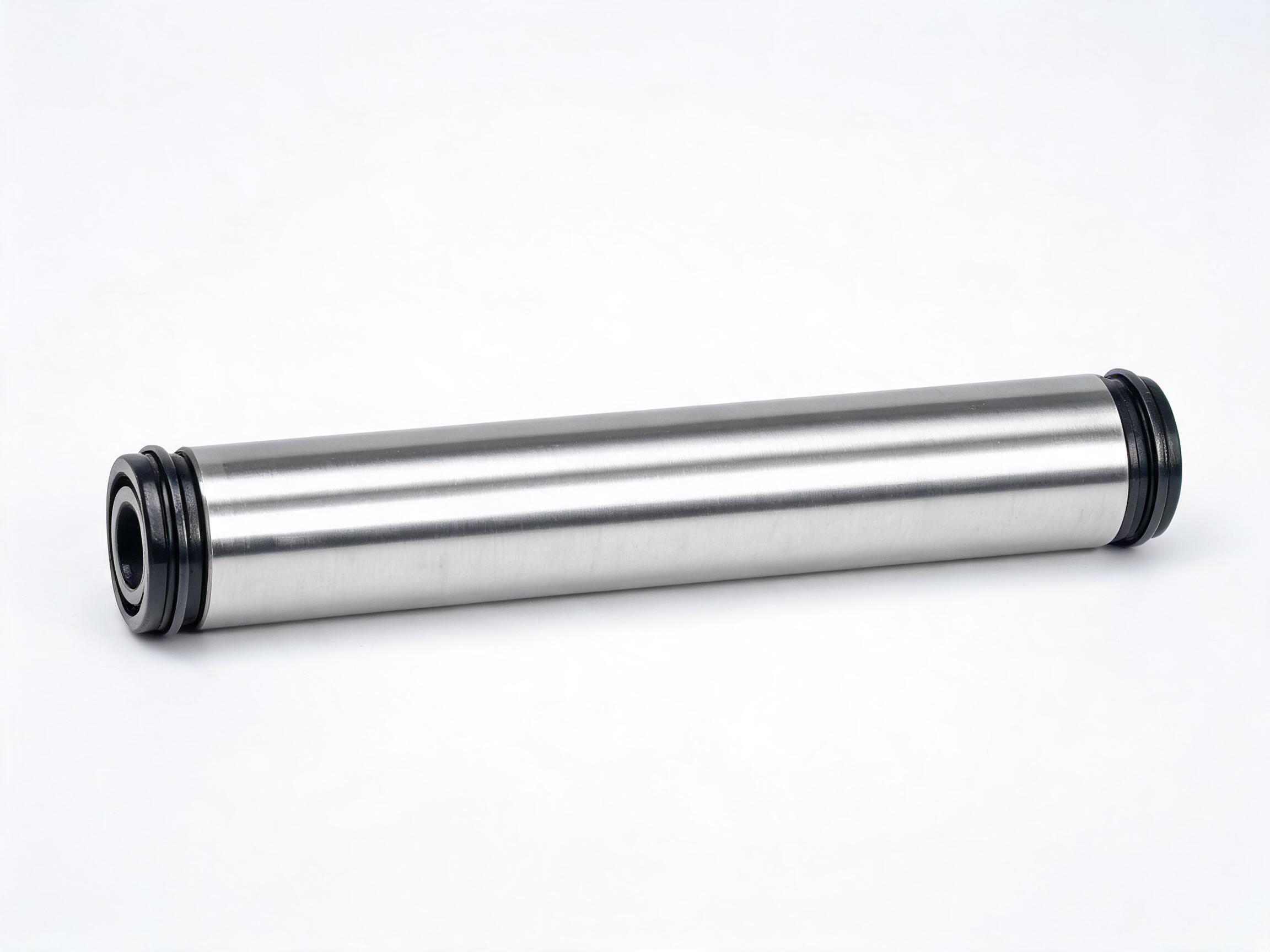
A catalog-value reading guide for buyers comparing linear bushings: what the dynamic load rating actually defines, when the static rating governs instead, why ratings are only comparable at the same size and configuration, and how the LM series records illustrate the difference.
Two bushings that look almost identical can carry very different published numbers. A buyer comparing linear bushings soon meets a page of catalog values where the dynamic load rating looks like the headline figure, yet the static load rating, the shaft tolerance and the housing bore matter just as much in the actual machine. This guide explains what the dynamic rating defines, when the static rating governs instead, and why the two figures must be read at the same size and configuration before any comparison is made.
What the ratings mean in one pass
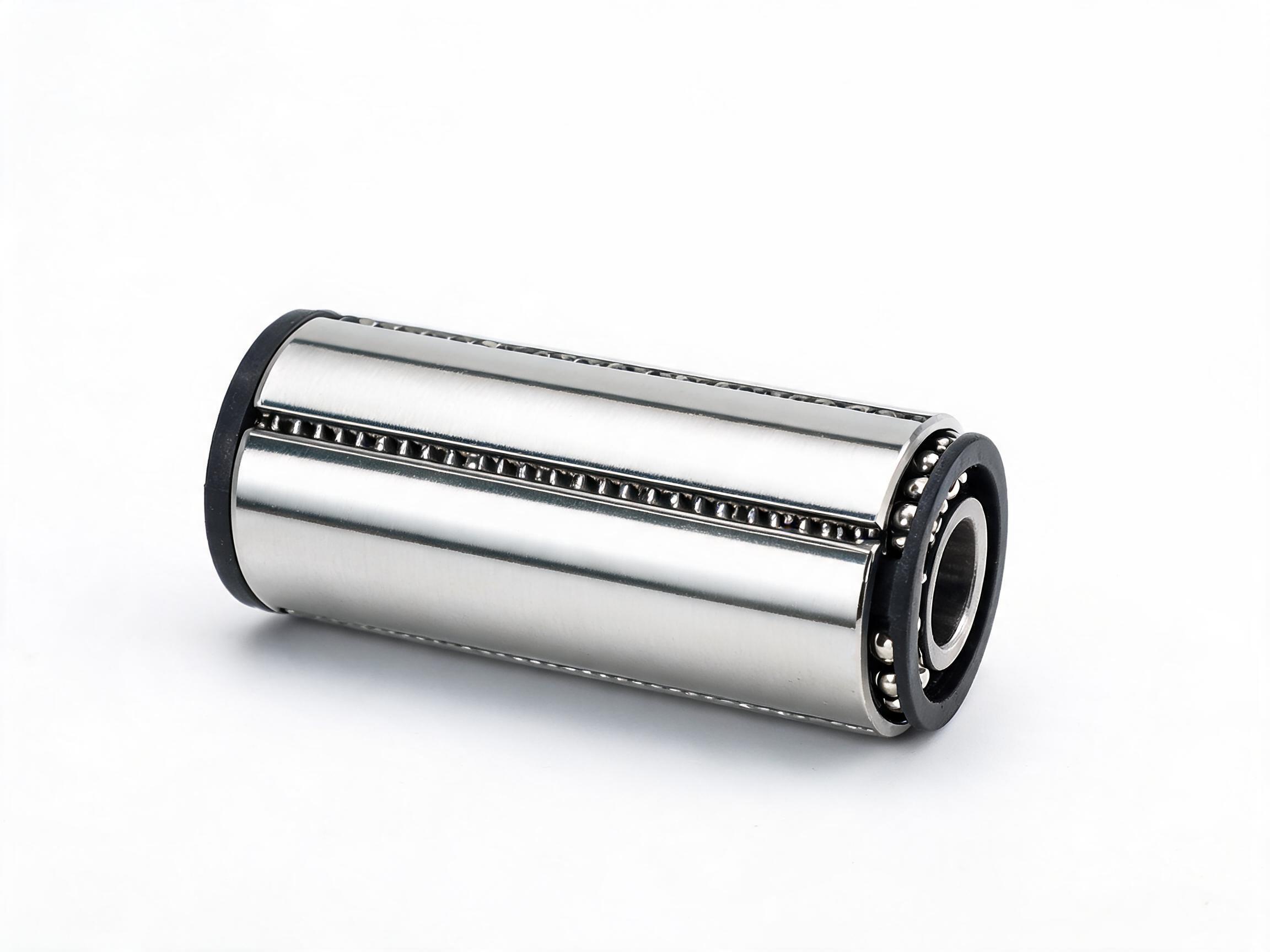
- Dynamic load rating is the radially applied constant load corresponding to the rated travel life of the bearing.
- Static load rating relates to permissible permanent deformation under stationary or impact loads.
- Ratings are only comparable at the same size and configuration.
- The rated travel life follows standard rolling-element practice, where life scales with the cube of the rating-to-load ratio (C/P)^3.
Defining the dynamic load rating

The dynamic load rating is the radially applied constant load under which the bearing reaches its rated travel life. It is a benchmark number, not a peak figure: the load is constant, radially directed, and the life attached to it is the reference life defined for the product record. The value tells you how much continuous radial load the raceway system was evaluated to carry for that reference distance when the bushing runs with its rolling elements in motion.
Because the value is defined at a reference life, it transfers poorly to conversations without that reference. Two suppliers may quote dynamic ratings for the same bore size against different reference lives, and a catalogue page that lists the number without the life is incomplete for comparison purposes. When the life definition is not stated, confirm against the datasheet before treating the figure as equivalent to another vendor's figure. The records cited on this page do not state a reference travel life, so the figures must be compared through the supplier's datasheet rather than treated as directly interchangeable.
The published value also assumes a defined load direction. A linear bushing carries radial loads in the plane perpendicular to its axis; loads that resolve into axial components need a design that can support them. If the machine applies combined loads, the dynamic rating alone does not describe the condition, and the assembly layout should be confirmed against the datasheet.
When the static load rating governs instead
The static load rating addresses a different failure mode: permissible permanent deformation under stationary or impact loads. It applies when the bearing hardly moves, when it is loaded while at rest, when it receives shock loads, or when it oscillates at very slow speed through a short stroke rather than rolling continuously through a full travel cycle.
The distinction is practical rather than academic. A bushing used as a rest pad, a locating stop or a guide for a slow acting clamp sees high loads with little or no raceway travel. In those positions, the raceway is not building up fatigue over a long travel distance; it risks local indentation instead. Sizing against the dynamic rating in that role can leave the bearing undersized for the deformation it will actually experience.
- Stationary support roles: size against the static rating.
- Shock or impact loading: size against the static rating, with the peak load considered.
- Slow oscillation over a short stroke: the static rating usually sets the limit.
- Continuous rolling travel under steady load: the dynamic rating and the life relation set the limit.
Many machines combine both conditions in one axis: a load that is mostly rolling with occasional rest periods or a stop at the end of stroke. In those cases both ratings are checked, and the more restrictive one drives the selection.
Reading both figures together
The two ratings are not a hierarchy where one always outweighs the other. They describe different states of the same bearing, and the selection depends on the duty cycle the bushing will see. A sound reading method follows the load history of the axis rather than the catalogue layout.
| Load condition in service | Which rating governs | What to verify |
|---|---|---|
| Continuous rolling travel, steady radial load | Dynamic load rating | The reference life behind the quoted value |
| Stationary, resting or clamped load | Static load rating | The peak load, not the running average |
| Impact or shock loading | Static load rating | Load direction and any axial component |
| Slow oscillation over a short stroke | Static load rating | Whether travel is enough to count as rolling |
| Mixed rolling with stops | Both, whichever is more restrictive | The full duty cycle, including rest periods |
Using the life relation in the other direction is equally useful. Standard rolling-element practice states that travel life scales with the cube of the rating-to-load ratio (C/P)^3. In plain terms, doubling the applied load shortens the rated life by roughly eight times, and running well below the rated load extends it. The relationship is a reference model for life, and actual life in a machine also depends on installation, lubrication, shaft hardness and contamination.
Why ratings cannot be compared across configurations and sizes
A catalog row is a whole design description compressed into a few numbers. Bearing steel grade, raceway hardness, the number of ball circuits, the length of the bushing and the seal arrangement all shape what the rating means. Comparing a figure for one configuration against a figure for another configuration is therefore not a like-for-like comparison, even when the bore size is identical.
The LM series records illustrate the point. The bushings use GCr15 bearing steel with raceway hardness of HRC 60-64, and the same bore size appears in single-length, double-length, flanged and adjustable variants with different ratings. A buyer who compares the largest number across that series without checking size and configuration is comparing different products, not different suppliers of the same product. Equally, a rating quoted for one bore size says nothing reliable about another bore size, and load ratings for sizes outside the documented records must be confirmed against the datasheet.
Worked examples from the LM series records
Three records from the LM series make the reading method concrete. Each is cited as listed for the named product, and the figures apply to that model and size only.
Standard single-length: LM16UU
The standard single-circulation LM16UU carries a dynamic load rating of 980 N. That is the benchmark for continuous radial travel of that model. It is the reference against which the longer variants of the same bore are measured, because the bore is the same but the internal configuration is not.
Double-length, double-circulation: LMK16UU
The double-length double-circulation LMK16UU has a dynamic load rating of 2350 N and a static load rating of 3680 N. The product record states that the double-length double-circulation design provides about 60 percent higher rated travel life than the standard single-circulation LM16UU; that figure is quoted from the record, and its load and reference-life conditions must be confirmed against the datasheet rather than derived from the two load ratings. The static figure covers the deformation side of the same design. The static value being above the dynamic value is normal in this format: the static rating covers permissible deformation, the dynamic rating covers rated life, and each must be read for its own purpose.
Flanged variant: LMF16UU
The flanged LMF16UU lists a dynamic load rating of 1370 N. It shares the nominal bore size with the two bushings above but not their configuration or mounting form. A designer who needs a flanged mounting should compare the LMF16UU only against other flanged records of the same size, and a designer who does not need the flange should not select it on the strength of a rating read out of context.
Looking at the three figures side by side shows why the reading order matters. The bore is the same, the reported dynamic values differ, and the static value is listed only where the record states it. Comparing the highest dynamic figure across all three would ignore the configuration, the mounting form and the load condition, and it would not answer a single real design question.
Applying the values to a specification
A practical application starts from the load history, not from a part number. The steps below are a reading method for a catalogue page, not a claim about any delivered product.
- Establish whether the axis rolls continuously, rests, receives shocks, or only oscillates slowly.
- For rolling duty, take the service radial load and compare it against the dynamic rating at the chosen configuration and size, using the life relation to estimate how far rated life is shortened.
- For resting, clamped or shock duty, take the peak load and compare it against the static rating.
- Check the mounting form: standard, double-length, flanged or adjustable, all at the same bore size.
- Read the shaft and housing tolerances from the same record, since a rating is only one input to a fit decision.
- Request the reference life definition alongside the rating; where it is not stated, confirm against the datasheet.
Two records support this method directly. Browse the LM series linear ball bearing bush range for the standard single-length records and their bore options, and the LMK series double-length linear ball bearing range for the longer double-circulation configuration where higher rated life is needed at the same bore. Both pages carry their ratings as listed, and each rating applies to the model and size it is printed against.
One point deserves repetition because it affects purchasing decisions: a rating is a reference figure under defined conditions, and the machine adds installation, lubrication, shaft quality and contamination to the life equation. The catalogue value narrows the selection; it does not replace the verification of the running conditions in the design.