
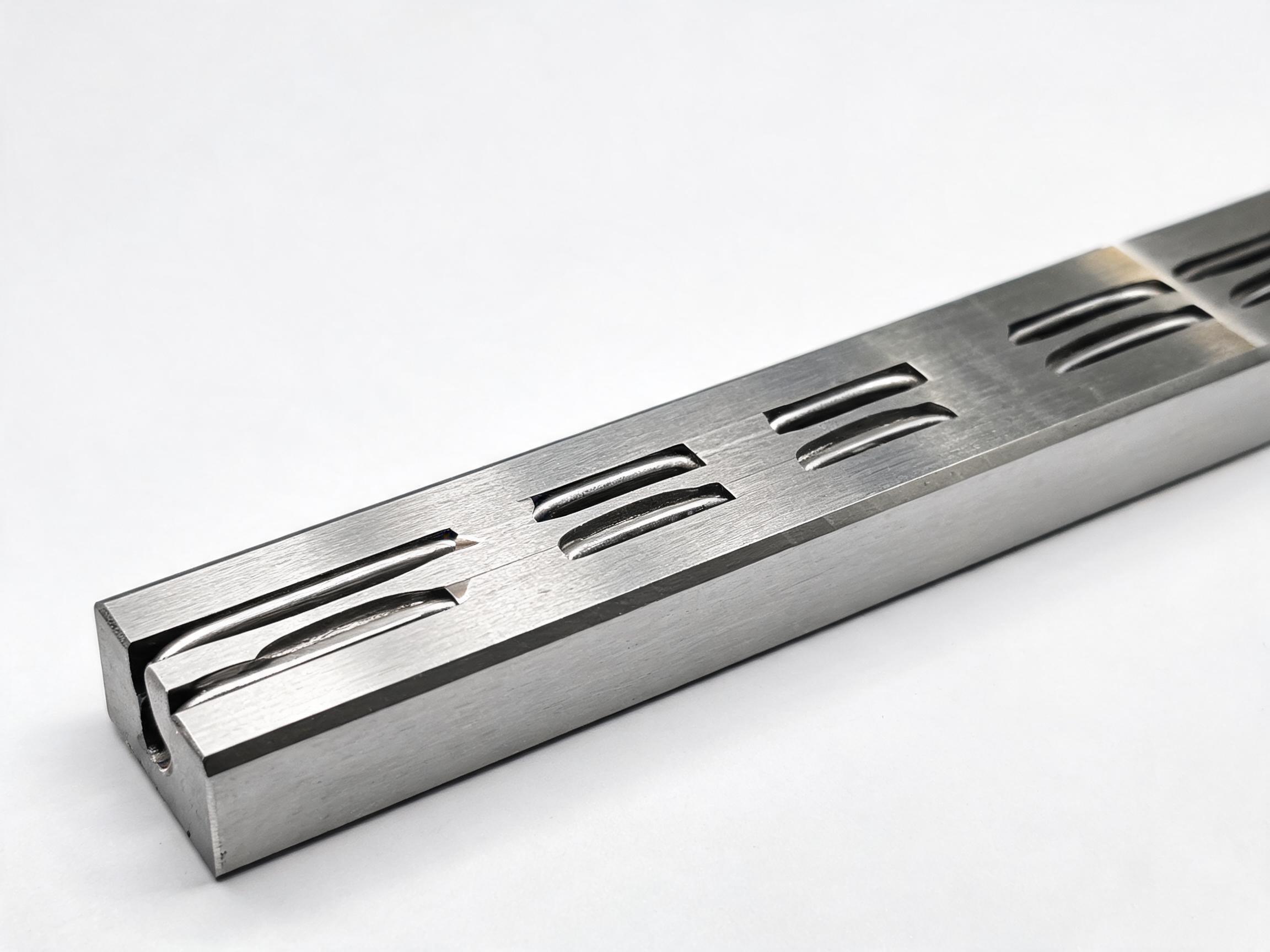
HGR15 is the smallest size in the HGR heavy-duty linear guideway series. This article explains where it sits in the range, what material and precision options come with it, and how to decide whether it fits your machine—using verified HGR20 load figures as a concrete reference point.
What the HGR15 Actually Is
HGR15 is the smallest size in the HGR heavy-duty linear guideway series. It uses a 15 mm rail width, the lowest profile in a range that runs HGR15, HGR20, HGR25, HGR30, HGR35 and HGR45. The designation matters because buyers often assume that the smallest number also means the lightest duty—and in some applications that assumption is correct, while in others it is not.
The question this article answers is practical: if you are sizing a machine and your first instinct is to jump to a larger rail, is HGR15 actually enough? The answer starts with understanding what the HGR series is built from and how its sizes relate to one another.
Key takeaways
- HGR15 is the smallest rail in the HGR series (HGR15–HGR45), not a separate light-duty line.
- All HGR sizes share the same 55# steel rail with HRC 58-62 surface hardening.
- Two precision grades are available across the series: ground H (P5) and rolled N (P7).
- Rails can be supplied up to 4000 mm, with longer runs built from butt-joined sections.
- HGR20—the next size up—carries 16.7 kN dynamic and 26.7 kN static load ratings; HGR15's own figures should be confirmed on the datasheet before you commit.
Where HGR15 Sits in the HGR Series
The HGR series is a heavy-duty profile rail family. Sizes are designated by rail width, and each size has its own carriage options. The progression from HGR15 upward increases rail width, carriage size, and—generally—load capacity. But the series shares core material and hardening specifications across all sizes, so HGR15 is not a downgraded product. It is the same construction in a smaller envelope.
That distinction is useful for buyers. If your machine has a compact axis, short stroke, or a carriage that must stay within a tight footprint, HGR15 may fit where larger rails would force a redesign of the surrounding structure. The trade-off is load capacity, which is why the next section uses HGR20 as a reference point.
For a full overview of the series, including carriage types and mounting dimensions, see the HGR Series Heavy-Duty Linear Guideway Rail product page.
Material and Hardening: Same Steel, Same Hardness
All HGR rails use 55# steel with surface hardening to HRC 58-62. This is the same specification across the size range, including HGR15. The hardening depth and case are designed to resist wear on the raceway while keeping the core tough enough for mounting and handling.
For buyers comparing suppliers, the hardness figure is one of the few material specifications that can be verified without a full application test. HRC 58-62 is a conventional range for heavy-duty linear guideways, and it applies to the rail surface rather than the carriage. If your application involves abrasive dust or insufficient lubrication, the rail hardness matters, but so does the carriage seal and lubrication interval—both of which should be confirmed against the supplier's datasheet for the specific carriage you select.
Precision Options: Ground H (P5) and Rolled N (P7)
HGR15 is available in two precision grades:
- Ground H (P5) — the higher-precision option, with ground raceways. Suitable for applications where running accuracy and smooth motion are primary requirements.
- Rolled N (P7) — a rolled finish with a wider tolerance band. Typically chosen where the machine's overall accuracy budget is less demanding or where cost is a stronger constraint.
The choice between P5 and P7 is not about rail size; it is about what the machine needs to hold. A common mistake is to assume that the smallest rail size must be paired with the lower precision grade. In practice, HGR15 in ground H (P5) is a valid combination, and for compact instruments or short-travel positioning axes, the precision grade often matters more than the rail width.
If you are unsure which grade your design requires, the starting point is the machine's specified positioning tolerance and the expected load direction. Those two inputs usually narrow the choice quickly.
Using HGR20 Load Data as a Reference Point
HGR15's own load ratings are not reproduced here because they should be read from the current datasheet for the exact carriage configuration you are considering. What can be shared is the verified reference point for the series: HGR20, the next size up, is rated at 16.7 kN dynamic load and 26.7 kN static load.
Note on attribution: The 16.7 kN dynamic and 26.7 kN static figures belong to HGR20. They are included here to show the order of magnitude within the HGR series—not to suggest that HGR15 carries the same loads.
Two practical observations follow from that reference:
- Load capacity drops as rail size decreases, so if your calculated load per carriage is in the same range as HGR20's rating, HGR15 is likely undersized and should not be selected without confirming its datasheet figures.
- If your load is substantially lower—for example, a small gantry, a pick-and-place head, or a measurement axis—HGR15's smaller envelope may be the better mechanical fit, provided the datasheet confirms adequate capacity for your load case.
To compare HGR15 against the rest of the range, the HGR series product page lists the available sizes and carriage options.
Rail Length and Jointing
HGR rails are supplied in lengths up to 4000 mm. For travel longer than that, rails can be butt-joined to form a continuous run. Butt joining is a standard approach for long-axis machines, but it introduces a joint that must be handled correctly during installation—alignment at the joint affects smoothness and carriage life.
When specifying a joined rail, it helps to tell the supplier the total length required and whether the joint position is critical for your application. If the carriage must cross the joint under load, the joint quality becomes more important than for a setup where the joint sits outside the working stroke.
When HGR15 Is the Right Choice
Based on the series specifications, HGR15 tends to fit in these situations:
- Compact machine envelopes where the rail width and carriage height are constrained by the surrounding structure.
- Moderate load axes where the calculated load per carriage is well below the HGR20 reference rating and the datasheet confirms HGR15 capacity.
- Short-to-medium travel where a single rail up to 4000 mm covers the stroke without jointing.
- Precision-focused designs that can use ground H (P5) in a small rail size.
It is less likely to be the right choice when the axis carries high moment loads, when the carriage must resist significant overhung loads, or when the machine's duty cycle demands the largest possible load margin. In those cases, moving up to HGR20 or HGR25 is the conventional path, and the HGR20 figures above give a sense of what that step provides.
Practical Selection Checklist
Before ordering HGR15, confirm the following with your supplier or against the datasheet:
- Load per carriage (dynamic and static) and the direction of that load.
- Required precision grade: ground H (P5) or rolled N (P7).
- Carriage type and preload—these affect stiffness and running characteristics.
- Total rail length and whether butt joining is needed beyond 4000 mm.
- Mounting surface flatness and alignment tolerances for the selected grade.
- Lubrication method and interval for the environment (dust, coolant, vacuum).
MOQ for the HGR series is 50. If your first build is a prototype, plan the order quantity around that figure or ask about sample arrangements separately.
FAQ
Is HGR15 a light-duty rail?
No. HGR15 belongs to the HGR heavy-duty series and shares the same 55# steel and HRC 58-62 surface hardening as the larger sizes. Its load capacity is lower than HGR20's because of its smaller size, but it is not a separate light-duty product line.
Can I get HGR15 in ground H (P5)?
Yes. The HGR series offers both ground H (P5) and rolled N (P7) precision options, and HGR15 is available in either grade.
What is the maximum rail length?
Rails are supplied up to 4000 mm. Longer runs are made by butt-joining rail sections.
Where can I find HGR15 load ratings?
HGR15's specific dynamic and static load ratings should be taken from the datasheet for the carriage you select. The HGR20 figures cited in this article (16.7 kN dynamic, 26.7 kN static) are for reference only and do not apply to HGR15.
What is the MOQ?
The MOQ for the HGR series is 50. Contact the supplier for details on ordering configurations below that quantity.
Next Step
If you have a machine layout and a load case, the fastest way to confirm whether HGR15 fits is to share those details and ask for the matching datasheet. The HGR series page lists the sizes and options; from there, the supplier can confirm capacity, precision grade, and rail length for your application.