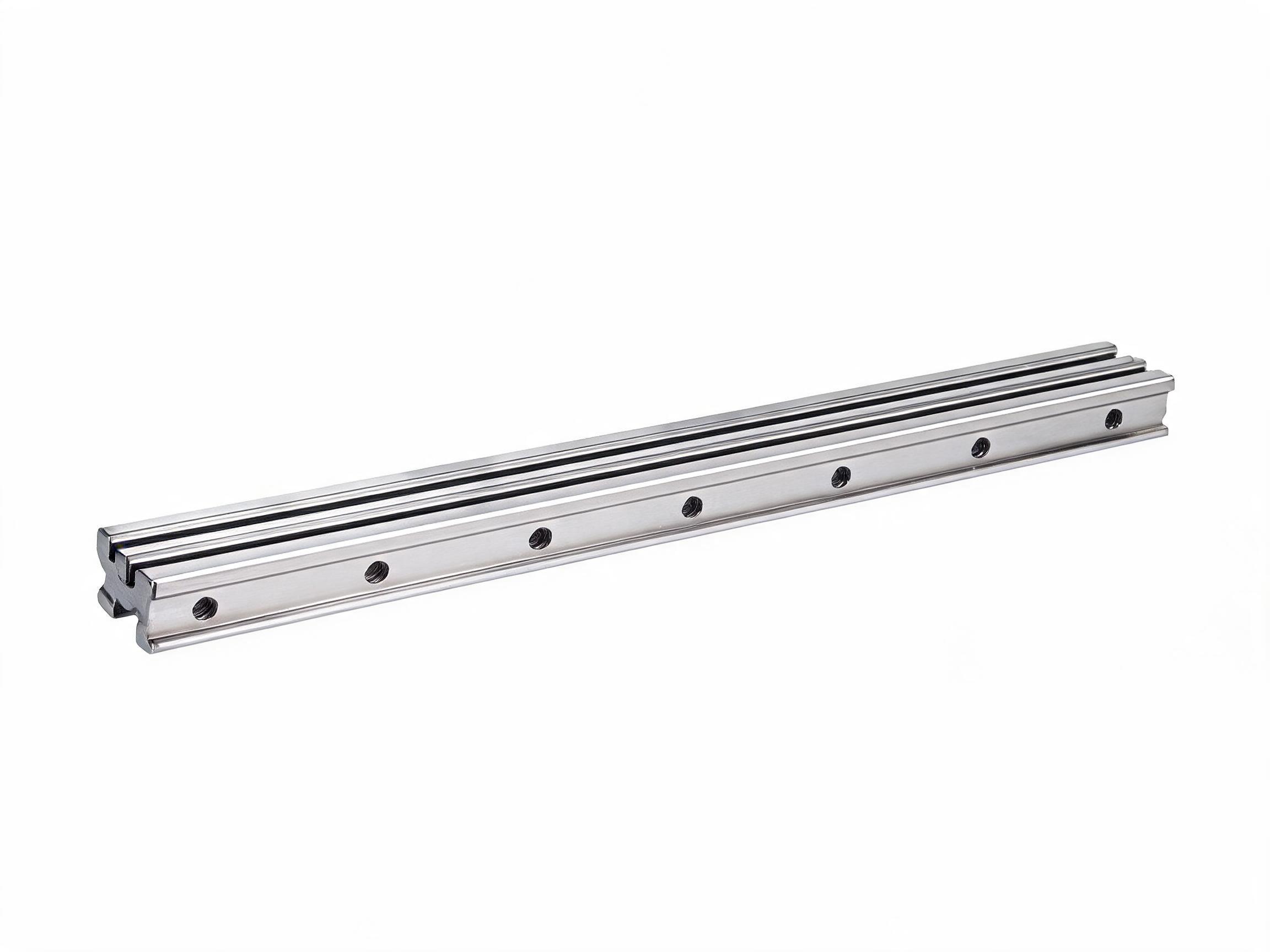
Selecting the right linear guideways for CNC machine tools is a critical purchasing decision that affects precision, load capacity, and service life. This guide covers the key selection criteria—load rating, accuracy class, preload, rail type, and sealing—to help international buyers evaluate suppliers and specifications with confidence.
BUYER GUIDE
- Choose the rail type (square, flange, or heavy duty linear guide rail) based on your machine's load direction and space constraints.
- Accuracy class (C0–C5) and preload (Z0–Z3) must match the machine's positioning tolerance and rigidity requirements.
- Sealing and lubrication options directly affect service life in cutting environments; always confirm wiper material and grease type.
- Verify supplier certifications (ISO 9001), dynamic load rating (C), and static load rating (C0) against your application data.
- Request dimensional drawings and interchangeability specs before placing a bulk order.
Why Linear Guideway Selection Matters for CNC Machine Tools
Linear guideways—also referred to as linear guide rails or rail linear systems—are the guiding components that determine the motion accuracy, rigidity, and load-bearing capacity of a CNC machine tool. A poorly matched guideway can lead to vibration, premature wear, and loss of positioning accuracy, directly affecting the quality of machined parts and the machine's overall lifespan.
For international buyers sourcing for OEM builds, retrofit projects, or replacement parts, the selection process involves more than comparing dimensions. You need to evaluate mechanical ratings, accuracy grades, preload levels, and environmental sealing—all of which vary across manufacturers and product lines.
1. Understand the Types of Linear Guide Rails
Linear guideways are broadly classified by the shape of the rail and the carriage profile. The three most common types used in CNC machine tools are:
| Rail Type | Typical Profile | Common Applications |
|---|---|---|
| Square (rectangular) rail | Flat top, 4-bolt mounting pattern | General-purpose machining centers, milling machines |
| Flanged rail | Wider base with flange holes | Heavy cutting, gantry machines, large lathes |
| Heavy duty linear guide rail | Reinforced cross-section, thicker rail wall | High-load CNC, forging presses, transfer lines |
If your machine operates under high cutting forces or carries a heavy worktable, a heavy duty linear guide rail is the preferred choice. These rails have a larger cross-sectional area and wider raceways, allowing them to handle higher static and dynamic loads without deflection.
2. Load Rating: Dynamic (C) and Static (C0)
Every linear guideway has two load ratings published by the manufacturer:
- Dynamic load rating (C): The load under which the guideway achieves a rated life of 50 km (or 100 km per some standards) without failure. This is the key number for service life calculation.
- Static load rating (C0): The maximum stationary load that the guideway can withstand without permanent deformation of the raceway or balls.
For CNC machine tools, you should calculate the equivalent dynamic load based on the actual cutting forces, acceleration, and workpiece weight. A common rule: the applied load should not exceed 30% of the dynamic load rating C for continuous operation, and 50% for intermittent use.
When comparing suppliers, ask for the C and C0 values in Newtons (N) for the specific rail size and carriage type you are considering. Do not rely on generic "heavy duty" labels—always verify the numbers.
3. Accuracy Class: C0 to C5
Linear guideways are manufactured in accuracy classes that define the permissible deviation in running parallelism, height, and side-to-side alignment. The most common classes for CNC applications are:
| Class | Typical Tolerance (µm/m) | Suitable Machine Type |
|---|---|---|
| C0 (ultra-precision) | ±3 | High-precision grinders, jig borers, measuring machines |
| C1 (precision) | ±5 | CNC machining centers, lathes with high positioning accuracy |
| C2 (medium precision) | ±8 | Standard milling machines, drilling machines |
| C3 (commercial) | ±12 | Routers, simple automation |
| C5 (general) | ±20 | Low-accuracy or manual machines |
For a typical CNC machining center, C1 or C2 class is the standard. Going lower than C2 may introduce enough deviation to affect part tolerances. Always request the accuracy test report from the supplier—this is a standard document for any reputable manufacturer.
4. Preload: Z0, Z1, Z2, Z3
Preload refers to the internal clearance (or interference) between the balls and the raceways. It determines the rigidity and backlash of the linear guideway. Preload levels are usually designated as:
- Z0 (zero clearance): Minimal preload, used for low-load applications where smooth motion is needed.
- Z1 (light preload): Suitable for most CNC applications where moderate rigidity is required.
- Z2 (medium preload): Used in high-speed machining or when vibration damping is critical.
- Z3 (heavy preload): For heavy duty linear guide rail systems under extreme loads, but it increases friction and heat generation.
For a standard CNC milling machine, Z1 or Z2 preload is a safe starting point. If you are building a high-speed or high-accuracy machine, Z2 offers better rigidity. For heavy duty applications, Z3 may be necessary, but you must ensure the lubrication system can handle the additional heat.
5. Sealing and Lubrication
CNC machine tools operate in environments with coolant, chips, and dust. The sealing system of the linear guideway is critical to prevent contamination and extend service life.
Common sealing options include:
- Standard rubber wipers: Provide basic protection against dry chips and dust.
- Double-lip wipers: Better sealing for wet cutting environments with coolant.
- Metal scraper + wiper: Used in heavy duty linear guide rail systems where large chips or abrasive particles are present.
- Bellows or telescopic covers: External protection for the entire rail, often used in grinding machines.
For lubrication, most linear guideways use grease or oil. Grease is simpler and more common for individual machines, while oil lubrication is used in centralized systems for multi-axis machines. Confirm the grease type (e.g., lithium-based, high-temperature) and the relubrication interval with the supplier.
6. Rail Length and Mounting Considerations
Linear guide rails are typically supplied in standard lengths (e.g., 1,000 mm, 2,000 mm, 3,000 mm) or cut to order. When specifying rail length, consider:
- Total travel distance: The rail must be longer than the full stroke of the carriage by at least the carriage length plus a safety margin (usually 20–30 mm per side).
- Mounting holes: Standard pitch is usually 60 mm, 80 mm, or 100 mm depending on rail size. Verify the hole pattern matches your machine base.
- Rail straightness: For long rails (>3 m), straightness tolerance becomes critical. Request the straightness report for each rail.
When mounting, the rail must be aligned to the machine base within the specified parallelism tolerance. A misalignment of even 0.01 mm can cause binding and premature wear. Use a precision level and dial indicator during installation.
7. Supplier Evaluation Checklist
When you are evaluating a potential supplier for linear guideways, use this checklist to ensure you are comparing apples to apples:
- Certifications: Does the supplier hold ISO 9001? Are there any industry-specific certifications (e.g., CE, UL)?
- Material specification: What steel grade is used (e.g., GCr15, 100Cr6)? Is the rail hardened and ground? What is the hardness (typically HRC 58–62)?
- Interchangeability: Can the carriage and rail be sourced from different batches or manufacturers? Some brands are proprietary; others follow standard dimensions (e.g., THK, HIWIN, NSK).
- MOQ and lead time: What is the minimum order quantity per size? What is the typical lead time for custom lengths?
- Packaging: How are the rails packed for export? Rust-proof coating and wooden crating are standard for sea freight.
- Warranty: What is the warranty period? Does it cover manufacturing defects only, or also premature wear under normal use?
Frequently Asked Questions
Q: Can I use a standard linear guide rail for a heavy duty CNC machine?
A: Not recommended. Standard rails have thinner raceways and lower load ratings. A heavy duty linear guide rail is designed with a thicker cross-section and higher C/C0 values to handle the loads without deflection.
Q: What is the difference between a linear guideway and a ball screw?
A: A linear guideway provides guiding and load support, while a ball screw converts rotary motion into linear motion. They work together in a CNC axis: the ball screw drives the load, and the guideway supports and guides it.
Q: How do I know if the preload is correct for my application?
A: If the machine vibrates during cutting, the preload may be too low. If the guideway heats up excessively or the motor draws high current, the preload may be too high. Start with Z1 or Z2 and adjust based on actual performance.
Q: Do I need to lubricate the rail linear system daily?
A: It depends on the operating environment. For a CNC machine running 8 hours/day with coolant, automatic lubrication every 2–4 hours is typical. For intermittent use, manual greasing every 40–50 operating hours is sufficient.
Next Steps for Buyers
Choosing the right linear guideways for your CNC machine tools requires matching the mechanical specifications to your application's load, speed, accuracy, and environmental conditions. Start by defining your machine's axis loads and required positioning tolerance, then select the rail type, accuracy class, and preload accordingly.
If you are sourcing for a new project or replacing existing guideways, we recommend sending a detailed inquiry to potential suppliers that includes:
- Machine type and axis configuration
- Required rail length and carriage quantity
- Load and speed data
- Accuracy class and preload preference
- Sealing and lubrication requirements
This allows the supplier to provide a precise quotation and avoid costly mismatches. For more information on our linear guideway product range, including heavy duty linear guide rail options, please contact our sales team with your specifications.