
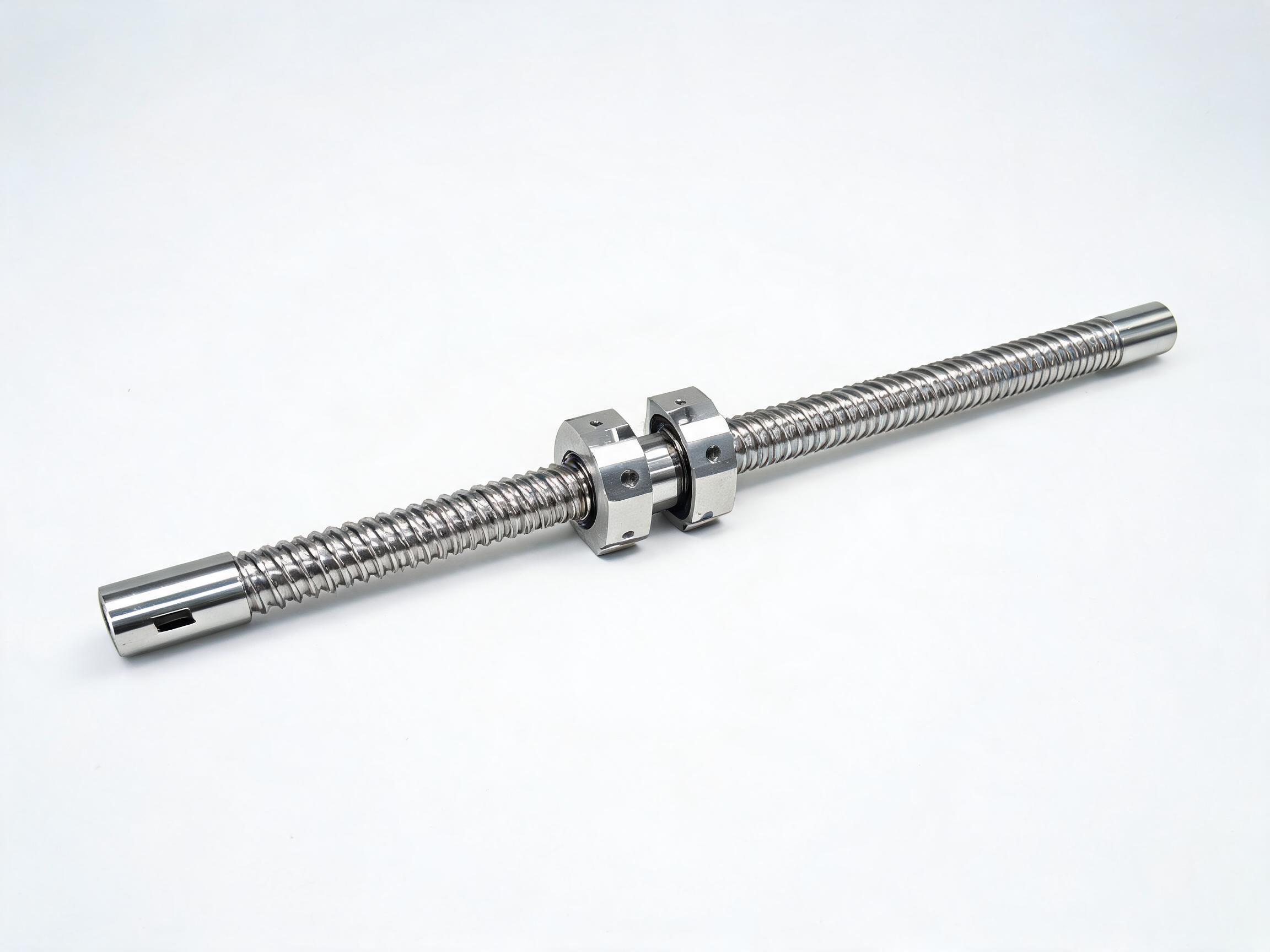
Choosing the right lead screw actuator means balancing precision, load, speed, and environment. This guide breaks down ISO precision grades, common nut and screw materials, and how to match them to real-world applications like medical devices, packaging lines, and industrial automation.
ACTUATOR SELECTION GUIDE
Lead Screw Actuator Selection Guide: Precision Grades, Materials, and Application Matching
A lead screw actuator — also referred to as a screw actuator, linear screw actuator, or linear screw drive — is one of the most common mechanisms for converting rotary motion into precise linear motion in industrial equipment. But not all lead screw actuators are built the same. The wrong choice can lead to positioning errors, premature wear, or unnecessary cost.
This guide focuses on the three criteria that matter most when specifying a lead screw actuator for a B2B application: precision grade, screw and nut material, and application matching. Whether you are designing a new machine or sourcing a replacement, understanding these dimensions will help you communicate clearly with suppliers and avoid costly mis-specifications.
- Precision grade (ISO/C5/C7/C10) directly determines positioning repeatability — choose the lowest grade that meets your application tolerance, not the highest.
- Material selection (steel/stainless/bronze/polymer) affects load capacity, corrosion resistance, and maintenance interval.
- Application matching is about combining speed, load, duty cycle, and environment — not just picking a part number.
1. Understanding Precision Grades for Lead Screw Actuators
Precision grade is the most commonly misunderstood specification. In the world of lead screw actuators, grades are defined by ISO 3408-3 and are typically labeled C0, C1, C3, C5, C7, and C10. The lower the number, the tighter the lead accuracy — and the higher the cost.
What the Grades Mean in Practice
| Grade | Lead Accuracy (mm per 300mm) | Typical Positioning Repeatability | Common Applications |
|---|---|---|---|
| C0 | ±0.006 | ±0.003 mm | Ultra-precision metrology, semiconductor |
| C3 | ±0.012 | ±0.005 mm | High-end CNC, laser cutting |
| C5 | ±0.018 | ±0.01 mm | Medical devices, precision assembly |
| C7 | ±0.050 | ±0.05 mm | General automation, packaging, 3D printing |
| C10 | ±0.120 | ±0.10 mm | Material handling, simple positioning |
Practical advice: For most industrial automation applications — pick-and-place, packaging, conveyor indexing — C7 is sufficient. Going to C5 adds cost without tangible benefit unless your system requires sub-0.05 mm repeatability. C3 and above are for niche precision equipment.
How to Verify Grade with a Supplier
When you request a quote for a linear screw actuator, ask the supplier to provide:
- The ISO grade and the corresponding lead accuracy tolerance per 300 mm.
- Whether the grade is measured at 20°C (standard condition).
- If the nut is preloaded (preload reduces backlash but increases friction).
A reliable supplier will provide these numbers. If they only say "high precision" without a grade, treat that as a red flag.
2. Material Selection: Screw and Nut Combinations
The material of the screw and nut determines load capacity, wear life, corrosion resistance, and maintenance requirements. There is no single "best" material — the right choice depends on your operating environment and duty cycle.
Screw Materials
- Carbon steel (C45 / 1045): Most common. Good strength, moderate wear resistance. Requires lubrication. Suitable for dry indoor environments.
- Stainless steel (304 / 316): Corrosion-resistant. 316 offers better chemical resistance. Lower hardness than carbon steel, so wear life may be shorter unless surface-hardened. Used in food processing, medical, and marine environments.
- Hardened alloy steel (e.g., 40Cr / 4140): Higher surface hardness, better wear life. Often used in high-duty-cycle applications. Requires consistent lubrication.
Nut Materials
| Nut Material | Load Capacity | Wear Life | Self-Lubricating? | Typical Applications |
|---|---|---|---|---|
| Bronze (CuSn8 / SAE 660) | High | Long | No | Heavy loads, continuous duty |
| Bronze with PTFE liner | Medium | Medium | Yes | Low maintenance, clean rooms |
| Polymer (e.g., POM / Acetal) | Low to medium | Short | Yes | Light duty, low noise, no lubrication |
| Steel (with anti-friction coating) | High | Long | No | High-speed, high-load |
Practical advice:
- For a linear screw drive in a food packaging line, use stainless steel screw + bronze nut with PTFE liner. This combination resists washdown chemicals and reduces maintenance.
- For a screw actuator in a general assembly machine running 8 hours/day, carbon steel screw + bronze nut is the most cost-effective.
- For a lead screw actuator in a cleanroom or lab instrument, polymer nut + stainless steel screw eliminates lubrication contamination.
3. Application Matching: Putting It All Together
Selecting a lead screw actuator is not a matter of picking the highest grade or the strongest material. It is about matching the actuator to the real operating conditions.
Key Application Parameters to Define
Before contacting a supplier, write down these five numbers:
- Maximum axial load (N or kgf) — not just static, but dynamic during motion.
- Linear speed (mm/s or m/min) — determines required lead and RPM.
- Stroke length (mm) — affects screw buckling and critical speed.
- Duty cycle (hours/day, starts/hour) — drives wear life and lubrication interval.
- Environment (temperature, humidity, dust, chemicals, washdown) — determines material and sealing.
Example Matching Scenarios
| Application | Recommended Grade | Screw Material | Nut Material | Key Consideration |
|---|---|---|---|---|
| Medical syringe pump | C5 | Stainless 304 | Polymer (POM) | Low noise, no lubrication, smooth motion |
| Packaging conveyor indexing | C7 | Carbon steel | Bronze | Cost-effective, moderate speed |
| CNC router Z-axis | C5 | Hardened alloy steel | Bronze | High load, preload for backlash control |
| Food processing washdown | C7 | Stainless 316 | Bronze + PTFE liner | Corrosion resistance, washdown-proof seals |
| 3D printer gantry | C7 or C10 | Carbon steel | Polymer | Low cost, low load, high speed acceptable |
4. Common Mistakes When Specifying a Lead Screw Actuator
Mistake 1: Over-specifying precision
Going from C7 to C5 can double the cost of a linear screw drive. If your application only needs ±0.05 mm repeatability, C7 is fine. Save the budget for components that actually affect performance.
Mistake 2: Ignoring critical speed
A long, fast-rotating screw can whip at its critical speed, causing vibration and failure. For any screw actuator with a stroke over 500 mm, check the critical speed chart from the supplier. If your speed exceeds it, consider a larger diameter screw or a ball screw alternative.
Mistake 3: Choosing the wrong nut for the duty cycle
Polymer nuts wear quickly under continuous heavy load. A bronze nut will last 5–10 times longer in the same conditions, even though it costs more upfront. For a screw actuator running 16 hours/day, the total cost of ownership favors bronze.
Mistake 4: Forgetting lubrication
Lead screws with bronze or steel nuts require periodic lubrication. If your application is in a sealed or inaccessible location, consider a self-lubricating nut (polymer or PTFE-lined). Many field failures of linear screw actuators are simply due to dried-out grease.
5. FAQ: Quick Answers for Buyers
Q: What is the difference between a lead screw actuator and a ball screw actuator? A: Lead screws use sliding friction (nut on screw); ball screws use rolling friction (recirculating balls). Lead screws are lower cost, quieter, and self-locking (depending on lead angle). Ball screws offer higher efficiency (up to 90%) and longer life at high speed, but cost more and require more precise alignment.
Q: Can I use a lead screw actuator vertically? A: Yes, but be aware of back-driving risk. If the lead angle is high (typically > 5°), the load may drive the screw when power is off. For vertical applications, use a low-lead screw or add a brake.
Q: How do I reduce backlash in a linear screw drive? A: Use a preloaded nut (split nut design or spring-loaded). This eliminates axial play but increases friction and reduces efficiency. For C7 applications, standard clearance is often acceptable.
Q: What is the typical lead time for a custom lead screw actuator? A: For standard sizes (diameter 8–20 mm, stroke 100–600 mm), lead times are typically 2–4 weeks. Custom materials or non-standard lengths add 2–4 weeks. Always confirm with your supplier.
Conclusion
Selecting the right lead screw actuator — or screw actuator, linear screw actuator, or linear screw drive — comes down to three decisions: precision grade, material combination, and application fit. Start by defining your load, speed, environment, and required repeatability. Then match those numbers to the appropriate grade and material, rather than defaulting to the highest specification.
If you are unsure about any parameter, ask your supplier for a technical datasheet and a critical speed chart. A good supplier will help you validate the selection before you commit to production.
For more information on specific models or to request a quote for a custom linear screw drive, please contact our engineering team. We can provide detailed specifications and application support based on your exact requirements.