
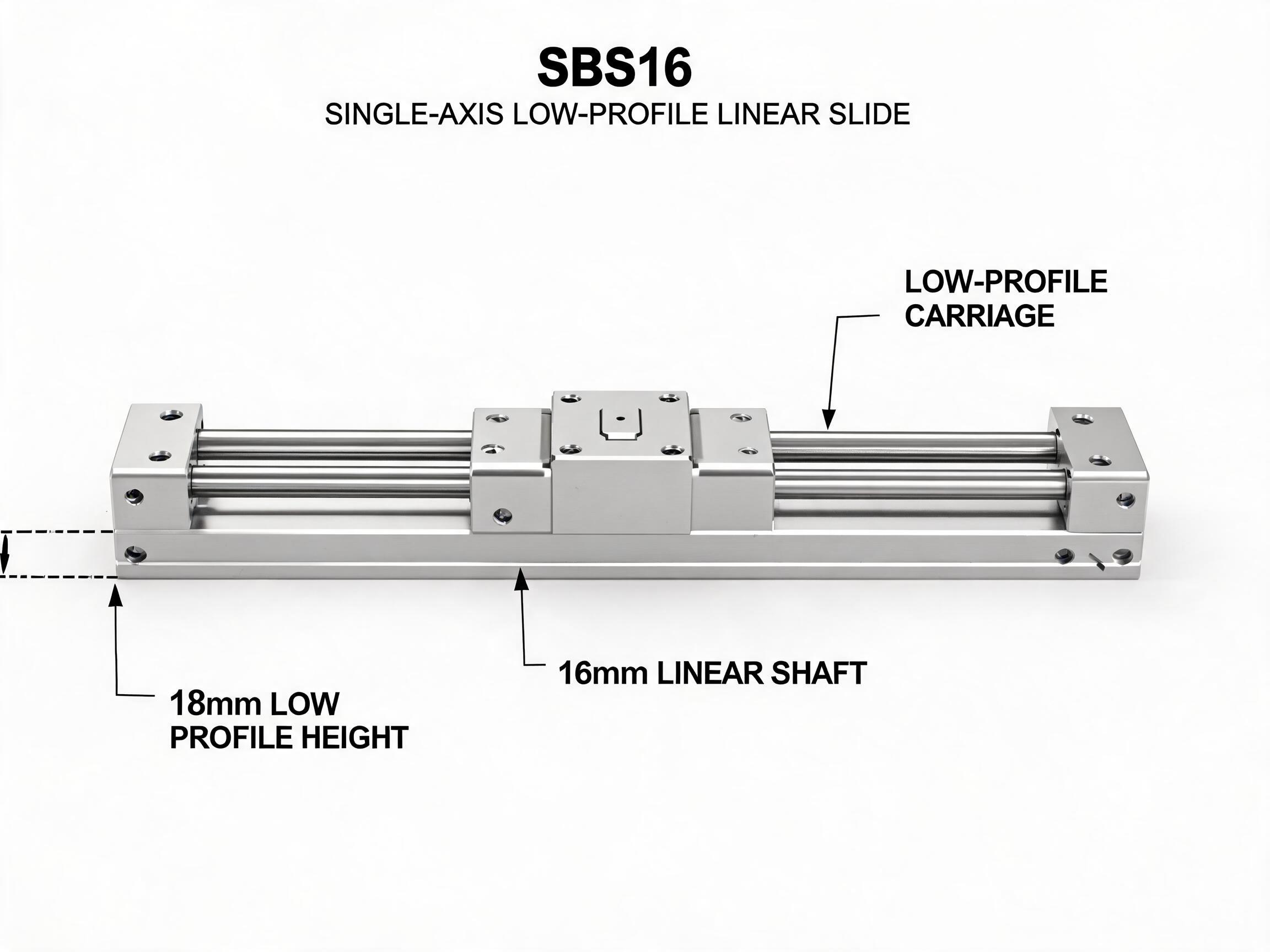
Build height is the first thing a machine builder runs out of and the last thing most linear guide articles discuss. This guide compares the stack height of an SBS16 low-profile slide, an SBR16 round-shaft unit and an HGR20 profile rail, then quantifies what the low-profile option saves in millimeters and what it costs in load capacity, with the geometry checklist that decides the call.
Axis Integration
Build height decides more machine designs than people admit. If you are comparing a profile rail, a round-shaft unit and a low-profile slide, the number that hurts first is not the dynamic load rating on the datasheet. It is the distance from the mounting face to the center of the carriage, plus whatever you need above the block for hardware. Add those up and you either have room for the frame, the tooling and the guards, or you spend a week redesigning around an axis that sits too tall.
Short answer before the details: on a 16 mm shaft, an SBS16 low-profile slide unit has an overall profile height of 18 mm, roughly 40 percent lower than an SBR16 round-shaft unit of the same shaft size. You buy that space back with load capacity. The SBS16 is rated 5.2 kN dynamic and 8.0 kN static, against 7.8 kN and 12.0 kN for the SBR16. Whether that trade is acceptable depends on your actual geometry, not on the catalog headline.
What "build height" actually measures
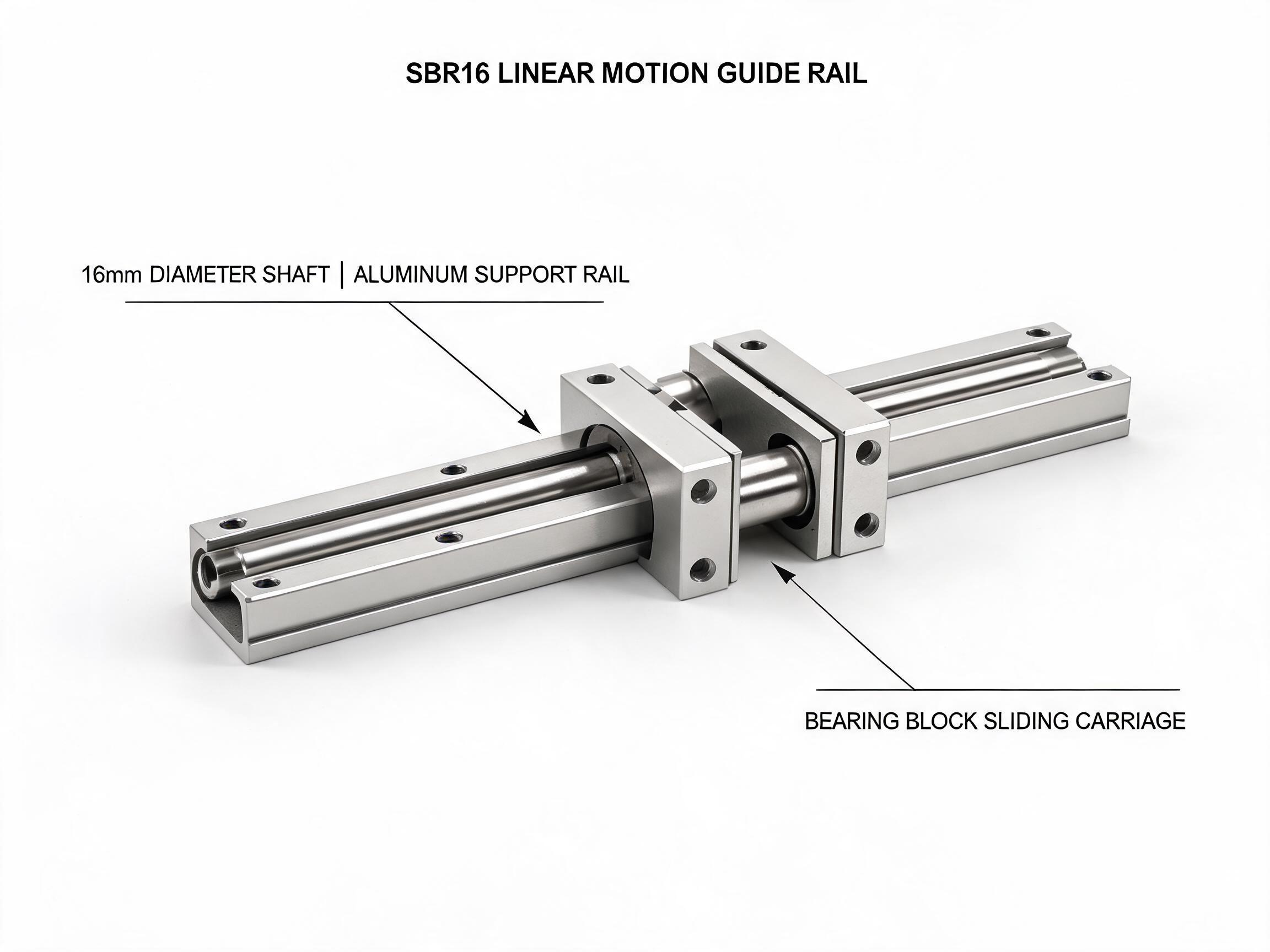
Buyers usually ask for "linear guide height" and get three different answers depending on whether the supplier is quoting the shaft, the block, or the assembled unit. Fix the definitions before you compare anything:
- Shaft or rail height. The diameter of a round shaft, or the rail height of a profile guideway. This is a component dimension, not an axis dimension.
- Assembled profile height. The total height of the complete unit, from the bottom of the support rail or mounting base to the top of the bearing block. This is the number that sits in your stack-up drawing.
- Stack height. Profile height plus mounting plate thickness plus bolt-head or washer clearance plus any shim. This is what you compare against the space available inside the machine.
The usual failure is comparing a shaft diameter to a stack height. A 16 mm shaft tells you almost nothing about how tall the axis will be once the support rail and block are assembled.
Stack height across three mounting approaches
The table below compares the three approaches at nominally the same shaft or rail size. Only the figures that come from manufacturer data are listed. Mounting plate thickness and bolt clearance are your own design inputs, so totals are shown as a formula rather than a fixed number.
| Approach | Series / size | Assembled profile height | Shaft or rail | Load rating (dynamic / static) | Length range | Mounting hole pitch |
|---|---|---|---|---|---|---|
| Low-profile slide unit | SBS12 / 16 / 20 | 18 mm on SBS16 | 16 mm shaft | 5.2 kN / 8.0 kN | 150–500 mm, 1000 mm custom | 25 mm |
| Round-shaft linear guide unit | SBR12 / 16 / 20 / 25 / 30 | About 40 percent higher than SBS16 at the same shaft size | 16 mm shaft, 6063-T5 aluminium support rail, double-row bearing block | 7.8 kN / 12.0 kN | Max 2000 mm, 4000 mm custom | 50 mm |
| Profile guideway | HGR 15 / 20 / 25 / 30 / 35 / 45 | Set by rail and block series; verify against the drawing for the size you select | 55# high-carbon steel rail, ground H class P5 or rolled N class P7 | 16.7 kN / 26.7 kN on HGR20 | Max 4000 mm | Per rail drilling pattern for the size |
All three families use GCr15 bearing steel at 58–62 HRC in the rolling elements and raceways. Profile guideway rail material is 55# high-carbon steel.
Two things stand out when the table is read sideways. First, the SBS16 wins on height and also wins on hole pitch: 25 mm against 50 mm for the SBR16, which matters if you are bolting to a short or narrow carriage plate. Second, the profile guideway is in a different class on load — HGR20 carries more than three times the SBS16 dynamic rating — but it does not solve a tight vertical envelope. A profile rail is chosen for stiffness and load, not for saving height.
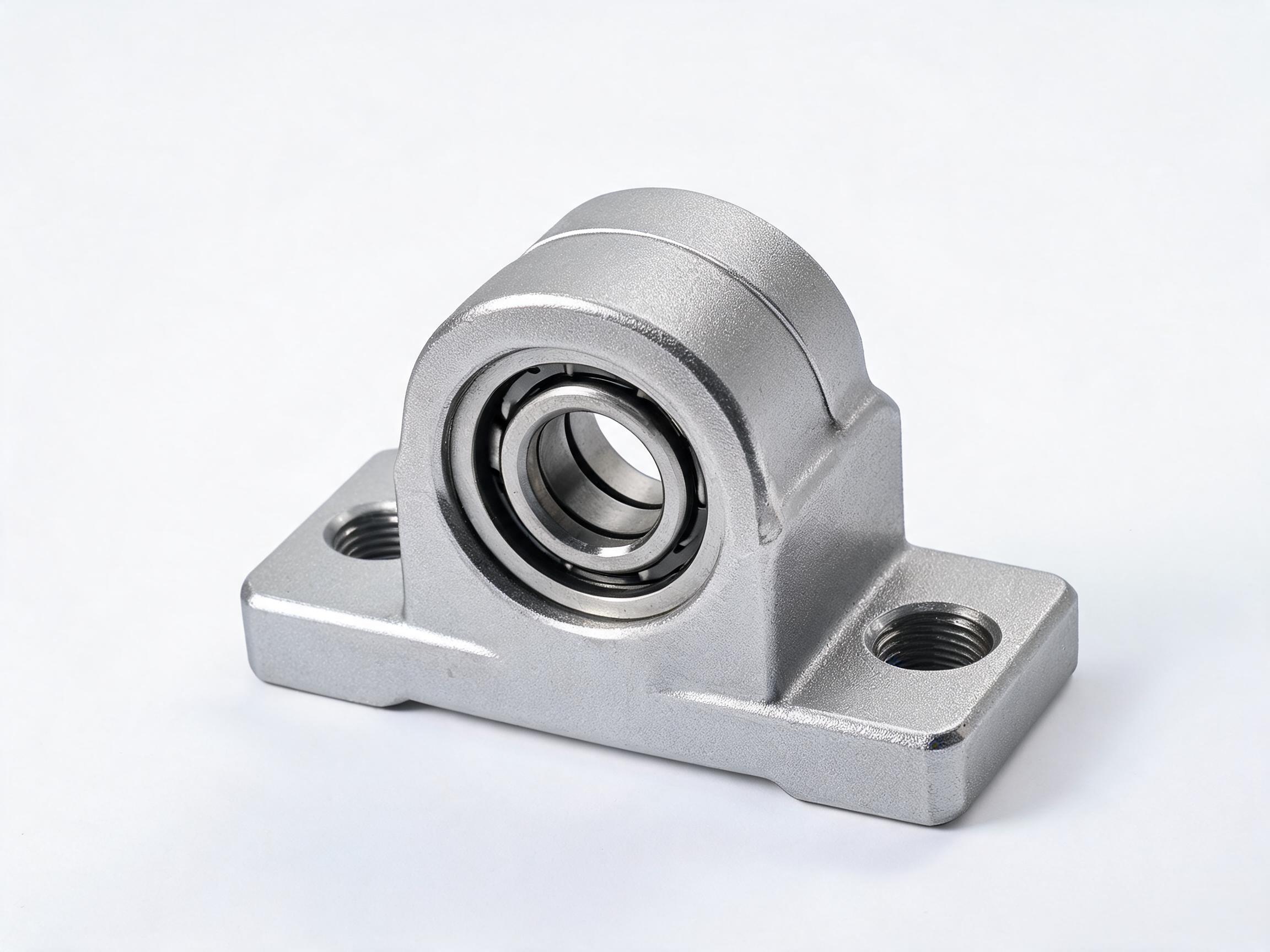
There is a fourth option worth naming because it appears in the same conversations. The KH series pillow block housing is an ADC12 die-cast aluminium unit running pre-fitted LM..UU bearings on shafts from 8 mm to 50 mm. KH16 is rated 980 N dynamic with self-aligning capability of plus or minus 3 degrees. That is a different order of load from the slide and shaft units above, so treat it as a light-duty alternative where shaft alignment is uncertain, not as a substitute for a 5 kN axis.
The load-capacity trade-off, in plain terms
Going from SBR16 to SBS16 drops dynamic capacity from 7.8 kN to 5.2 kN. That is a 33 percent reduction. Static capacity falls from 12.0 kN to 8.0 kN, also about a third. The reduction comes from geometry, not from a cheaper build: a lower block has a shorter effective bearing span and less material around the raceways.
What this means in practice:
- If your axis carries tooling, a fixture and a workpiece on a single block, check the total load against 5.2 kN with whatever safety factor your application requires. Do not compare against the static figure for a moving load.
- If the load is offset from the block center, the moment matters more than the vertical load. A lower block resists that moment with less leverage. This is where low-profile designs get into trouble, not on pure downforce.
- If you are near the limit, running two SBS16 blocks on one rail is usually a better answer than moving up to a taller unit, provided your travel and hole pitch allow it.
- If the load genuinely sits in the 8–17 kN range, the SBS16 is the wrong family and you should be looking at a profile guideway rather than trying to make a low-profile slide carry it.
Note also the length ceiling. SBS16 stock runs 150 to 500 mm with 1000 mm available as a custom build. SBR16 goes to 2000 mm standard and 4000 mm custom, and HGR rail goes to 4000 mm. A long, lightly loaded axis is therefore better served by the round-shaft unit even though it is taller, because the low-profile slide cannot be supplied long enough in one piece.
Geometry checklist before you commit
Height is the headline, but four other conditions decide whether a low-profile slide works in your machine.
Available height above and below the axis
Work the stack-up from the machine base up: base flatness, mounting plate, block, carriage plate, tooling, and the clearance needed for the fasteners that hold it all together. A bolt head and washer can add more than the height you saved. Check the top of the envelope as well, because a lower block often needs a taller carriage plate to reach the same working plane, which can give the height back.
Mounting-face condition
The SBS unit bolts down on a 25 mm hole pitch, which suits a machined plate or a short carriage. The SBR16 uses 50 mm pitch on an aluminium support rail, so it tolerates a longer, less rigid base. If your mounting surface is welded fabrication rather than machined plate, the taller round-shaft unit is usually the more forgiving choice.
Debris and lubrication access
A low block sits closer to the machine bed and to chips, coolant and swarf. That reduces the clearance for wipers and makes the lubrication point harder to reach with a grease gun. Confirm you can still get a grease fitting on the block and that a way-cover or bellows will fit in the reduced gap. If the machine runs dry or produces fine dust, this is often the deciding constraint rather than load.
Cable and hose clearance
Low-profile axes are frequently used in tight gantries where cable chain, pneumatic hose and sensor wiring also live. Dropping the axis 20 mm does not help if the cable chain was already the tallest item in the stack. Measure the full moving bundle, including its bend radius, before concluding that the slide solved your space problem.
Frequently asked questions
What is a linear guide, in terms of what I have to design around?
It is a rolling-element assembly that constrains motion to one axis: a rail or shaft, a bearing block or carriage, and the rolling elements between them. For design purposes it presents three numbers that matter — the assembled height, the mounting hole pattern, and the load and moment ratings. The shaft or rail diameter alone will not let you size the axis.
How much height does a low-profile linear guide actually save?
On a 16 mm shaft, the SBS16 unit has an overall profile height of 18 mm, roughly 40 percent lower than an SBR16 unit at the same shaft size. The real saving in your machine is smaller, because you must add mounting plate, fastener and carriage-plate clearance on top of the profile height.
Does a low-profile slide carry less load?
Yes. The SBS16 is rated 5.2 kN dynamic and 8.0 kN static, against 7.8 kN and 12.0 kN for the SBR16. That is roughly a third less capacity, driven by the shorter bearing span of the lower block.
When should I choose a profile guideway instead?
When load or stiffness drives the decision. HGR20 carries 16.7 kN dynamic and 26.7 kN static, and HGR rail is available in ground H class P5 and rolled N class P7 up to 4000 mm. Profile guideways are available from HGR15 through HGR45. They are not the answer to a tight vertical envelope.
Can I get a 1000 mm low-profile slide?
SBS units are supplied 150–500 mm as standard, with 1000 mm available as a custom build. If your travel needs more than that in a single length, the SBR round-shaft unit, which goes to 2000 mm standard and 4000 mm custom, is the practical route.
What are the minimum order quantities?
SBS, SBR and HGR series are quoted at an MOQ of 50. The KH pillow block housing series is quoted at an MOQ of 100. Confirm against your specific size and length before ordering.
If you can send the available height in your envelope, the mounting hole pattern you already have and the load the axis will carry, we can tell you which of the three approaches fits without a redesign. Send your axis dimensions and we will come back with a specific recommendation.