
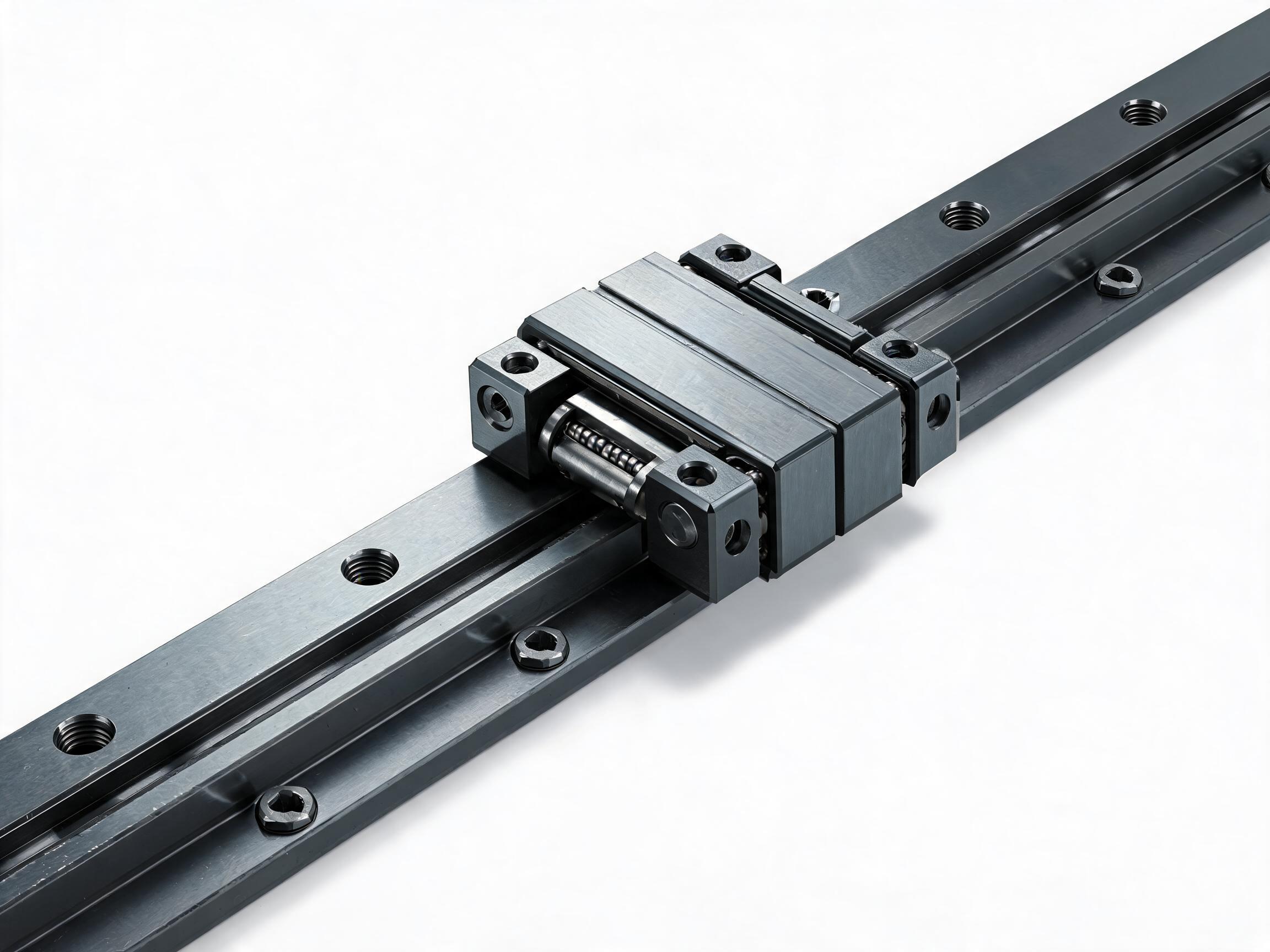
A practical guide for buyers switching or qualifying a new supplier of linear motion components. Learn which supplier signals you can actually check: product range depth, stated QC processes, MOQ and order transparency, and standards-based documentation.
Supplier Vetting Guide
Switching or qualifying a new linear motion system supplier is a decision that affects lead times, machine reliability, and total cost. You can't visit every factory, and you shouldn't rely on a polished catalog alone. What you can do is check specific, observable signals that tell you how deep a supplier's product range is, how they control quality, how transparently they handle orders, and what documentation they can provide.
This guide covers four practical areas of vetting: product range depth, stated QC processes, MOQ and order transparency, and standards-based documentation. For each, it sets out what to ask and what a given answer tells you, using specifications and terms from the product ranges on this site as concrete examples of what a specific answer looks like.
1. Product Range Depth: Look Beyond the Headline Item
A supplier that offers only one or two variants of a guideway or ball screw is a signal to check further rather than a verdict. It may be a trader with no engineering control behind the catalog, or it may be a specialist concentrating on a narrow range of sizes. The size matrix and the documentation answer are what tell you which one you are dealing with.
Ask for the full size matrix of their guideway series. A serious supplier will list all available sizes, not just the most popular ones. For example, an HGR guideway series might cover six sizes: 15, 20, 25, 30, 35, and 45. That breadth lets you select a size that fits your load and space constraints without forcing a compromise. But size alone isn't enough — check the construction details that affect durability and precision.
For the HGR series, the rail body is made of carburized steel with raceway induction hardened to 58–62 HRC, and the rails are available in full-length oil grooves up to 4000 mm. These are signs of a supplier that has thought about wear resistance and lubrication in long-stroke applications. If the supplier can't tell you the hardness or the maximum length they can produce, the range may be shallow.
Range depth also extends to matched components. A guideway without the right carriage is of limited use. When you request a quote for an HGR45 rail, ask for the carriage options. In one well-documented pairing, the HGR45 rail is matched with an HGW45CA carriage rated at 62.8 kN dynamic load and 112 kN static load, with straightness within 0.02 mm/m. That level of detail — load ratings, straightness tolerance, matched part numbers — tells you the supplier has a structured product line rather than a collection of unrelated items.
Similarly, check the carriage design. The HGW wide-body carriages are triple-sealed with end, side, and bottom scrapers, and include a top M6 grease nipple. These features affect contamination resistance and maintenance intervals. If a supplier can explain why those seals are there and how to re-grease the block, they likely manufacture or deeply understand the product. If they only parrot a generic "high quality" line, keep looking.
Don't forget ball screws. A complete linear motion supply should include both ground and rolled ball screws, because different applications have different accuracy and cost requirements. For example, the SFE series ground ball screws are available in C5 grade with axial rigidity of 280 N/um, while the SFU rolled series is C7 grade and measured at 55 dB below at 600 RPM in bench noise testing. If a supplier can quote both grades and also state the test conditions behind the rolled series noise figure, that is a signal they hold test records rather than marketing copy. A number on its own does not prove the test was run, so ask what the figure was measured under before you treat it as evidence.
When you review a potential partner, ask for the full series list, not just the items you need today. A supplier with depth will have a clear answer for each size, grade, and accessory. A supplier without that range tends to steer you to what they have in stock.
2. Stated QC Processes: What Do They Actually Inspect?
Every supplier says they have "strict quality control." The difference is what they inspect, how often, and with what equipment. Ask for their QC process in writing, then look for measurable checkpoints.
For linear motion components, a credible QC process should cover:
- Raw material verification: Do they check the hardness of the steel before machining? For guideways, raceway hardness (58–62 HRC) is critical for load capacity and wear life. A supplier should be able to show you their incoming inspection records or at least describe the test method (e.g., hardness tester on each batch).
- In-process checks: For ground ball screws, the lead accuracy and axial rigidity (e.g., 280 N/um for C5 grade) should be verified during production. Ask how they measure straightness and what tolerance they hold. The 0.02 mm/m straightness for a guideway rail is a specific number—does the QC plan include a straightness check on every rail or a sampling basis?
- Final inspection: Noise testing on rolled ball screws (e.g., 55 dB at 600 RPM) is a good example of a final check that directly relates to end-use performance. If a supplier can quote a noise figure, ask whether it's a routine test or a one-off. A routine test with a documented pass/fail limit is a positive signal.
You don't need to audit their factory to ask these questions. If the answers are vague ("we inspect all products") without any reference to specific measurements, the QC process is likely informal. A supplier who can name the tests and the acceptance criteria is more likely to have a controlled process.
Certificate availability is another point to request. Management-system certificates (for example ISO 9001) are not the same as product test reports, and this site makes no claim that any particular certificate is held. Ask the supplier to send a copy of their current certificate and check the scope: does it cover the products you're buying? If they can't provide one, that alone isn't a deal-breaker, but it means you'll rely more on incoming inspection and sample testing.
3. MOQ and Order Transparency: Can You Place a Trial Order?
MOQ policies tell you how flexible a supplier is and whether they are set up for buyers who need to validate quality before committing to volume. A supplier that only quotes large MOQs and refuses trial orders is either a wholesaler with limited stock or a factory that doesn't want small runs. Neither is necessarily bad, but it may not fit your stage.
Ask for MOQ by product line, not just a single blanket number. For example, the product records on this site state guideways from 30 to 50 pieces depending on size, linear bearings from 100 pieces, and DFU screws from 20 pieces. Those numbers are specific and tiered, which suggests a real production planning system. If a supplier quotes "MOQ: 100 pcs for all items," ask why a 15 mm guideway and a 45 mm guideway have the same minimum—often they don't, and the answer may reveal whether they actually manufacture or just resell.
Order transparency also means clear pricing and lead time breakdown. Ask for a quotation that separates unit price, packing, and any tooling or setup charges. If the quote is just a lump sum, you can't compare options or understand what drives cost. For trial orders, ask whether they will ship mixed items or require a single line item. A supplier that supports mixed trial orders is easier to test.
One practical test: request a sample or small trial order of a standard item, like a 30 mm HGR rail and a matching carriage. If the supplier can ship within the delivery window you set for the trial and provide the test data (hardness, straightness) with the shipment, that is a strong sign of organised operations. If they hesitate or add surcharges that weren't mentioned upfront, note that for future negotiations.
4. Standards-Based Documentation: What Can They Put on Paper?
Documentation is where a supplier's confidence shows. For linear motion components, useful documents include:
- Dimensional drawings for each model, with tolerances. A supplier who can send a PDF drawing of an HGR45 rail or an HGW45CA carriage within a day is likely to have engineering support. If they ask you to download from a third-party site, be cautious.
- Material and treatment certificates: For the steel body and raceway hardening, a certificate of conformity or a test report from their heat treatment supplier adds credibility. You can ask for the hardness test results for a specific batch.
- Performance test reports: For ball screws, a lead accuracy report or noise test report (like the 55 dB at 600 RPM reference) is a concrete document. Ask whether it's from a routine batch or a one-time qualification. Routine reports are better.
- Packaging and preservation specs: Linear motion components are sensitive to rust and contamination. A supplier should provide their standard packaging description (e.g., anti-rust oil, individual box, wooden case). This is part of order transparency.
When you request documents, pay attention to how quickly and completely they respond. A supplier who sends a full set of drawings and test reports for the models you're considering is easier to qualify than one who sends a generic brochure. If a document is missing, ask for it specifically—for example, "Can you provide the hardness test report for the HGR45 rail batch?" The answer tells you whether they have the data or would need to generate it.
Putting It Together: A Vetting Checklist
Use this checklist to structure your evaluation. For each area, record what the supplier provided and whether it meets your requirements.
| Vetting Area | What to Request | Positive Signal |
|---|---|---|
| Product range depth | Full size matrix for guideways, carriages, ball screws | Lists all sizes (e.g., HGR 15–45) with construction details (hardness, seals, load ratings) |
| QC processes | Written inspection plan with test methods and acceptance criteria | Names specific checks (hardness, straightness, noise) and frequencies; provides certificate copies on request |
| MOQ and order transparency | MOQ by product line; sample order policy; itemized quotation | Quotes tiered MOQs (e.g., guideways 30–50, bearings 100, DFU screws 20) and supports mixed trial orders with clear pricing |
| Documentation | Drawings, test reports, packaging specs | Provides current drawings and batch-specific test data promptly |
No supplier will be perfect on every point. The goal is to identify which gaps are acceptable for your application and which are red flags. For example, if you need C5 ground ball screws for a high-precision machine, a supplier who only offers rolled C7 screws is not a fit, regardless of other strengths. Conversely, if you're building a general automation line, a supplier with a solid rolled screw range and good documentation may be sufficient.
Final Note: Verify with Your Own Tests
Supplier claims and documents are inputs to your decision, not guarantees. Before committing to volume, run a small trial: install a sample guideway or ball screw in a test rig, measure straightness or backlash, and check for noise and smoothness. Compare the results with the supplier's stated figures. If they match within the tolerance your drawing sets, you have evidence that their process is under control. If they don't, you've learned something important before production scales.
For more detailed specifications on the components mentioned, see the product pages for the HGR series heavy-duty linear guideway rail, the HGW series wide-body linear guideway carriage block, and the SFE series ground ball screw assembly. These pages list the size ranges, load ratings, and available grades that you can use as a baseline when vetting other suppliers.
Vetting a linear motion system supplier is not about finding the cheapest quote. It's about finding a partner whose product range, quality controls, order terms, and documentation match the way you design and build machines. Use the checklist above, ask for specifics, and test before you commit. That's how you reduce the risk of a bad supplier switch.