
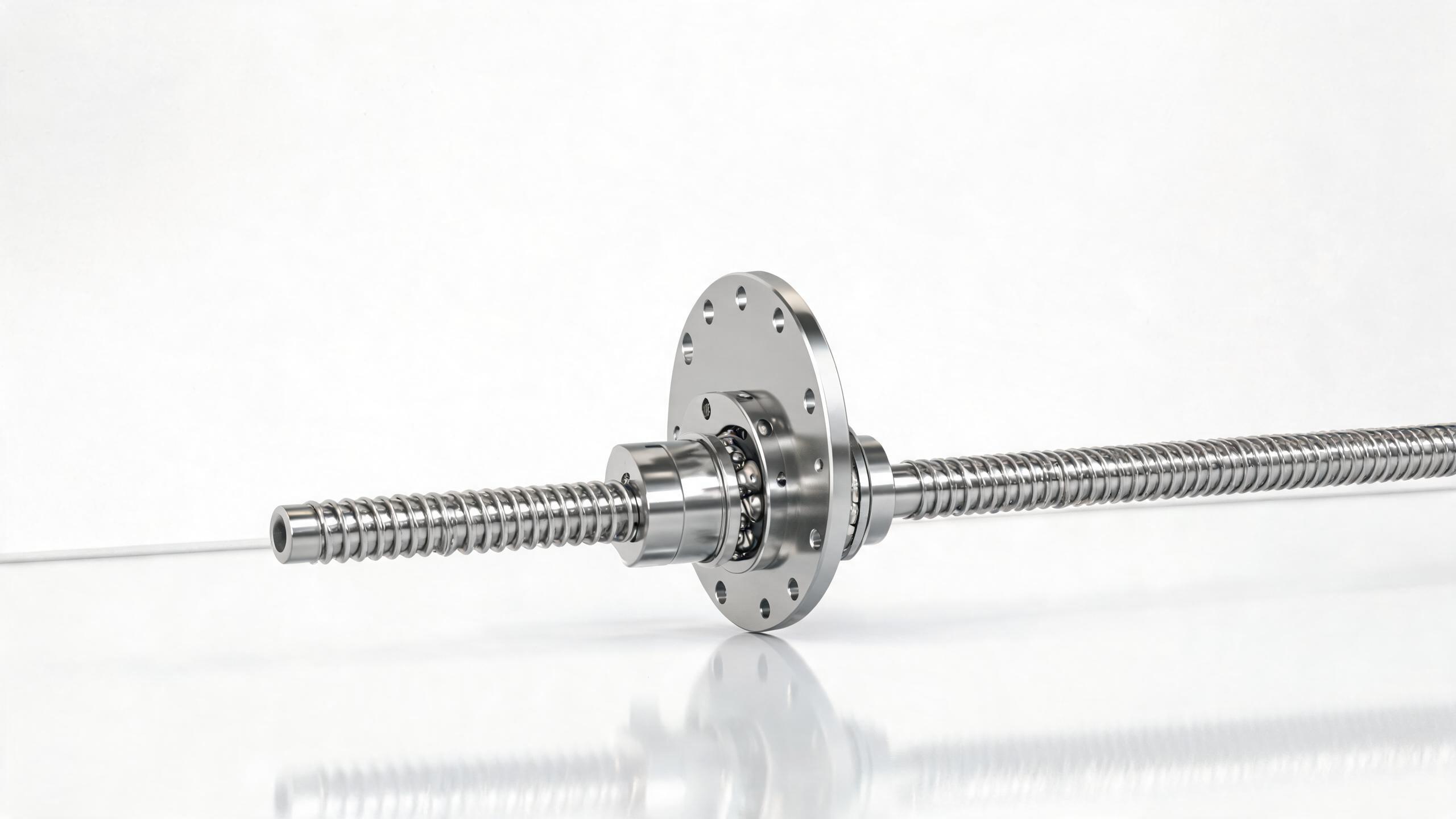
A practical buyer's guide to linear stepper motor actuators, electric cylinder actuators, and linear motor actuators. Covers how each technology works, where each fits in automation equipment, selection criteria, and quality checks for sourcing from overseas suppliers.
BUYER GUIDE — MOTION CONTROL
When you are building automation equipment, every axis of motion is a decision about cost, speed, and repeatability. A pick-and-place head, a valve positioner, a camera focus stage, a lab dispenser — each needs a different balance of force, stroke, and accuracy. Choosing the wrong actuator means rework, missed deadlines, and a machine that does not hold tolerance.
This guide compares three common electric linear motion technologies — the linear stepper motor actuator, the electric cylinder actuator, and the linear motor actuator — and gives you a practical framework for selecting and sourcing them.
- Linear stepper motor actuators suit open-loop positioning with moderate load and cost sensitivity — no encoder required.
- Electric cylinder actuators are the direct replacement for pneumatic cylinders, offering force control and programmability.
- Linear motor actuators deliver the highest speed and precision but cost more and require closed-loop control.
- Match stroke, thrust, repeatability, and duty cycle to your application — not to the supplier's headline specs.
- When sourcing overseas, verify the supplier's test data, lead time, and customization capability in writing.
What Is a Linear Stepper Motor Actuator?
A linear stepper motor actuator converts digital pulse signals directly into linear motion. Inside, a threaded rotor (leadscrew) engages with a nut integrated into the motor body. Each pulse rotates the rotor by a fixed step angle, which moves the shaft a precise linear distance. Because the motion is synchronous with the pulse count, the actuator can run open-loop — no feedback device required — as long as the load stays within the motor's torque curve.
This construction gives three practical advantages for equipment builders:
- Predictable positioning — repeatability is typically ±0.01 mm to ±0.05 mm depending on leadscrew pitch and mechanical tolerances.
- Holding torque at standstill — the motor holds position when powered, which simplifies clamping and dwell operations.
- Simple control — a stepper driver and a PLC or motion controller with pulse output are enough. No servo tuning, no encoder wiring.
The trade-off is that open-loop control can lose steps under overload, shock, or resonance. If your application cannot tolerate a missed step, you need a closed-loop stepper (with encoder feedback) or a servo-based solution.
Electric Cylinder Actuator: The Pneumatic Replacement
An electric cylinder actuator uses a motor (stepper, servo, or brushless DC) to rotate a leadscrew or ballscrew inside a housing. The screw drives a piston rod in and out — mechanically similar to a pneumatic or hydraulic cylinder, but with electric control.
Equipment builders switch from air cylinders to electric cylinders for three reasons:
- Position control — you can program multiple stop positions, not just fully extended and retracted.
- Force control — you can limit torque to avoid crushing fragile parts.
- No air supply — no compressor, no valves, no leaks, no exhaust noise. This matters in cleanrooms and lab automation.
Electric cylinders are available in a wide range of strokes (from 50 mm to over 500 mm) and thrust ratings (from tens of newtons to several kilonewtons). They are the most direct drop-in replacement for pneumatic actuators in existing machine designs.
Linear Motor Actuator: Speed and Precision at a Cost
A linear motor actuator eliminates the rotary-to-linear conversion entirely. The motor's forcer (the moving part) rides directly on a magnetic track. There is no leadscrew, no nut, no backlash, no wear from thread contact.
This architecture delivers:
- Very high speeds — several meters per second are achievable.
- High acceleration — ideal for short-stroke, high-cycle pick-and-place.
- Excellent precision — sub-micron repeatability with a linear encoder.
- Zero backlash — direct drive, no mechanical transmission.
The cost is higher, and the system requires a linear encoder and a servo drive with commutation. For most general automation — where loads are under a few kilograms and cycle times are measured in seconds — a stepper-based actuator is more economical and simpler to integrate.
Comparison Table: Which One for Your Axis?
| Parameter | Linear Stepper Actuator | Electric Cylinder Actuator | Linear Motor Actuator |
|---|---|---|---|
| Typical stroke | 5 – 300 mm | 50 – 600 mm | 100 – 2000 mm |
| Typical thrust | 10 – 500 N | 50 – 5000 N | 10 – 1000 N |
| Repeatability | ±0.01 – ±0.05 mm | ±0.01 – ±0.1 mm | ±0.001 – ±0.01 mm |
| Max speed | 10 – 100 mm/s | 50 – 500 mm/s | 1000 mm/s + |
| Feedback required | No (open-loop) | Optional | Yes (linear encoder) |
| Relative cost | Low | Medium | High |
| Typical use | Focus stages, valves, dispensers | Presses, clamps, material handling | High-speed sorting, precision scanning |
Note: figures are typical ranges; verify against the supplier's spec sheet for your exact model.
How to Select the Right Actuator for Your Application
Work through these five questions before you request a quote. They will define the technical requirements you must send to the supplier.
1. What is the required thrust (force)?
Calculate the maximum force during the worst-case motion — including acceleration and any external load. Add a safety margin of 20–30%. A stepper actuator's thrust drops as speed increases, so check the thrust-speed curve, not just the rated holding force.
2. What is the stroke and installation space?
Measure the total travel distance. Then check the actuator's overall length in the retracted position — many designs are longer than you expect because the motor adds to the body length. For tight spaces, consider a motor-on-side or motor-rear configuration.
3. What repeatability does the process require?
If your process needs ±0.02 mm, a leadscrew-based stepper actuator with a fine pitch is usually sufficient. If you need ±0.005 mm or better, you likely need a ballscrew with backlash compensation or a linear motor with a high-resolution encoder.
4. What is the duty cycle?
Continuous operation generates heat in the motor. A stepper actuator running at high duty cycle may require derating or an external cooling solution. Check the supplier's duty cycle rating and thermal data.
5. What is the control interface?
Stepper actuators accept pulse/direction signals from most PLCs and motion controllers. Some suppliers offer integrated drivers with RS-485, CANopen, or EtherCAT. Choose the interface that matches your existing control architecture to avoid adding converters.
Quality Checks When Sourcing from Overseas Suppliers
When you evaluate a supplier — especially for the first time — ask for specific documents and data. A reliable supplier will provide them without hesitation.
- Dimension drawings (2D/3D) — verify mounting dimensions, shaft end, and tolerance class.
- Thrust-speed curve — confirm the actuator delivers the force you need at your operating speed.
- Repeatability test report — ask how they measure repeatability and under what conditions.
- Material and finish specs — housing material (aluminum alloy, stainless steel), shaft hardness, and surface treatment for your environment.
- IP rating — if the machine runs in a dusty or washdown environment, confirm the ingress protection level.
- Customization capability — can they modify stroke, add a special connector, or change the shaft end? Ask for the engineering change process and minimum order quantity for custom versions.
Send the supplier a clear specification table (stroke, thrust, speed, repeatability, voltage, control interface, duty cycle) and ask them to confirm each line item in writing. Vague answers like "we can make it work" are a red flag. A professional supplier will respond with a model recommendation and a datasheet.
Common Mistakes Equipment Builders Make
Oversizing the actuator
Buying a bigger actuator than needed increases cost, weight, and inertia. Oversizing also slows down the axis because a larger rotor has more inertia to accelerate. Match the thrust and speed to the actual load profile.
Ignoring the thrust-speed curve
A stepper motor's torque drops sharply as speed increases. The rated holding torque is measured at standstill. At 50 mm/s, the available thrust may be only 40% of the holding value. Always check the curve.
Forgetting the duty cycle
Running a small actuator continuously at high load can overheat the motor and shorten its life. If your cycle runs 24/7, consider a larger frame size or a motor with better thermal performance.
Skipping the mechanical interface check
The actuator's mounting holes, shaft diameter, and connector orientation must match your machine frame. A small mismatch causes delays at assembly time. Review the dimensional drawing before you place the order.
FAQ
Can a linear stepper motor actuator hold position when powered off?
No. A stepper motor holds position only while the windings are energized. When power is removed, the shaft is free to move (unless the leadscrew has a self-locking pitch and the load is within the holding friction). For fail-safe holding, add a brake or use a self-locking leadscrew with a low pitch.
What is the difference between a leadscrew and a ballscrew actuator?
A leadscrew uses a sliding nut — lower cost, quieter, and self-locking in many pitches, but with more friction and wear. A ballscrew uses recirculating balls — higher efficiency, less wear, and capable of higher speeds, but more expensive and not self-locking. For high-cycle applications, a ballscrew is usually the better investment.
How do I know if I need a closed-loop stepper?
If your process cannot tolerate a lost step — for example, a dispensing head that must not skip a drop — choose a closed-loop stepper with an encoder. The encoder detects position error and the driver corrects it. The cost increase is modest compared to a full servo system.
What is the typical lead time for custom actuators?
Lead time varies by supplier and customization depth. Standard models are often stocked or built in 2–4 weeks. Custom strokes, shafts, or connectors typically add 2–4 weeks for engineering and tooling. Confirm the lead time in writing and ask about sample availability before committing to a production order.
Final Thoughts
Choosing between a linear stepper motor actuator, an electric cylinder actuator, and a linear motor actuator comes down to your application's speed, force, precision, and budget. For most general automation tasks, the stepper-based actuator offers the best balance of cost, simplicity, and adequate precision. Electric cylinders are the natural upgrade path from pneumatics. Linear motors are reserved for high-speed, high-precision axes where the budget allows.
When you source from overseas, send a complete specification, request test data and drawings, and confirm customization terms before you order. A supplier that responds with specific numbers and clear documentation is more likely to deliver a reliable product than one that promises "high quality" without evidence.
If you are evaluating a specific application and need help selecting the right actuator, send us your load, stroke, speed, and precision requirements — we will recommend a model and provide the datasheet for your review.