
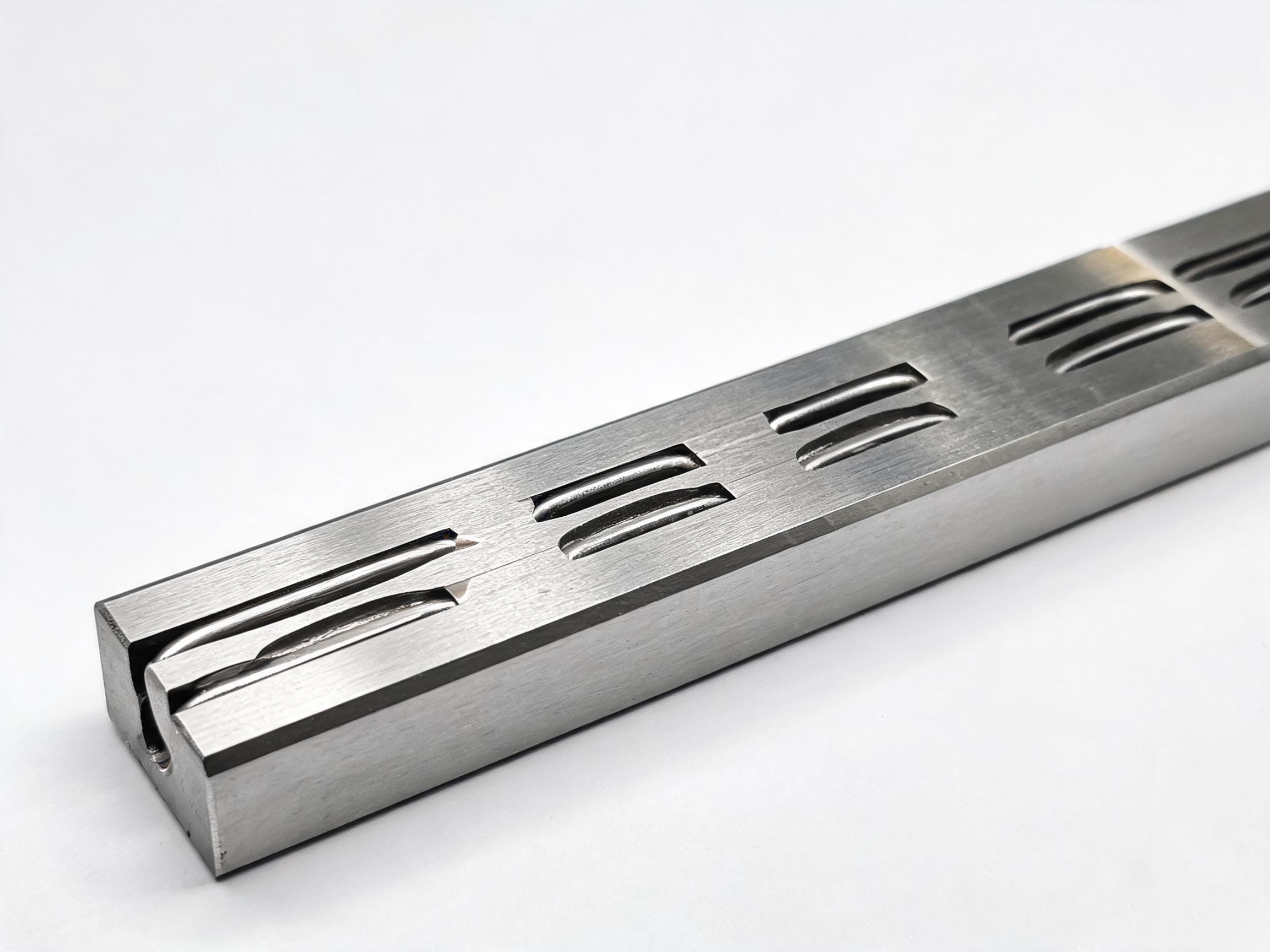
A practical matching and RFQ checklist for sourcing a replacement linear guide rail and carriage block for an existing machine. Learn which dimensions decide interchangeability, what to read off the old part, and how to write an enquiry that gets the right part the first time.
Sourcing Guide
You need a replacement linear guide rail and carriage block for a machine that is already in service. The original manufacturer may have changed its supply, the machine builder may no longer stock the profile, or you simply need a spare set for planned maintenance. The challenge is not finding a linear guideway supplier; it is matching the new part to the old one so the carriage runs on the existing rail mounting and the machine geometry does not shift.
This article gives you a direct matching and RFQ checklist for HGR series profile linear guideway rail. It covers what to read off the old machine, which dimensions decide interchangeability, and what to state on the enquiry so the supplier can confirm the correct rail and carriage block before quoting.
Key takeaways
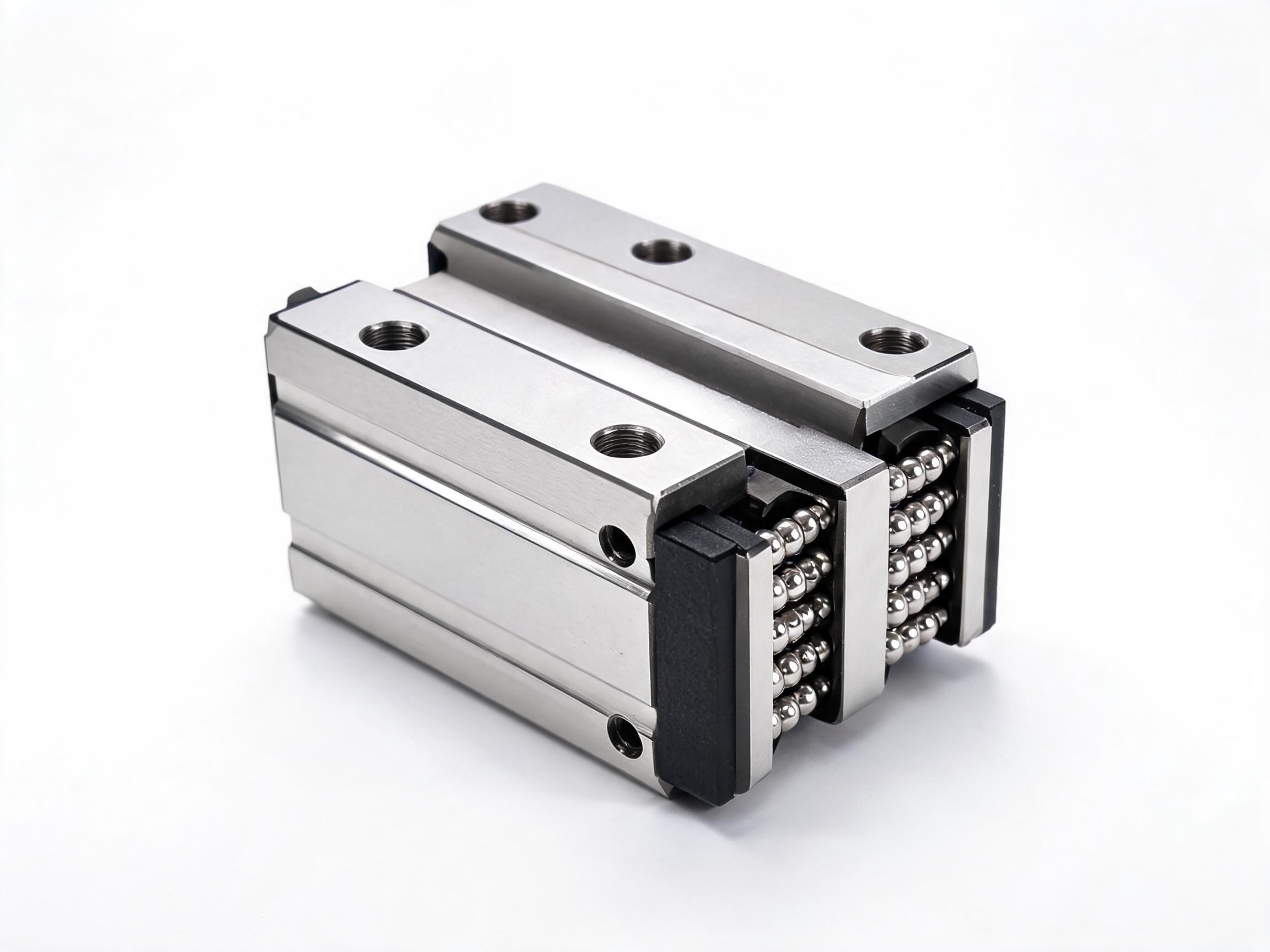
- Interchangeability is decided by rail width, height, bolt hole pitch and raceway tolerances, not by the size name alone.
- The HGR rail cross-section and bolt hole pitch match the standard Taiwanese HGR profile, so carriage blocks using the same profile mount directly, but fit must be confirmed against the actual rail dimensions.
- Read the original part marking for the carriage size number and height code (CA standard height or HA high height) before ordering.
- Standard MOQ is 50 pieces per size or SKU, and dimensional drawings are available on request.
What this guide covers
Where to buy replacement linear guide rails
Buying a replacement linear guide rail starts with a dimensional match, not a brand match. If the machine uses a standard HGR profile, you can source a replacement rail and carriage block from a manufacturer that produces that profile and confirm the critical dimensions against your original part. HGR series heavy-duty linear guideway rail is available in sizes HGR 15, 20, 25, 30, 35 and 45, in two precision grades: ground H (equivalent to P5) and rolled (equivalent to P7). The rail body is 55# high-carbon steel with raceway surface hardness of 58-62 HRC by induction hardening.
For buyers who need a direct replacement, the practical route is to request a dimensional drawing and compare it with the old rail. You can see the rail specification on the HGR series heavy-duty linear guideway rail page and the matching carriage on the HGH series flange-type carriage block page. Both are standard catalogue items, so you are not asking for a custom profile; you are confirming that the standard profile matches your machine.
What you cannot do is assume that the size number alone is enough. A 20-size rail from one source may share the HGR profile while differing in raceway tolerance or preload grade, and those differences affect how the carriage fits and runs. The next two sections explain what to read and what to confirm.
What to read off the old machine
Before you contact any supplier, gather the following from the existing rail and carriage. Most of this information is marked on the parts or can be measured with calipers.
- Rail size number. HGR 15, 20, 25, 30, 35 or 45. This is often marked on the rail or in the machine manual.
- Carriage size number and height code. HGH 15, 20, 25, 30, 35 or 45, followed by the height code: CA for standard height or HA for high height. This is the single most common source of ordering errors.
- Preload grade. C0 clearance, C1 light or C2 medium. The original carriage may have a marking or you may need to check the machine builder's specification.
- Rail length and mounting hole pattern. Measure the overall rail length and the distance between bolt hole centres. For long axes, note whether the original was a single piece or joined sections.
- Mounting hole size and counterbore. The bolt hole diameter and counterbore depth must accept the existing fasteners without modification.
- Number of carriages per rail. Some machines use two or more carriages on one rail. State the quantity per machine.
If the original part marking is worn or unreadable, measure the rail width, rail height and carriage height with calipers and include those measurements in your enquiry. The supplier can then cross-reference them against the standard HGR profile drawing.
The dimensions that decide interchangeability
Four dimensions decide whether a replacement rail and carriage will fit and run correctly on your machine. The table below lists them and explains why each one matters.
| Dimension | Why it decides fit | How to confirm |
|---|---|---|
| Rail width | Determines whether the carriage block can straddle the rail and whether the mounting bolt pattern aligns with the machine bed. | Measure the rail width with calipers and compare with the HGR profile drawing. |
| Rail height | Sets the vertical position of the carriage mounting face. A height difference changes the machine geometry and can cause binding or misalignment. | Measure from the rail bottom to the top raceway surface and confirm against the drawing. |
| Bolt hole pitch | The distance between mounting holes must match the existing tapped holes in the machine bed. This is the linear rail bolt hole pitch, and it is not adjustable on a standard rail. | Measure centre-to-centre distance between adjacent holes and compare with the standard profile. |
| Raceway tolerances and preload grade | Affects running clearance, stiffness and positioning repeatability. A different preload grade changes how the carriage feels and performs. | Check the carriage marking or machine specification for C0, C1 or C2. Confirm the rail precision grade (H or rolled). |
The HGR rail cross-section dimensions and bolt hole pitch match the standard Taiwanese HGR profile. This means carriage blocks that use the same profile mount directly, but fit must be confirmed against rail width, height and raceway tolerances. In practice, if your old rail is a standard HGR profile and the measurements match, a replacement from the same profile family will fit. If the old rail is a non-standard or proprietary profile, you may need to replace both the rail and the carriage as a set, or confirm whether the supplier can produce a matching profile.
Standard rail lengths and joined sections
HGR rail is available in standard lengths up to 4000 mm. Longer axes are supplied as joined sections with precision splice joints held to the same grade as the individual rail. If your machine has a travel length beyond 4000 mm, state the total length required and the number of joined sections you can accept. The splice joint is a controlled feature, not a simple butt joint, so include this requirement in your enquiry if applicable.
Rail and carriage matching: HGR rail with HGH carriage blocks
The HGH series flange-type carriage block is designed to run on HGR series rail of the same size number. For example, an HGH20 carriage block runs on an HGR20 rail. The carriage has four-row ball recirculation, which carries radial, radial-reverse and both lateral directions at once. It has a self-aligning angular tolerance of +/-0.5 degrees, and is available in preload grades C0 clearance, C1 light and C2 medium.
For a 20-size assembly, the HGR20 rail has a dynamic load rating of 16.7 kN and a static load rating of 26.7 kN. The HGH20CA carriage block has a dynamic load rating of 18.0 kN and a static load rating of 29.5 kN. These ratings are for the standard configuration and are useful for checking that the replacement meets the original duty.
Two features matter when matching a replacement carriage to an existing machine. First, the flange body has top-face mounting holes, so the carriage mounting pattern must match the machine's moving platen or table. Second, the carriage height code (CA or HA) changes the overall height of the carriage. If you order the wrong height code, the machine table will sit at the wrong height and may not align with other axes. Always confirm the height code from the original part marking before ordering.
The carriage has an end seal plus side seal strip, providing IP40 equivalent protection. The top port accepts standard M6 grease nipple fittings. Lithium-based grease NLGI Grade 2 is suitable, with a starting re-greasing reference of every 100 km of travel or every 3 months, whichever comes first. If your machine runs in a dirty or high-cycle environment, include your actual re-greasing interval in the enquiry so the supplier can confirm the seal configuration is appropriate.
RFQ checklist for a replacement guideway rail and carriage
Use this checklist to write an enquiry that the supplier can answer without a round of clarifying questions. The goal is to get a confirmed part number and a drawing check, not a catalogue page.
- Machine make and model. If known, this helps the supplier identify the original profile family.
- Original rail size and marking. HGR size number, and whether the rail is single-piece or joined sections.
- Original carriage marking. HGH size number plus height code (CA or HA) and preload grade (C0, C1 or C2). If the marking is unreadable, state that and provide measured dimensions.
- Measured rail dimensions. Rail width, rail height, bolt hole pitch and mounting hole diameter. Include a photo of the old rail with a caliper or ruler in frame if possible.
- Rail length required. Overall length and, for long axes, the maximum single-piece length you can install or the number of joined sections you can accept.
- Quantity. Number of rails and number of carriages per machine, and whether you are ordering for one machine or for spares stock. Standard MOQ is 50 pieces per size or SKU.
- Operating environment. Dust, coolant, chips, high cycle rate or unusual temperature. This helps confirm seal and lubrication suitability.
- Request a dimensional drawing. Ask for the rail and carriage drawing so you can overlay it with your original measurements before committing to the order.
If you can provide the original part marking, a photo and the measured dimensions, the supplier can usually confirm the correct replacement without a sample. If the original rail is a non-standard profile, the supplier may need to review the drawing and advise whether a standard HGR rail can be adapted or whether a custom profile is required.
FAQ
Can I replace only the carriage block and keep the existing rail?
Yes, if the existing rail is a standard HGR profile and the rail raceway is still within tolerance. Confirm the carriage size number and height code from the original part marking, and check the rail for wear or damage. If the rail raceway is worn, replacing both the rail and carriage together is the more reliable option.
What if the original rail has no marking?
Measure the rail width, rail height, bolt hole pitch and carriage height with calipers. Provide these measurements and a photo in your enquiry. The supplier can compare them against the standard HGR profile drawing and advise the closest match.
Does the HGH carriage block fit any HGR rail of the same size?
HGH carriage blocks are designed for HGR rail of the same size number and standard profile. Fit must be confirmed against rail width, height and raceway tolerances. If your rail is a standard HGR profile, the carriage will mount directly. If your rail is a different profile, confirm compatibility before ordering.
What is the linear rail bolt hole pitch and why does it matter?
The bolt hole pitch is the centre-to-centre distance between mounting holes along the rail. It must match the existing tapped holes in the machine bed. It is a fixed dimension on a standard rail, so it is one of the first dimensions to check when matching a replacement.
Can I order a rail longer than 4000 mm?
Standard rail length is up to 4000 mm. Longer axes are supplied as joined sections with precision splice joints held to the same grade as the individual rail. State the total length required and the number of joined sections you can accept when requesting a quote.
What lubrication should I use for the replacement carriage?
Lithium-based grease NLGI Grade 2 is suitable. A starting re-greasing reference is every 100 km of travel or every 3 months, whichever comes first. The carriage top port accepts standard M6 grease nipple fittings.
For a confirmed match, send the original part marking, measured dimensions and a request for the dimensional drawing. The rail and carriage pages linked above list the standard sizes, precision grades and load ratings; the drawing check is what confirms the replacement will fit your machine.