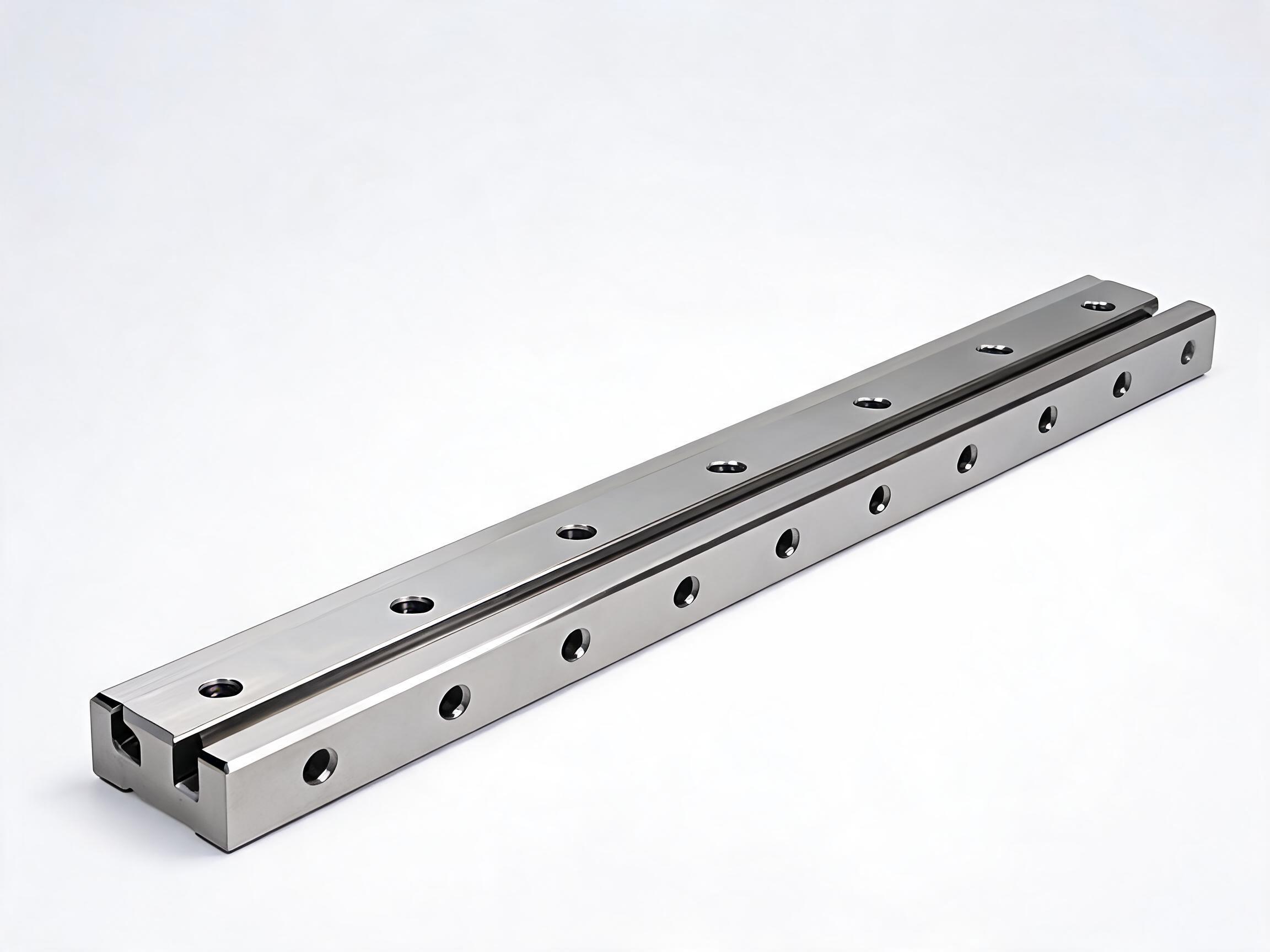
A size-selection guide to the MGN linear rail family: what actually changes between MGN 9, 12 and 15, how to pick C or H carriage, stainless versus chrome steel, and a load-and-environment decision process for 3D printers, desktop CNC, medical and compact automation builds.
Picking an MGN linear rail starts with one question: how much rail does your machine actually need, in width, in load and in stiffness? MGN 9, 12 and 15 share the same miniature profile design, but the envelope, the carriage choice and the material option change with size. This guide walks the series-level decision rather than any single model.
- All MGN sizes use a two-row Gothic-arch ball circuit with equal load capacity in four directions.
- Choose the size by envelope and stiffness first, then confirm load from the datasheet for that specific size.
- Standard material is 9Cr18Mo martensitic stainless at HRC 54–58; GCr15 chrome steel is an indoor, cost-sensitive option.
- Distinguish standard MGN-C from long MGN-H carriages before you fix your mounting pattern.
In this article
- What changes between MGN 9, 12 and 15
- Choosing the carriage: MGN-C versus MGN-H
- Stainless versus chrome steel
- A decision process by load and environment
- Specifying your order
What changes between MGN 9, 12 and 15
The three sizes share a design language: a miniature profile rail, a two-row Gothic-arch ball circuit, and equal load capacity in the four directions (radial, reverse-radial and both lateral). The difference is the scale of the envelope and therefore how much stiffness and load the block can give you.
In practice, the size decision is often driven by the machine, not by the catalog. A printer gantry with a light aluminum carriage and a small print head rarely needs the body width of a 15. A desktop CNC with a cutting tool reaction force on a short axis usually needs more. Confirm with the datasheet for exact per-size ratings, because those numbers scale with the size and should drive the final check.
| Aspect | MGN 9 | MGN 12 | MGN 15 |
|---|---|---|---|
| Block width (trend) | Smallest | Middle | Largest |
| Typical build fit | Light, compact heads | General-purpose printers, desktop CNC | Heavier carriages, longer cantilever |
| Load ratings | Confirm with the datasheet for exact per-size ratings | ||
| Rail length | Up to 1000 mm per rail, splicing available | ||
Rail width is the first check. A wider block needs more room on the carriage plate and shifts the tool centre; measure your current plate before changing size.
Choosing the carriage: MGN-C versus MGN-H
Each size is offered with two carriage lengths: MGN-C (standard) and MGN-H (long). The long carriage adds length to the block, which spreads the ball loads over more of the raceway. That extra length is what you feel as stiffness when the tool overhangs the rail.
For a compact build, the C carriage is usually the better fit: shorter, lighter, and easier to accommodate in a tight gantry plate. For a cantilevered tool or a build where you feel the carriage rock under load, look at the H carriage, accepting that it takes more room along the rail and that your mounting-hole pattern will not match the C.
As a reference point for the middle size, the MGN12C lists 3.7 kN dynamic and 5.4 kN static capacity with a 0.025 kg carriage weight and a friction coefficient of 0.002–0.004. Those figures belong to the MGN12C specifically; do not carry them across to 9 or 15.
Stainless versus chrome steel
The standard material across the MGN series is 9Cr18Mo martensitic stainless steel, hardened to HRC 54–58. The optional material is GCr15 chrome steel at HRC 58–62. The two are not interchangeable defaults; each suits a different build condition.
- 9Cr18Mo stainless (standard): the general-purpose choice. Appropriate when the machine may see moisture, wash-down, condensation or a workshop environment where corrosion resistance matters.
- GCr15 chrome steel: the indoor, cost-sensitive option. Suited to clean, dry, temperature-controlled assemblies where the environment will not attack the rail.
The MGN series stainless steel miniature linear guide page covers the standard material across sizes. If you are building for a medical or diagnostic enclosure that gets wiped down, that is a different environmental ask than a lab printer that stays dry.
A decision process by load and environment
Step 1: Start with the carriage envelope
Measure the space your block has on the carriage plate and the clearance under the tool. If the smallest block that gives you the required stiffness fits your plate, that is your size. A larger block that needs a redesigned plate is a new mechanical job, not a drop-in.
Step 2: Check the load rating for that size
Read the dynamic and static ratings for the exact size from the datasheet. The four-direction load diagram tells you which direction your loads actually press on the block; a printer gantry and a CNC Z axis load the block differently. Confirm with the datasheet for exact per-size ratings before you finalize.
Step 3: Match the material to the environment
Dry, clean, temperature-controlled indoor build: GCr15 chrome steel is the cost-conscious option. Any exposure to moisture, condensation or cleaning fluids: stay with the 9Cr18Mo stainless standard. If you are unsure, describe the environment in your enquiry and let the specification be matched.
Step 4: Choose the carriage length and preload
Pick MGN-C or MGN-H from the overhang and stiffness. Preload options are light or medium; medium is typically recommended for CNC use, while light suits low-friction printer carriages. Running parallelism is about 0.02 mm per 300 mm at standard grade and 0.01 mm per 300 mm or better at P grade.
Step 5: Set the rail length and seals
Rails are available up to 1000 mm, with splicing available for longer travel. End seals are standard; side scraper seals are optional and worth specifying where fine dust or chips are present.
Specifying your order
Once size, carriage, material, preload, accuracy grade and length are set, the order is straightforward. MOQ is 50 pieces per size; sample sets of 5–10 pieces can be arranged for a first build. Rails ship pre-greased from the factory, and typical indoor use suggests re-greasing every 3–6 months or about 100 km of travel.
A useful habit: write your requirement in the order line rather than in a separate email. Size + carriage + material + preload + grade + length + seal option is enough for the supplier to quote a comparable part, and enough for you to compare quotes side by side.
FAQ
Can I run a 9 mm rail where a 12 was designed?
The rail width changes the mounting-hole pattern and the carriage footprint, so a plan to swap sizes usually means a new carriage plate. Confirm the plate dimensions before committing.
Which carriage should I pick for a desktop CNC?
Start with medium preload, and choose between C and H by overhang. A cantilevered spindle is more likely to benefit from the long carriage; a compact one may not need it.
Do I need stainless for an indoor printer?
Not necessarily. A dry, clean, temperature-controlled assembly can suit GCr15 chrome steel. Choose the 9Cr18Mo stainless standard where moisture, condensation or cleaning fluids are present.
What rail length can I order?
Rails are available up to 1000 mm. Longer travel can be handled with splicing; state your total travel length and the splice requirement in the enquiry.