
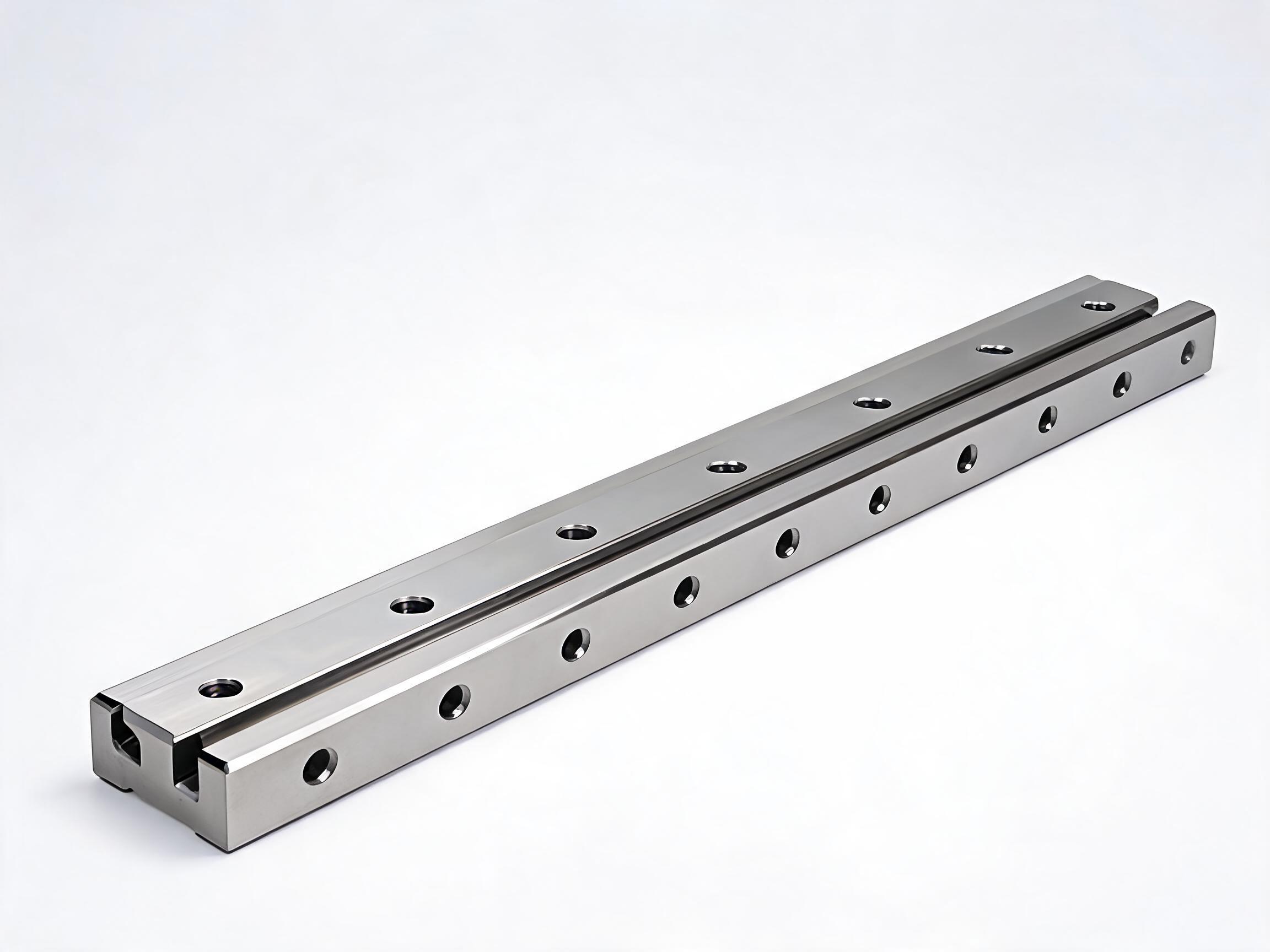
MGN12C and MGN12H share the same 12 mm rail but differ in carriage length, ball circuits, and load behavior. This comparison explains how to decide between the standard C block and the longer H block for CNC, automation, and precision positioning.
Miniature Linear Guide Selection
The MGN12C and MGN12H run on the same 12 mm rail, share the same mounting hole pattern, and use the same two-row Gothic-arch contact geometry. The difference is the carriage body: the C block is the standard length, the H block is longer. That single dimension changes load capacity, mounting footprint, and how the block behaves under a given load. This article walks through the decision using the verified MGN12 datasheet figures, not generic marketing claims.
Key takeaways
- MGN12C: 3.7 kN dynamic, 5.4 kN static, friction coefficient 0.002–0.004, carriage weight 0.025 kg.
- MGN12H is the longer carriage type. The site states H = long carriage, higher load, without publishing a separate MGN12H rating — confirm the exact figure with the manufacturer.
- Both blocks accept equal load in four directions thanks to the two-row Gothic-arch design.
- Choose C when travel envelope and weight matter; choose H when the same rail must carry more or resist higher moment loads.
On this page
The shared MGN12 platform
MGN12 is a 12 mm-wide miniature linear rail. The rail and carriage are available in 9Cr18Mo martensitic stainless steel as standard, with GCr15 chrome steel as an option for indoor use. Stainless rail hardness is HRC 54–58; the chrome steel option is HRC 58–62.
Both the C and H carriages use a two-row Gothic-arch raceway. This geometry gives equal load capacity in all four directions — radial, reverse radial, and both lateral directions — which is why a single MGN12 axis can handle vertical, horizontal, and inverted mounting without re-rating.
Maximum rail length is 1000 mm. End seals are standard on the carriage, and side scrapers are optional for environments with fine dust or chips.
The rail and block are available as a matched set. For the full rail specification, see MGN12 linear rail; the broader stainless miniature range is described under MGN series stainless steel miniature linear guide.
MGN12C vs MGN12H at a glance
| Attribute | MGN12C | MGN12H |
|---|---|---|
| Carriage type | Standard length | Long carriage |
| Dynamic load rating | 3.7 kN | Higher than C; confirm exact figure with manufacturer |
| Static load rating | 5.4 kN | Higher than C; confirm exact figure with manufacturer |
| Carriage weight | 0.025 kg | Heavier due to longer body |
| Friction coefficient | 0.002–0.004 | Same rolling-contact principle |
| Raceway geometry | Two-row Gothic arch | Two-row Gothic arch |
| Load directions | Equal in four directions | Equal in four directions |
| Rail width | 12 mm | 12 mm |
| Max rail length | 1000 mm | 1000 mm |
The load figures above are taken from the MGN12C datasheet. The MGN12H shares the same rail and ball size, but the longer body carries more ball circuits, which is why the site lists it as the higher-load option. No separate MGN12H dynamic or static number is published in the material reviewed for this article, so treat any specific H rating as a figure to be confirmed with the manufacturer before finalizing a design margin.
When the C carriage is the right choice
The C block is the default for most MGN12 applications. Its shorter body reduces the moving mass and shortens the required travel envelope, which matters when the carriage must fit inside a compact housing or when the axis reverses frequently.
Typical reasons to stay with the C carriage:
- Compact machines and desktop equipment. The 0.025 kg carriage keeps moving mass low, which suits small stepper-driven axes.
- Short strokes with limited space. A shorter block leaves more usable travel for a given rail length.
- Moderate loads. At 3.7 kN dynamic and 5.4 kN static, the C block covers a wide range of pick-and-place, dispensing, and light CNC tasks.
- Multi-carriage setups. Two C blocks on one rail can sometimes be used where one H block would be too long.
When the H carriage earns its length
The H block is chosen when the same 12 mm rail has to carry more load or resist higher moment loads without moving to a larger rail size. The longer body spreads the load over more ball circuits and increases the effective contact area.
Consider the H carriage when:
- Load or moment is the limiting factor. If the C rating leaves little design margin, the H block is the next step before upsizing the rail.
- Single-carriage axes. A single long block resists pitching and yaw better than a single short block, which can remove the need for a second carriage.
- Overhung or cantilevered loads. The longer contact length improves resistance to tilting under offset loads.
- Stiffness matters more than weight or envelope. The longer block adds stiffness, at the cost of carriage length and mass.
Because the site does not publish a separate MGN12H rating, the correct engineering step is to request the H-block load and moment figures from the manufacturer and compare them against the actual load case, not to assume a fixed multiplier over the C rating.
Mounting length and envelope
The rail is the same; only the block changes. The practical consequences are:
- Mounting hole pattern on the rail: unchanged. Both carriages run on the same MGN12 rail.
- Carriage length: the H block is longer, so the mounting face on the moving part must be longer.
- Travel envelope: a longer block reduces the usable stroke for a fixed rail length, or requires a longer rail.
- Moving mass: the H block is heavier, which affects acceleration and motor sizing on fast axes.
- End-of-travel clearance: check that the longer block does not collide with end stops, cable carriers, or machine covers.
If the design is tight on rail length, the C block usually wins. If the design is tight on load capacity, the H block is the lower-risk choice before moving to a larger rail series.
Rail, preload, and accuracy options
Preload is available in light or medium. Medium preload is typical for CNC and machining axes where backlash must be minimized; light preload suits smoother, lower-drag motion. The friction coefficient of 0.002–0.004 applies to the rolling contact, so preload selection changes stiffness and drag more than it changes the basic load rating.
Accuracy is available in standard grade, around 0.02 mm per 300 mm, and P grade, around 0.01 mm per 300 mm. The choice depends on the positioning tolerance of the axis, not on the carriage length. C and H blocks can be paired with either grade.
Seals, lubrication, and service interval
End seals are standard on the carriage. Side scrapers are optional and are worth specifying where fine chips, dust, or coolant mist are present. The scraper adds a small amount of drag but protects the raceway from contamination.
The MGN12 datasheet notes re-greasing every 3–6 months or approximately every 100 km of travel for indoor use. High-duty cycles, contaminated environments, or high-speed operation may require shorter intervals. Grease type should follow the manufacturer recommendation for the operating temperature and load.
FAQ
Can I use an MGN12C and an MGN12H on the same rail?
Yes. Both carriages are designed for the same MGN12 rail profile and share the same rail mounting pattern. Mixing them on one rail is possible when the application needs different load or stiffness at different points, provided the mounting faces and travel envelope allow the longer H block.
Is the MGN12H always the better choice?
No. The H block is longer and heavier, which costs travel envelope, moving mass, and sometimes rail length. If the C rating already provides adequate margin, the C block is usually the more efficient choice.
What is the MGN12H dynamic load rating?
The material reviewed for this article states that H is the long carriage with higher load but does not publish a separate MGN12H dynamic or static figure. Confirm the exact rating with the manufacturer before using it in a design calculation.
Which preload should I choose for CNC?
Medium preload is typical for CNC and machining axes. Light preload suits lower-drag, smoother motion applications. The correct choice depends on the required stiffness and acceptable drag for the axis.
Does the carriage type affect accuracy grade?
No. Standard grade is around 0.02 mm per 300 mm and P grade is around 0.01 mm per 300 mm, and both are available regardless of whether the C or H carriage is selected.
Next step
To select between MGN12C and MGN12H, prepare the load per carriage, the moment load if the load is offset, the required travel, the available mounting length, and the positioning tolerance. With those values, the manufacturer can confirm whether the C rating of 3.7 kN dynamic and 5.4 kN static is sufficient or whether the H block is required, and provide the exact MGN12H rating for the load case.