
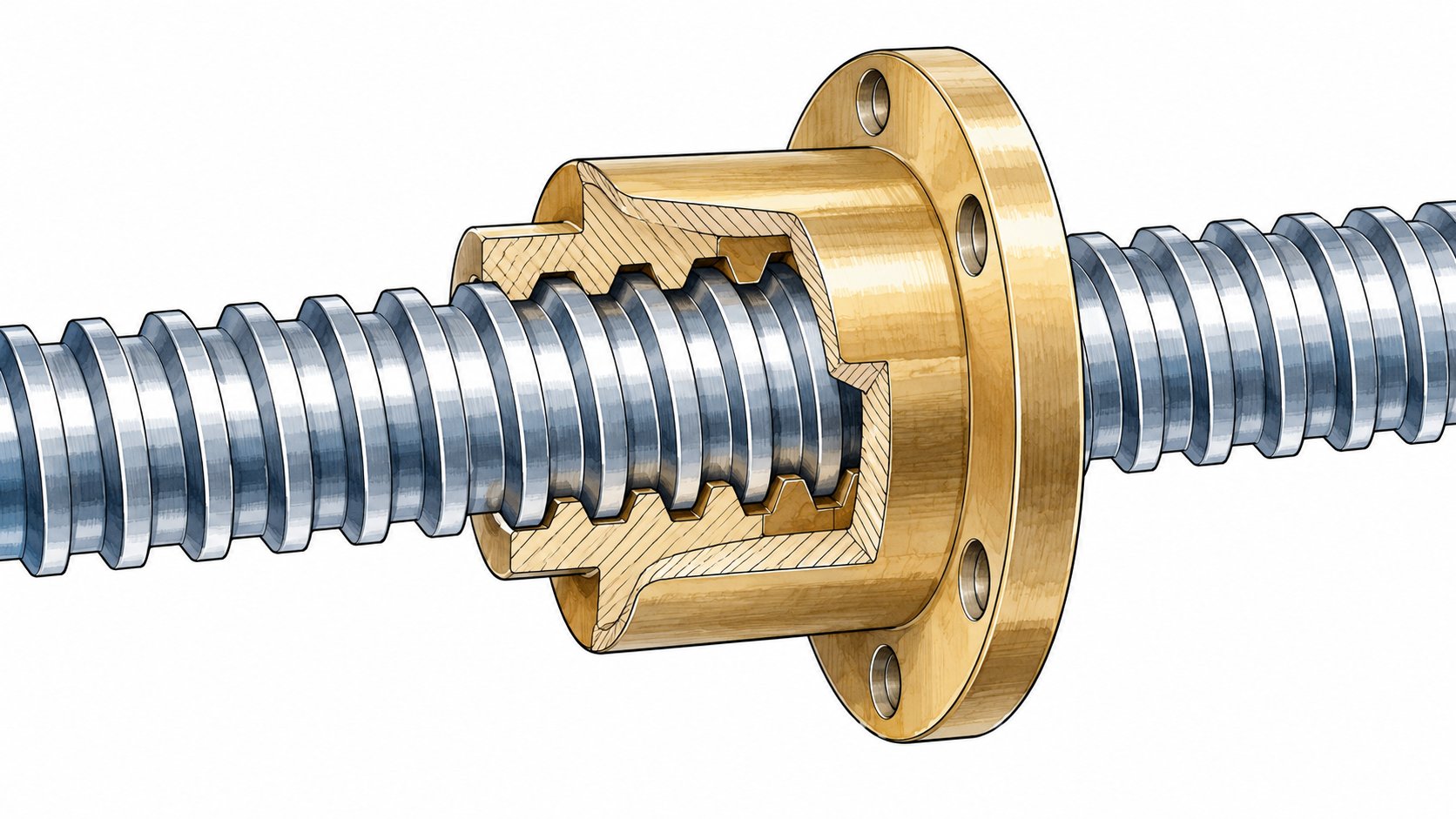
The lead screw converts spindle rotation into synchronized carriage movement for thread cutting. This guide explains its function, how it differs from the feed rod, and qualitative checks for wear.
Machine Tool Components
The lead screw is the reason a lathe can cut a consistent thread. It turns spindle rotation into precisely synchronized carriage travel along the bed. When it wears, threads start to drift, backlash grows, and chasing a metric pitch may call for a different setup entirely. This article explains the lead screw's function and how to assess its condition without guessing at numbers.
In this article
What the lead screw does
The lead screw is a long, precision-threaded shaft running the length of the lathe bed. It connects the headstock to the carriage through the apron. When engaged, it rotates in a fixed relationship to the spindle and drives the carriage longitudinally at a rate determined by the thread pitch of the lead screw and the gear ratio selected on the quick-change gearbox.
That fixed relationship is the whole point. For thread cutting, the tool must advance exactly one thread pitch for every spindle revolution. The lead screw and its gear train provide that synchronization mechanically. If the ratio is set correctly, the carriage moves in step with the spindle, and the cutting tool traces the intended thread. If anything in that chain slips or wears, the pitch drifts.
The lead screw also serves as a manual traverse aid on some lathes. A handwheel on the apron can move the carriage along the lead screw for positioning, though this is a secondary use. The primary job is thread cutting.
Lead screw vs. feed rod
Many engine lathes have two separate shafts: a lead screw and a feed rod. They look similar but do different work.
| Feature | Lead screw | Feed rod |
|---|---|---|
| Primary purpose | Thread cutting | Routine turning and facing feeds |
| Motion transfer | Threaded nut engagement in the apron | Keyed or splined shaft driving feed gears |
| Engagement method | Half-nut lever closes around the screw | Feed selector engages drive gears |
| Accuracy demand | High — directly affects thread pitch | Moderate — affects surface finish and feed rate |
| Typical wear point | Thread flanks and half-nut faces | Keyways, splines, and drive gears |
Using the lead screw for everyday turning feeds accelerates wear on the thread flanks and half-nut. On lathes that provide a separate feed rod, the lead screw should be reserved for threading. On lighter machines where only a lead screw exists, that distinction cannot be made, and the screw wears faster as a result.
Wear symptoms and what they mean
Lead screw wear rarely announces itself with a sudden failure. It shows up as a gradual loss of thread quality or increasing lost motion in the carriage.
- Growing backlash. When you reverse carriage direction, the handwheel turns a little before the carriage moves. Some backlash is normal and built into the assembly, but a noticeable increase over time points to thread flank wear or a worn half-nut.
- Pitch drift. Threads that were once within specification start measuring long or short over a length. This suggests uneven wear along the screw — often worse near the headstock where most cutting happens.
- Rough or torn thread flanks. A worn screw can introduce small variations in carriage speed that show up as surface defects on the thread.
- Half-nut slipping or not fully engaging. The half-nut faces wear against the screw threads. If engagement feels loose or the carriage stalls under load, the nut may need attention.
- Visible scoring or pitting on thread flanks. Contamination, lack of lubrication, or abrasive particles can damage the thread surface directly.
Key takeaway: Backlash that increases gradually is usually wear. Backlash that appears suddenly after a crash or jam may indicate a bent screw or damaged half-nut. Both cases warrant inspection before the next threading job.
Qualitative inspection steps
These checks do not require a metrology lab. They help you decide whether the lead screw is serviceable or needs professional assessment.
- Clean the screw first. Wipe the full length with a lint-free cloth and a compatible solvent. Inspect the thread flanks under good light. Look for scoring, pitting, or a polished wear pattern that is heavier near the headstock.
- Check lubrication. Confirm that the oiling system or manual oil points are delivering lubricant to the screw and half-nut. Dry running accelerates wear quickly.
- Measure backlash with a dial indicator. Mount the indicator against the carriage or apron and rock the handwheel back and forth. Record the lost motion. Compare it to the machine builder's specification for your lathe model. If no specification is available, note the value and monitor it over time.
- Engage the half-nut and check for play. With the half-nut closed and the spindle locked out, try to move the carriage by hand. Excessive movement suggests half-nut wear or improper adjustment.
- Cut a test thread. Turn a short length of thread in a soft material and check pitch with a thread gauge or by fitting a known nut. Compare the result to the same test done when the machine was known to be accurate. A change in pitch over the length of the cut indicates uneven screw wear.
- Inspect the gear train. The lead screw is only as accurate as the gears driving it. Check for worn or damaged change gears, missing teeth, or excessive mesh clearance.
When to bring in a specialist
Some conditions call for more than a workshop check. If the screw is visibly bent, has deep scoring that catches a fingernail, or if backlash cannot be brought within the builder's specification by adjusting the half-nut, the screw may need replacement or reconditioning. Measuring pitch accuracy properly requires a lead screw measuring setup that most job shops do not have. In those cases, consult the machine builder or a specialist who can assess the screw against the original tolerance.
For routine maintenance, the priority is simple: keep the lead screw clean and lubricated, reserve it for threading when a feed rod is available, and track backlash readings over time. A small log of dial indicator readings can reveal a wear trend before it affects part quality.
FAQ
Can I use the lead screw for normal turning?
On lathes with a separate feed rod, no. Use the feed rod for turning and facing to avoid unnecessary wear on the lead screw and half-nut. On lathes without a feed rod, the lead screw must handle both tasks, and it will wear faster.
How much backlash is acceptable?
Acceptable backlash varies by lathe model and builder. Measure it with a dial indicator and compare to the machine builder's specification. If no specification is available, record the reading and monitor changes over time. A sudden increase is more concerning than a stable value.
What causes pitch drift?
Pitch drift usually comes from uneven wear along the lead screw, a worn half-nut, or a problem in the gear train. It can also result from a bent or misaligned screw. A test thread cut over a known length helps isolate whether the error is consistent or changes along the bed.
Is the lead screw the same as the feed rod?
No. The lead screw is a threaded shaft used for thread cutting. The feed rod is a separate shaft that drives routine turning and facing feeds. They have different engagement mechanisms and different accuracy requirements.
How often should the lead screw be lubricated?
Follow the lathe manufacturer's lubrication schedule for your machine. As a general practice, ensure the screw and half-nut receive lubricant before threading operations. Check the oiling system regularly and keep the screw clean of chips and abrasive debris.
If you are sourcing lead screws or need guidance on wear assessment for your lathe, a manufacturer with experience in screw production can help clarify specifications and inspection criteria. Reach out to discuss your application.