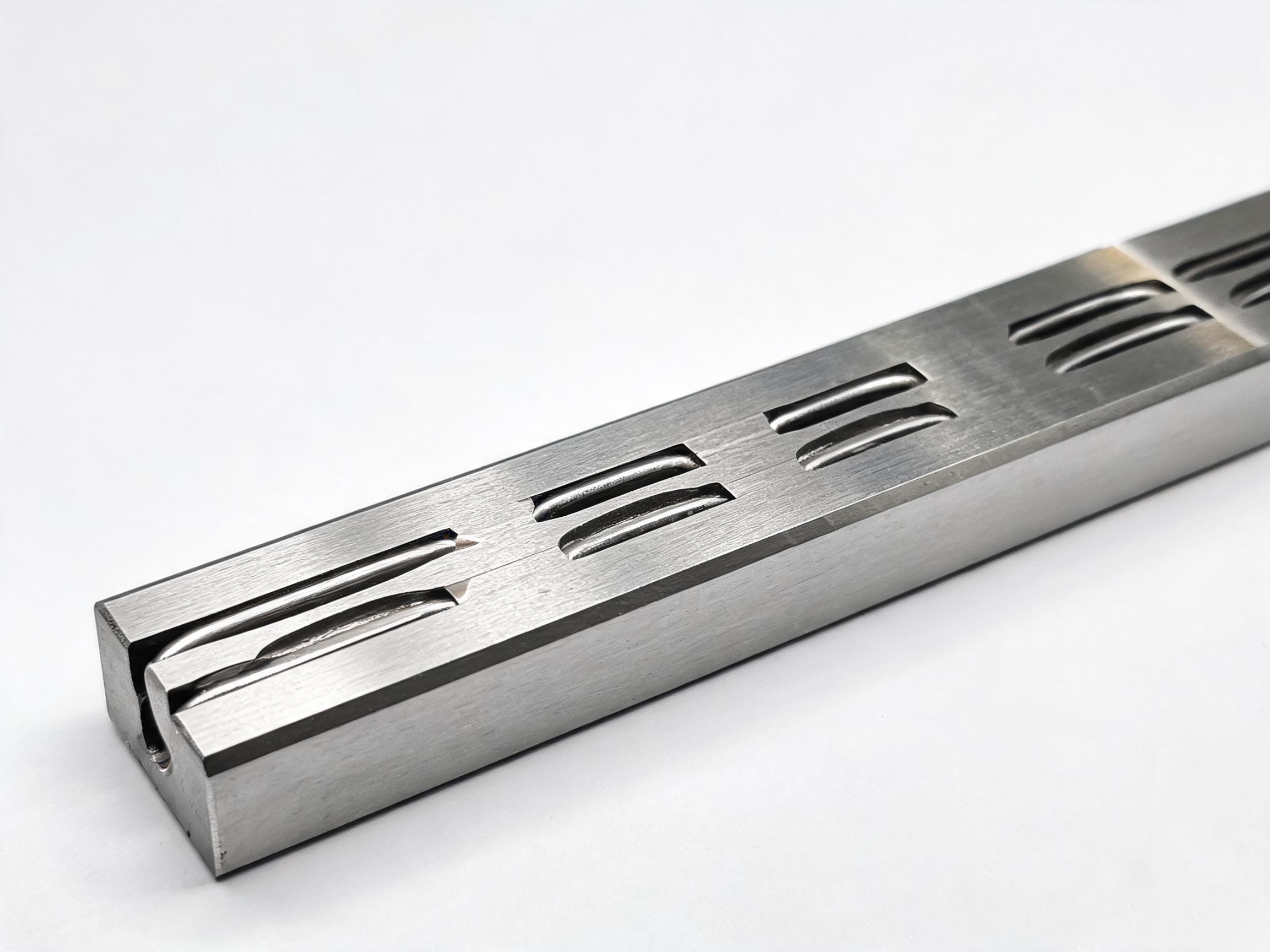
Two quotes for the same nominal rail size can differ because of precision grade, material, cross-section, rail length, and carriage configuration. This buyer-focused guide walks through each cost driver, what to confirm with the supplier, and a pre-quote checklist for HGR, EGH, and MGN series linear guide rails.
Cost Driver Checklist
Two suppliers quote the same nominal size — say HGR20 — and the numbers don't line up. In most cases the difference is not markup. It is the configuration behind the number: the precision grade, the steel, the cross-section, how the rail was cut, and which carriage is on the price sheet. This guide lays out the five factors that move linear guide rail cost, what each one looks like in a real BOM, and what to confirm before you approve a quotation.
Key takeaways
- Precision grade is the biggest driver. Ground H and P5 rails cost more to produce than rolled N and P7 rails; HGR is available in both, while EGH miniature rail is P5 only.
- Material matters. MGN miniature rail uses 9Cr18Mo stainless as standard; a lower-cost GCr15 chrome steel option exists but changes corrosion behavior.
- Size and length add cost. HGR covers sizes 15 to 45, and larger cross-sections use more steel per meter. Standard rail runs to 4000 mm; custom lengths and splice joints add processing steps.
- Carriage type, preload grade (C0/C1/C2), and sealing influence the total axis cost — a rail quote alone does not tell you the price of the assembled axis.
- Sourcing terms: MOQ is 50 pieces per SKU for HGR and HGH, mixed sizes are allowed, and in-stock HGR20/25/30 ship in 7–10 business days.
Why the same rail size gets different quotes
Part number alone does not define a linear guide rail. HGR20 is a size and a series — it is not a complete specification. Two HGR20 rails can differ in accuracy class, rail material, length and end treatment, and the carriage that travels on them. Each of those choices has its own production route, and the route sets the cost.
That is why a buyer comparing three quotes needs to compare the same configuration. If one quotation is written against rolled N and another against ground P5, the gap reflects the manufacturing process, not a discount. The five sections below break down where the money goes and what to put in your request so the quotes you receive are comparable.
The five cost factors
Precision grade: ground H/P5 versus rolled N/P7
Accuracy class defines how much the rail deviates over its running length. Ground rail is machined after forming to tighten that deviation; rolled rail keeps the as-rolled accuracy. Ground H and P5 are the higher-precision options, while rolled N and P7 sit at the standard end.
The HGR series heavy-duty linear guideway rail is offered in both ground and rolled accuracy grades, so you can specify the class that matches the application. The MGN series stainless steel miniature linear guide is supplied in P5 only — there is no rolled-accuracy equivalent in that range. EGH miniature rail follows the same rule: P5 only.
Choose the class the machine actually needs. A positioning axis feeding a vision system may need P5. A transfer axis that only reciprocates may run correctly on rolled N for years. Over-specifying precision is one of the most common ways buyers add cost without adding function.
Ask the supplier: Which accuracy grade is this quotation written against, and can you show the deviation criteria for that grade?
Material: 9Cr18Mo stainless versus GCr15 chrome steel
Standard MGN miniature rail uses 9Cr18Mo stainless steel. For applications where corrosion resistance is less critical, a lower-cost GCr15 chrome steel option is available. The two materials behave differently in humid, wash-down, or mildly corrosive environments, and that difference should drive the decision — not the price gap alone.
For larger HGR and HGH rails, material choice interacts with the surface treatment and the operating environment. If the machine runs in a clean, dry enclosure, the lower-cost steel option can be the sensible pick. If the axis sees coolant mist, condensation, or wash-down, the stainless rail is usually the more durable route.
Ask the supplier: Which material is quoted, what surface treatment is applied, and what environment is that combination intended for?
Size series and cross-section
HGR covers sizes 15 through 45. As the size number rises, the rail is taller and wider, and it contains more steel per meter of length. The heavy sections — such as those in the HGR45 heavy-duty large linear guideway rail range — carry higher load ratings, but they also move more material and take longer to machine.
Size selection should follow load and rigidity requirements, not habit. A machine builder who has standardized on size 25 for a whole platform may find that a lightly loaded return axis only needs size 15. Matching size to the actual load case is a direct cost lever that also affects carriage selection.
Ask the supplier: Given the load, moment, and stiffness target, is the requested size the smallest that meets the requirement, or is there a smaller series that also qualifies?
Rail length and end processing
Standard rail is produced in lengths up to 4000 mm. Within that range, quantity per length still matters: cutting a long rail into several shorter pieces adds cutting and deburring steps, while custom lengths outside the standard set require separate setup.
Splice joints are another processing step. When a travel length exceeds a single rail, two or more rails are butted together and the joint geometry must be machined to keep the running surface continuous. A spliced axis carries more processing than a single-piece rail of the same total length, and the quotation should reflect that.
Ask the supplier: What is the maximum single-piece length you can supply, and if a splice is required, how is the joint finished and inspected?
Carriage type, preload grade, and sealing
The rail is only half the axis. The carriage determines the preload grade — C0, C1, or C2 — and the sealing arrangement, and both affect total axis cost. Higher preload tightens the fit between carriage and rail, which can improve rigidity but increases rolling resistance. Heavier sealing protects the raceway in dirty environments but adds drag.
Standard, square, and flange carriage bodies are not interchangeable across mounting footprints, and the block style you choose affects the bracket, the bolt pattern, and the overall assembly cost. When you compare quotes, make sure the carriage part number, preload grade, and seal type are stated on both sides.
Ask the supplier: Which carriage body and preload grade are quoted, and what seal is fitted as standard?
How the factors combine: a quick comparison
| Factor | Lower-cost configuration | Higher-cost configuration | What it changes |
|---|---|---|---|
| Precision grade | Rolled N / P7 | Ground H / P5 | Running accuracy and production route |
| Material | GCr15 chrome steel | 9Cr18Mo stainless | Corrosion behavior in the operating environment |
| Size series | HGR15 / HGR20 | HGR30 / HGR35 / HGR45 | Load capacity and steel content per meter |
| Rail length | Standard length, single piece | Custom length, spliced joint | Cutting, setup, and joint processing steps |
| Carriage and preload | Standard body, C0, standard seal | Alternate body, C1/C2, heavy seal | Rigidity, drag, and protection level |
Pre-quote checklist
Send these items with your inquiry and the quotation you receive will be comparable across suppliers.
- Series and size: HGR or MGN, and the size number
- Accuracy grade: ground H/P5 or rolled N/P7, where both are available
- Material and surface treatment for the operating environment
- Rail length per piece and total quantity per length
- Whether any rail must be spliced, and the required joint quality
- Carriage body type, preload grade (C0/C1/C2), and seal type
- Quantity per SKU, and whether mixed sizes can ship together
- Any drawing or CAD file that defines end machining
MOQ and lead time at a glance
For HGR and HGH rails, the minimum order quantity is 50 pieces per SKU, and mixed sizes are allowed within one order. In-stock HGR20, HGR25, and HGR30 ship in 7–10 business days. For non-stock sizes, custom lengths, or spliced rails, confirm the production schedule with the factory before you finalize the purchase order.
Xiamen Dongfeng Bearing supplies these series factory-direct and supports OEM and ODM requests, including custom lengths and end machining to drawing.
FAQ
Why do linear rail prices vary so much between suppliers?
Most variation comes from configuration, not from a single price list. A rolled N rail and a ground P5 rail of the same size are different products with different production routes. Material, size, length treatment, and carriage configuration add further differences. Compare quotes only after the accuracy grade, material, and carriage details are stated on both sides.
What affects linear guideway price the most?
Precision grade has the largest single effect, because grinding is a separate operation after the rail is formed. Material choice is second, since stainless steel costs more than chrome steel. Size and length processing follow, and the carriage configuration completes the axis cost.
Does a larger rail size always cost more?
Per meter, yes — a larger cross-section contains more steel and takes longer to machine. But the correct comparison is per axis, not per meter. Since the same carriage series is shared across several rail sizes, a smaller rail with the correct carriage can meet a light-load requirement at lower total cost.
Can I order a custom rail length?
Custom lengths and end machining are available. Standard production runs to 4000 mm, and lengths outside that range or with special end features require a drawing review before quotation. Splice joints are also possible when a single-piece rail cannot cover the travel length.
Can I mix different rail sizes in one order?
Yes. Mixed sizes are allowed. The MOQ of 50 pieces per SKU still applies to each size and grade combination you order, so plan the SKU breakdown before placing the purchase order.
Next step
Before you approve a linear guide rail quotation, confirm the five factors above in writing: precision grade, material, size series, rail length and processing, and carriage configuration. Those five lines decide whether the number you receive reflects the product you actually need. If you can share the series, size, accuracy grade, and carriage details for your application, the factory can review the configuration and respond with a comparable offer.