
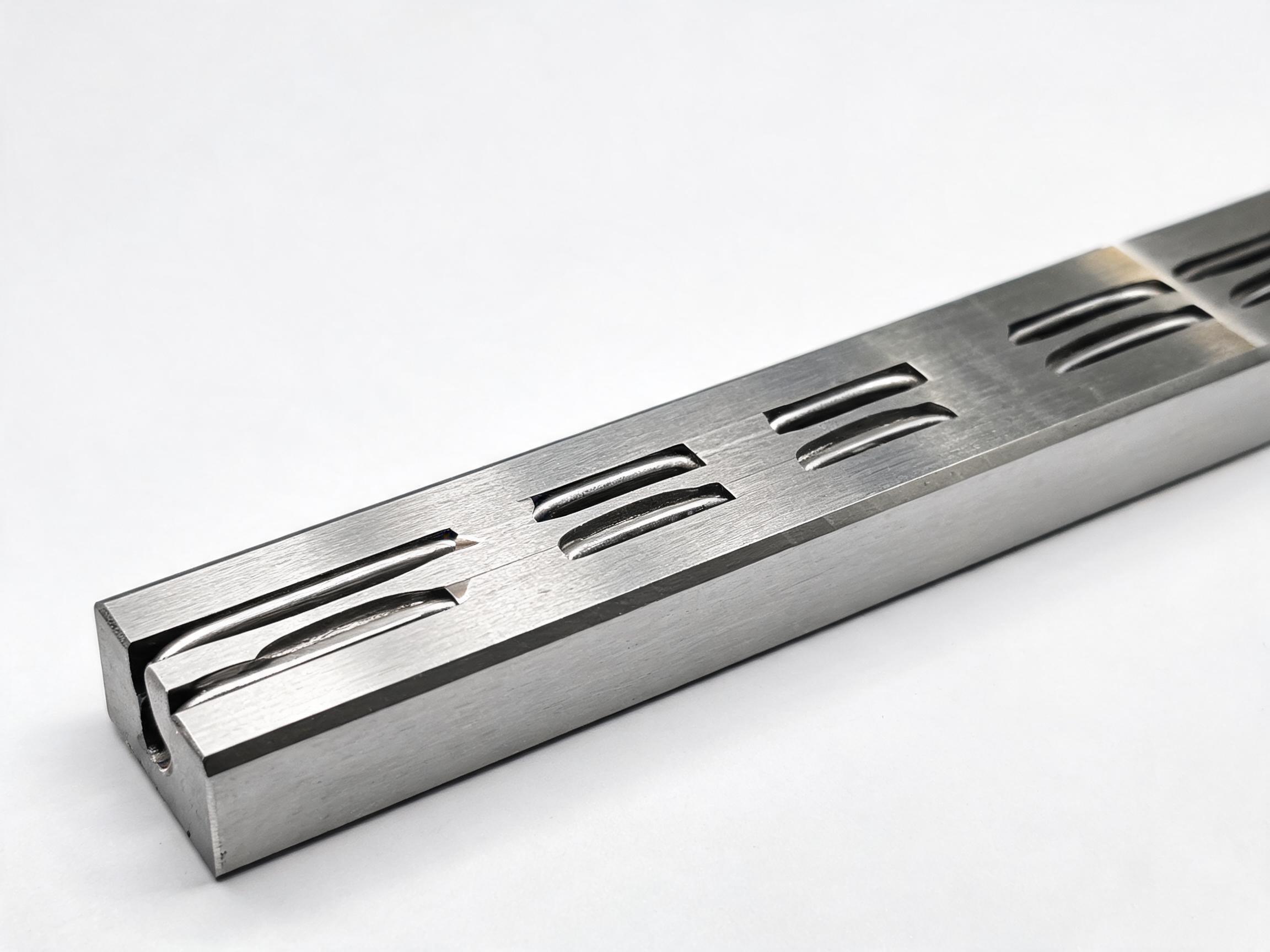
Heat changes grease life, seal materials, clearance, and load assumptions in linear guide systems. This article explains what to verify before ordering guide rails for ovens, dryers, foundries, and other hot-process equipment, with a supplier checklist and guidance on when standard rails still work.
If you are specifying linear guide rails for an oven, a dryer, a foundry application, or any equipment where the rail sits near a heat source, the standard catalogue page is not enough. Heat affects several parts of a guide system at once: the grease, the seals and wipers, the clearance between rail and carriage, and the mounting structure the rail is bolted to. Each of these has its own temperature limit, and those limits usually come from different sources.
This article explains what changes in high-temperature service and what to confirm with your supplier before you order. It does not give specific temperature figures, because exact limits for grease, seals, and rail assemblies must come from the datasheet for the exact part you are buying. Use the sections below as a checklist for the questions you need answered.
Key takeaways: Heat degrades grease faster than most buyers expect. Seal and wiper materials have their own limits. Thermal expansion of the mounting structure can change preload and clearance. Standard rails may still work if the actual temperature at the rail is moderate and the right grease and seals are selected — but you need the supplier to confirm the numbers, not assume them.
What heat actually changes in a guide rail system
Buyers often ask for a “high-temperature linear guide” as if it were a single product category. In practice, heat affects five separate interfaces, and each one can fail for a different reason.
1. Grease life and grease type
Grease is usually the first component to be affected. Standard lithium or mineral-oil greases have a recommended operating temperature range, and above that range the base oil oxidizes, the thickener breaks down, and the grease stops doing its job. The result is not an immediate failure but a gradual loss of lubricant film, leading to wear, noise, and higher friction.
High-temperature service usually requires a different grease — often a synthetic base oil with a different thickener — chosen for the temperature the rail actually sees. The important question is not just “can this grease handle high temperature?” but “what is the continuous operating temperature at the rail surface, and does the grease datasheet cover that?”
Note that the temperature at the rail is not always the same as the oven setpoint. Radiant heat, proximity to a hot platen, and duty cycle all affect the actual temperature at the carriage. Ask your supplier how they expect the grease to be specified, and measure or estimate the real rail temperature if you can.
2. Seal and wiper material limits
End seals and wipers are usually made from elastomers such as nitrile rubber, polyurethane, or other compounds. Each has a maximum continuous service temperature. Above that limit, the material hardens, cracks, or takes a permanent set, and the seal stops excluding dust and debris. In a hot process, seals may also see thermal cycling, which accelerates aging.
For higher temperatures, suppliers may offer seals in different materials. The specification for the seal material must come from the supplier and should state the continuous temperature range, not just a peak. If the application includes cleaning cycles or washdown, the seal must also be compatible with the cleaning chemicals — a separate question from temperature.
3. Clearance growth and thermal expansion
A linear guide rail is a precision assembly with a defined preload or clearance between the carriage and the rail. The rail is mounted to a structure — a machine bed, a frame, a bracket — and that structure expands as it heats up. If the rail and the mounting structure are made from different materials with different coefficients of thermal expansion, the rail can be subjected to additional stress, or the clearance can change.
In a long rail, thermal expansion can be significant. If one end is fixed and the other is not free to move, the rail may bow or the mounting bolts may be loaded beyond their design. The usual approach is to design one end with a fixed reference and allow the other end to float, but the exact arrangement depends on the rail length, the expected temperature rise, and the structure. Ask your supplier whether the mounting arrangement needs to account for expansion, and what guidance they can provide.
On shorter rails or lower temperature rises, expansion may be small enough to ignore. The point is to check, not to assume.
4. Load rating assumptions
Catalogue load ratings are typically based on room-temperature conditions and a defined grease life. At high temperature, grease life shortens, and the allowable load may need to be derated. Some suppliers publish a temperature factor that reduces the basic load rating at elevated temperatures; others do not. If you are sizing a rail for a hot application using the standard catalogue rating, confirm whether the supplier recommends a derating and what factor applies.
Also consider that thermal expansion can change the load distribution between multiple carriages on the same rail. A preloaded system that is correctly set at room temperature may become over-preloaded when hot, increasing friction and wear. This is another reason to discuss the mounting and preload with the supplier.
5. Oxidation and finish
At elevated temperatures, the risk of oxidation on the rail and carriage surfaces increases. Standard finishes may not be adequate. Some suppliers offer special surface treatments or materials for high-temperature use. The question to ask is whether the standard finish is suitable for the temperature and atmosphere, or whether a different finish is needed. In some cases, stainless steel or coated rails are used, but that depends on the application and the supplier's offering.
Questions to ask your supplier before ordering
Use this list to structure your inquiry. The answers should come from the supplier's datasheet or technical team, not from general assumptions.
| Topic | What to ask | Why it matters |
|---|---|---|
| Continuous vs peak temperature | What is the continuous operating temperature at the rail, and what is the peak temperature and duration? | Grease and seals are rated for continuous service; short peaks may be acceptable but need confirmation. |
| Grease specification | Which grease is supplied as standard, and what is its recommended temperature range? Is a high-temperature grease available? | Grease life is often the limiting factor; the wrong grease will fail early. |
| Seal and wiper material | What material are the seals and wipers, and what is their maximum continuous temperature? | Seals can harden or crack, allowing debris ingress. |
| Mounting material expansion | What is the rail and mounting structure material, and how should the mounting account for thermal expansion? | Expansion can cause binding, loss of preload, or bolt overload. |
| Load rating at temperature | Does the load rating need to be derated at the operating temperature? Is a temperature factor available? | Standard ratings assume room temperature; high temperature reduces capacity. |
| Finish and oxidation | Is the standard finish suitable for the temperature and atmosphere? Are special finishes available? | Oxidation can affect performance and appearance. |
When you send an inquiry, include the actual measured or estimated temperature at the rail, the duty cycle, the environment (air, inert gas, humidity), and the mounting structure material. That information helps the supplier give a specific answer rather than a generic one.
When standard rails still work — and when they don't
Not every warm application needs a special guide rail. If the temperature at the rail stays within the standard grease and seal limits, and the mounting structure is designed for expansion, a standard rail with the correct grease may be perfectly adequate. Many ovens and dryers operate at temperatures that are elevated but still within the range of standard components, provided the grease is selected for the temperature.
A special solution is more likely to be needed when:
- The continuous temperature at the rail exceeds the standard grease or seal limits.
- The application involves thermal cycling that accelerates seal aging.
- The rail is long and the mounting structure has significant expansion.
- The load is near the catalogue rating and derating would be required.
- The atmosphere is oxidizing or contains contaminants that affect standard finishes.
In these cases, the supplier may recommend a different grease, different seal material, a modified mounting arrangement, or a different rail series. The exact solution depends on the application details, and the supplier should provide the specifications for the proposed components.
Design considerations for the mounting structure
Even if the rail itself is rated for the temperature, the structure it is mounted to can cause problems. If the structure is made from aluminum and the rail from steel, the different expansion rates can cause the rail to bend or the carriage to bind. A common approach is to use a mounting surface that is machined flat and to allow for expansion at one end. The supplier can advise on the mounting arrangement, but the structure design is usually the machine builder's responsibility.
It is also worth checking the flatness and parallelism of the mounting surface after the machine reaches operating temperature. If the structure distorts when hot, the rail may not stay straight, and the carriage may run with higher friction or noise.
Summary
High-temperature applications require a closer look at grease, seals, clearance, load rating, and finish. The exact limits must come from the datasheet for the specific components you are buying. Before you order, ask your supplier for the continuous and peak temperature ratings, the grease specification, the seal material limits, and any guidance on thermal expansion and load derating. With those answers, you can decide whether a standard rail with the right grease will work or whether a special configuration is needed.
If you are sourcing linear guideways, linear bearings, or ball screws for a hot-process application, send your operating conditions to the supplier and ask for a written recommendation. That is the most reliable way to avoid a mismatch between the catalogue and the application.