
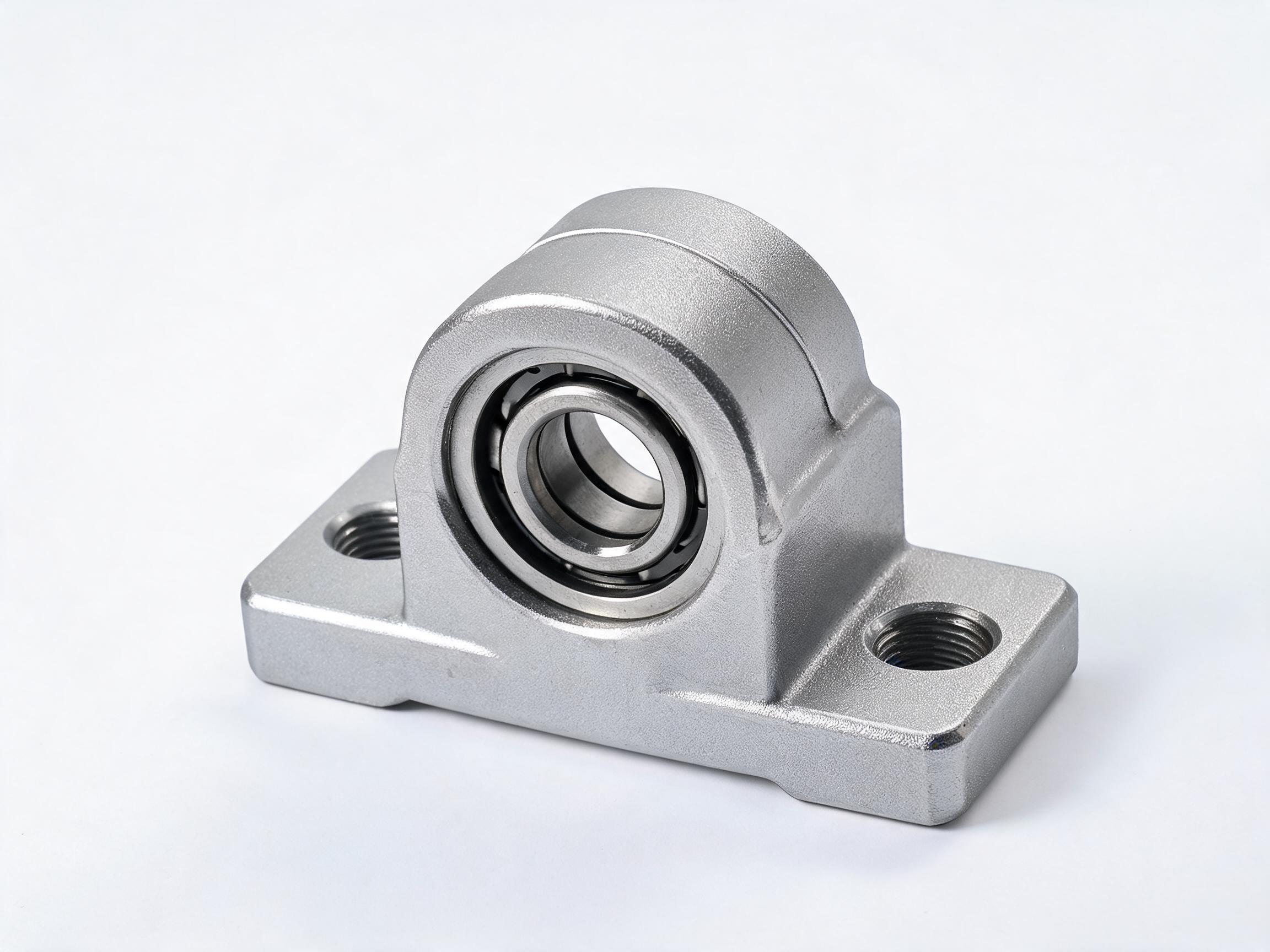
A practical procurement checklist for machine builders and maintenance buyers who source linear bearings together with matching shafts and housings: diameter fit, sealed versus open types, bare bearing versus housed unit, and how to order a matched set from one source without tolerance surprises.
Sourcing checklist
A linear bearing that slides badly is often not a bad bearing. It is the wrong bearing on the wrong shaft, or a shaft bought from a different source than the bearing and housing. This article walks through the four decisions that turn a parts list of linear bearings and rods into a working set: diameter fit, seal type, housed versus bare, and single-source ordering — including what the rods themselves need to match.
Short answer: match shaft diameter and bearing bore size first, confirm the envelope the housing expects, then decide sealed or open by whether debris reaches the track. Buy bearing, shaft and housing from one source when the motion matters, so the diameter, envelope and fit callouts are quoted against the same reference.
Start with the shaft diameter, not the bearing part number
Linear bearings are named by the shaft they run on. An LM16UU is a 16 mm bore bearing, and it is intended for a 16 mm shaft. Buyers who begin from an existing shaft on a machine will usually find a standard size, because the common ranges cover a lot of ground: sealed extended LMUU bearings run from 6 mm to 60 mm across 11 sizes (LMUU6 through LMUU60), metric flange LME bearings cover 8 mm to 60 mm, and KH pillow block units cover 8 mm to 50 mm.
That overlap means most general machine shafts can be matched inside a single product family. It also means the same nominal diameter appears in three different bearing formats, so diameter alone does not decide the part. Confirm the actual shaft diameter from the drawing or with a caliper, and confirm the bore size from the bearing datasheet. Where a running fit matters, ask the supplier to confirm the mating tolerance the bearing was designed for. Do not carry a tolerance value from one supplier's catalogue to another supplier's shaft.
What to put in the inquiry before you ask for a price
- Shaft diameter and shaft length, plus the shaft material you intend to use
- Number of bearings per shaft and the spacing between supports
- Load direction (radial, or combined with moment load) and approximate load
- Whether the environment has dust, chips, coolant or washdown
- Whether the design expects a bare bearing pressed into your own housing or a bolt-on unit
These five lines are enough for most suppliers to come back with a specific part rather than a family name.
Sealed or open: decide by what reaches the track
The sealed extended bearing carries a double-lip NBR seal plus a labyrinth groove. That combination is built for shafts where dust, chips or splatter are part of the day. The seal keeps the working surfaces covered, and the extended sleeve length adds support along the shaft.
The numbers on a sealed bearing are worth knowing when you size the set. LM16UU is rated at 1,580 N dynamic and 2,450 N static, with a sleeve length of 35 mm against 24 mm for a standard-length bearing. The extra sleeve length is also the reason a length check comes before any replacement claim: these bearings follow the JIS B 1185 LM envelope and drop into standard LM housings on bore and outside diameter, but the housing must have length allowance for the longer sleeve. Confirm bore and length allowance against the datasheet for the specific size. GCr15 chrome steel is the rolling element and raceway material across the series.
Open types exist for a reason. The LME series includes an OP variant with a longitudinal slot, which suits designs where the shaft is supported along its length or where the bearing must clear a support rail. In those arrangements a closed bearing simply cannot be fitted over the shaft. The trade-off is that an open bearing leaves the track exposed, so it belongs where the environment is clean or where a separate cover already protects the rail.
| Bearing format | Shaft range | Mounting | Typical use in a set |
|---|---|---|---|
| LMUU sealed extended | 6–60 mm (11 sizes) | Drop-in to standard LM housings, JIS B 1185 LM envelope | Dusty or chip-prone machines; replacement for standard-length bearings |
| LME metric flange | 8–60 mm | 3-bolt circular flange; closed UU or open OP with longitudinal slot | Flange-mounted end supports; OP where the shaft runs through a support |
| KH pillow block | 8–50 mm | Cast aluminum ADC12 body, 2-bolt base, pre-installed LM..UU bearing | Bolt-down support along a rail; self-aligning ±3° for multiple supports |
Sealed, open and housed options overlap in diameter but not in mounting. Pick the mounting format from the machine frame, then pick the seal from the environment.
Bare bearing or housed unit: who takes the alignment risk?
This is the decision that most often gets deferred to the assembly floor, and it is where delays come from.
A bare bearing goes into a housing you make or buy separately. You control the bore and the mounting geometry, and you take on the alignment between the bearing and the shaft. That is fine for a machined block on a single rigid frame, where the bore position is set on the drawing and checked at incoming inspection.
A housed unit moves that work to the supplier. The KH pillow block uses a cast aluminum ADC12 body with a 2-bolt base and a pre-installed LM..UU sealed bearing. Its rated load for the 16 size is 980 N dynamic. The housing bore allows the bearing to tilt, giving ±3° of self-alignment to compensate for misalignment between multiple supports — the situation on a long shaft with three or four pillow blocks where a few tenths of a millimetre of height difference between mounting pads is normal. The bearing can be replaced without tools through a retaining cap, in about 5 minutes, which matters for maintenance buyers keeping a machine running.
So the question to answer before ordering is not "which is better" but "where is the misalignment coming from and who is checking it". If it is a single machined housing with a controlled bore, a bare bearing is straightforward. If it is a long rail with several supports, a self-aligning pillow block handles the stack-up that a bare bearing would transfer to the shaft.
Do not mix the two mid-design. A pillow block and a machined housing place the shaft centreline at different heights. Substituting one for the other changes the rail geometry, so the drawing has to be updated at the same time as the purchase order.
What the rods themselves need to match
The rods in a linear bearings and rods set are the hardened linear shafts the bearings run on, and they carry three decisions of their own:
- Diameter: the rod diameter is the bearing bore size. A 16 mm LMUU runs on a 16 mm rod; there is no nominal "close enough" version of this match.
- Length and supports: rod length interacts with the number and spacing of supports. A long rod needs intermediate supports along the rail, which is exactly the multi-support layout where a self-aligning housed unit earns its place.
- Material, surface and straightness: these are rod-side specifications. They do not appear on the bearing datasheet, so confirm them with the rod supplier's datasheet in writing rather than assuming the bearing documentation covers them.
This is the practical reason ordering the bearings, rods and housings from one source is the safer default: one supplier owns the interfaces between all three instead of the buyer owning them alone.
Ordering bearings, rods and housings as one set
Mixing sources is normal in machine building, and for simple shafts it works. The risk shows up at the interfaces: the bore size against the shaft, the outside diameter against the housing bore, and the length against the space allowed on the frame.
When one supplier quotes the bearing, the shaft and the housing together, the three dimensions are quoted against one reference. There is a single answer to "what diameter is this shaft" and a single answer to "what envelope does this bearing need". If something does not fit at assembly, there is one contact rather than three suppliers pointing at each other.
A checklist to run before the purchase order goes out
- 1 Shaft diameter confirmed on the drawing and, for a retrofit, measured on the machine
- 2 Bearing bore size and envelope confirmed from the datasheet, not assumed from the part number
- 3 Seal type chosen against the actual environment: sealed and labyrinth-grooved for debris, open OP only where a support rail requires the slot
- 4 Mounting format fixed: bare bearing into your housing, flange mount, or 2-bolt pillow block
- 5 Number of supports and their spacing listed, so self-alignment needs are visible to the supplier
- 6 Spare bearings ordered with the set, in the same bore size, so a replacement does not become a re-engineering job
Item 6 is the one buyers skip most often. Maintenance stocks tend to grow one part number at a time, and a mismatched spare found during a breakdown costs more than the bearing.
Common matching mistakes and how they show up
Buying by bore size only
Two bearings with a 20 mm bore can have different outside diameters and lengths. If the housing was made for a standard-length bearing and a sealed extended part arrives with a 35 mm sleeve instead of 24 mm, the drop-in claim only holds if the housing follows the JIS B 1185 LM envelope and has length allowance for the longer sleeve. Check the housing drawing against the bearing datasheet before assuming interchangeability.
Using a closed bearing where the shaft is supported
A closed bearing has to slide onto the shaft from the end, and it cannot pass a support block. The open OP variant with its longitudinal slot exists for exactly this. If a design change adds a mid-shaft support, the bearing type has to change with it.
Assuming the housing will absorb the error
A self-aligning pillow block compensates ±3° of angular misalignment between supports. It does not correct a shaft that is bent, or mounting pads that are at different heights beyond that range. Those are machine-build issues, not bearing issues.
Quoting the fit from memory
Tolerance callouts for shaft and housing bores should come from the bearing datasheet or a written confirmation from the supplier for the specific part. A value remembered from a previous project, or copied from a different supplier's catalogue, is not a specification.
Frequently asked questions
Can I fit a sealed extended bearing into a housing made for a standard bearing?
If the housing follows the JIS B 1185 LM envelope, the LMUU series is designed as a drop-in on bore and outside diameter. Confirm the bore and the length allowance against the datasheet for the specific size, because the extended sleeve is longer — 35 mm against 24 mm on the 16 size.
When should I choose an open bearing?
When the shaft passes through a support and a closed bearing cannot be slid on, or when the bearing must clear a rail along its travel. The OP variant with a longitudinal slot is made for that case. It is not a substitute for a sealed bearing in a dirty environment.
Do I need a pillow block if my frame is already machined?
Not necessarily. A machined housing with a controlled bore and a single support can take a bare bearing. The pillow block earns its place when several supports sit along one shaft and height differences between them have to be absorbed.
How long does a bearing replacement take in a KH unit?
The retaining cap allows tool-free bearing replacement in about 5 minutes, which is the reason maintenance buyers specify this format for lines that cannot afford long downtime.
Can I buy the shaft from a different supplier than the bearing?
You can, and many builders do. The practical consequence is that you own the interface check: bore against shaft diameter, housing bore against bearing outside diameter, and the fit tolerance confirmed on both sides. Ordering the set from one source keeps that check with one supplier.
What to send for a matched-set quotation
A quotation is only as good as the drawing behind it. Send the shaft diameter and length, the number and spacing of supports, the load direction, the environment, and the mounting format already chosen on the frame drawing. If you are replacing an existing set, send the old part numbers and the measured shaft diameter — a retrofit is where nominal and actual most often diverge.
With those details, a supplier can propose a complete set: sealed bearings in the right bore size, shafts to the same nominal diameter, and housings in the mounting format your frame already has. If any tolerance callout is still open, ask for it in writing on the quotation before the order is placed.
Sourcing a matched bearing and shaft set?
Send your shaft diameter, support layout and mounting format. We will come back with a specific bearing, shaft and housing combination rather than a family name.
Request a matched-set quotation