
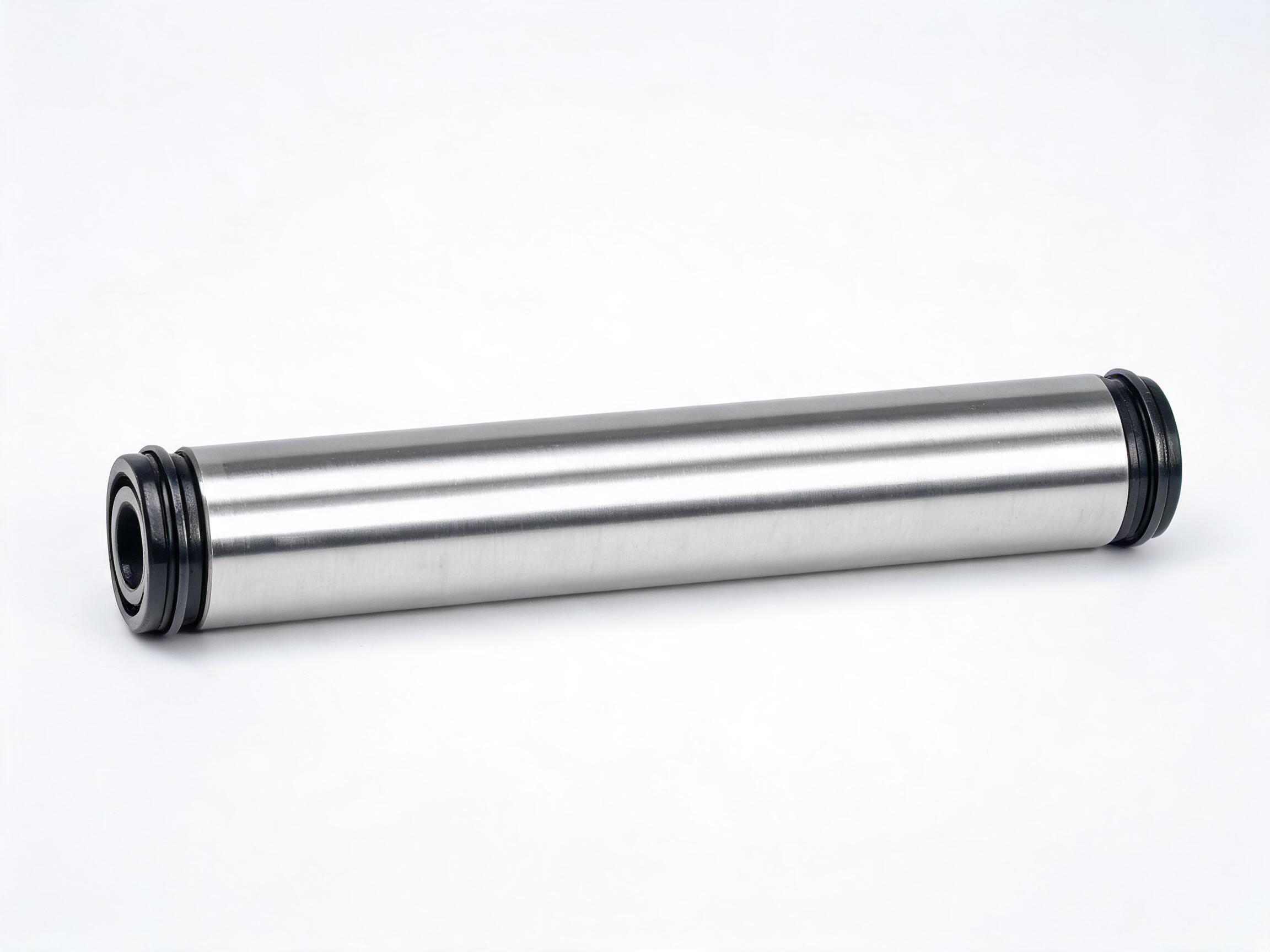
Round-shaft linear bearings rarely fail from a single cause. This guide maps the four main wear accelerators — contamination, misalignment, overload and poor lubrication — to prevention steps and to the shaft-bearing features that address each one, with load calibers kept strictly separate.
When a round-shaft linear bearing wears out ahead of the maintenance schedule, the bearing itself is rarely the whole story. Shaft cleanliness, mounting alignment, actual load against the rated figure, and lubrication all decide how a bushing behaves in service. The four sections below separate those accelerators, show what each one does to the bearing, and match prevention measures to specific product features available on sealed, pillow-block, flange and support-rail types.
Key Takeaways
- Contamination enters at the seal line; NBR contact seals on sealed extended-length bearings are listed at 95% dust reduction against an unsealed opening, and NBR operates from −30 to 110 °C.
- Misalignment loads the shaft against the race edge; self-aligning pillow blocks rated ±3° absorb shaft mounting deviation without preloading the bearing.
- Load figures are only comparable within the same caliber — a bare bearing rating and a complete unit (with housing) rating measure different things.
- Support-rail units take load off the shaft span itself; the SBR16 unit is rated at 7.8 kN dynamic / 12.0 kN static, and SBR20 at 11.2 kN dynamic per block — 22.4 kN per axis with its dual-block arrangement.
Contamination: the seal line is the first wear surface
On a round-shaft recirculating bearing, the balls and raceway sit behind a narrow gap at each end of the housing. Dust, chips and coolant mist that reach that gap get carried into the load zone on every stroke. Once abrasive particles are rolling with the balls, the raceway develops the fine scoring that shows up later as play and noise.
The countermeasure is a seal that actually contacts the shaft, not one that merely narrows the opening. The LMUU sealed extended-length bearing uses NBR contact seals that reduce dust ingress by 95% compared with an unsealed opening, as listed in the product data. Actual performance in a given application depends on dust type, air speed and installation condition, so treat the figure as a manufacturer rating rather than a guarantee for your environment. The extended housing also lengthens the distance between the seal and the load zone, which gives particles a longer path before they reach the balls. The same NBR material has an operating range of −30 to 110 °C, so it suits ambient conditions across that span rather than only room-temperature service.
Seals cannot remove everything. If the shaft surface carries dust when the bearing is installed, the seal wipes it straight into the housing. Clean and dry the shaft before assembly, and keep the exposed shaft length covered wherever the application allows.
Misalignment: edge loading from shaft deviation
A round-shaft bearing shares load across the ball rows along its length. When the shaft and the housing bore are not parallel, the bearing runs tilted, and load concentrates on one end of the load zone. The result is uneven wear: one end of the raceway wears first while the rest of the length is still serviceable.
Shaft mounting variation is the usual source. Two shafts bolted to a frame can sit at slightly different heights or angles, and a rigid housing has to absorb that difference. A self-aligning housing removes it instead. The KH pillow block compensates shaft mounting misalignment up to ±3°, so the bearing stays aligned to the shaft while the housing tolerates the frame variation.
The KH design adds a second maintenance benefit: tool-free bearing replacement. A worn bearing can be swapped out of the housing without dismantling the housing from the frame. For machines where the pillow block is bolted into a fixed structure, that changes the work required to restore the axis.
Self-alignment has a limit. A ±3° rating covers mounting deviation, not deliberate design angles. If the application genuinely runs the axis at an angle, specify it as such rather than relying on the self-aligning range.
Overload: comparing the right load caliber
Load comparison is where catalog data is most often misread. A bearing sold as a bare component and a bearing sold as a finished housing unit are measured at different points on the assembly.
| Product Type | Load Caliber | Listed Value | What the Number Covers |
|---|---|---|---|
| LM16UU sealed extended-length | Bare bearing | 1580 N dynamic / 2450 N static | Bearing and raceway only; no housing |
| KH16 pillow block | Complete unit (with housing) | 980 N | Bearing plus the housing it is mounted in |
| SBR16 support-rail unit | Complete unit (with housing and rail) | 7.8 kN dynamic / 12.0 kN static | Block assembly running on the aluminum support rail |
| SBR20 dual block on support rail | Complete unit (with housing and rail) | 11.2 kN dynamic per block (22.4 kN per axis); 17.5 kN static per block | Two blocks per rail sharing load on the support rail |
These figures are not interchangeable. A bare bearing rating and a complete-unit rating describe different assemblies and must not be compared directly. A housing changes how load reaches the bearing and how the assembly is supported, so a lower complete-unit figure than a bare-bearing figure does not mean the assembled unit is weaker. Confirm the caliber of any figure before using it in a load calculation.
Overload wear looks different from contamination wear. It shows as flaking or fatigue on the loaded side of the raceway rather than scoring around the circumference. The practical check is to compare the application's actual radial load — including shock and the weight of anything the carriage carries — against the rated figure for the exact assembly being used, not against a rating for a different configuration.
Where the calculated load is high or the shaft span is long, moving to a support-rail configuration changes the structure. The SBR series carries the block on an aluminum support rail, which supports the shaft along its length rather than only at the ends. The SBR20 is listed at 11.2 kN dynamic per block — 22.4 kN per axis with its two blocks — and 17.5 kN static per block. For shaft spans where a plain round shaft would deflect under load, the support rail addresses the deflection as well as the load path.
Lubrication: the condition that decides the other three
Lubricant separates the balls from the raceway. Without that film, every pass of a ball is metal on metal. The other three accelerators all act through lubrication: contamination displaces or thickens the film, misalignment pushes load into a region that may not be adequately lubricated, and overload breaks through whatever film is there.
- Re-lubricate on a schedule based on the environment, not only on running hours. A dusty or wet machine needs more frequent attention than a clean one.
- Match the lubricant to the temperature the bearing actually reaches. The NBR seals on the LMUU series are rated from −30 to 110 °C, and the grease must remain effective within that envelope.
- Inspect seals during lubrication. A torn or hardened contact seal stops being a barrier, and the dust-reduction benefit no longer applies.
For lubricant grade, re-lubrication interval and fill quantity for a specific size, refer to the datasheet.
Specifying for prevention
Prevention starts at the specification stage, where the choice of housing type fixes how much of the wear risk the bearing will carry.
Match the housing to the mounting reality
If the frame cannot guarantee parallel shafts, specify a self-aligning pillow block rather than a rigid housing and hope the frame is accurate. If the shaft span deflects, specify a support rail rather than a longer plain shaft. If the environment is dusty, specify a sealed extended-length bearing rather than an open type.
Flange mounting where axial location matters
The LME metric flange bearing is made from GCr15 chrome steel and listed per DIN ISO 10285 in sizes 8–60 mm. The open type has a longitudinal slot. A flange mount locates the bearing in the housing face directly, which suits arrangements where the housing position must be fixed relative to a plate.
Keep the load caliber straight in the drawing pack
When requesting a bearing for an axis, state the assembly type — bare bearing or complete unit with housing — alongside the load. Mixing the two calibers in one calculation is the most common way an axis ends up over- or under-specified. Where a listed figure does not cover the configuration in the request, refer to the datasheet for the applicable value.
Summary
Round-shaft linear bearing wear traces back to contamination at the seal line, misalignment edge loading, load applied against the wrong caliber, and a lubrication film that does not survive the environment. Each has a corresponding product characteristic: NBR contact seals and an extended housing for dust, ±3° self-alignment and tool-free replacement for mounting deviation, support rails for high load and long spans, and a disciplined re-lubrication schedule for all of them. None of these features replaces the others, and the load figure used for the calculation must match the assembly actually being installed.