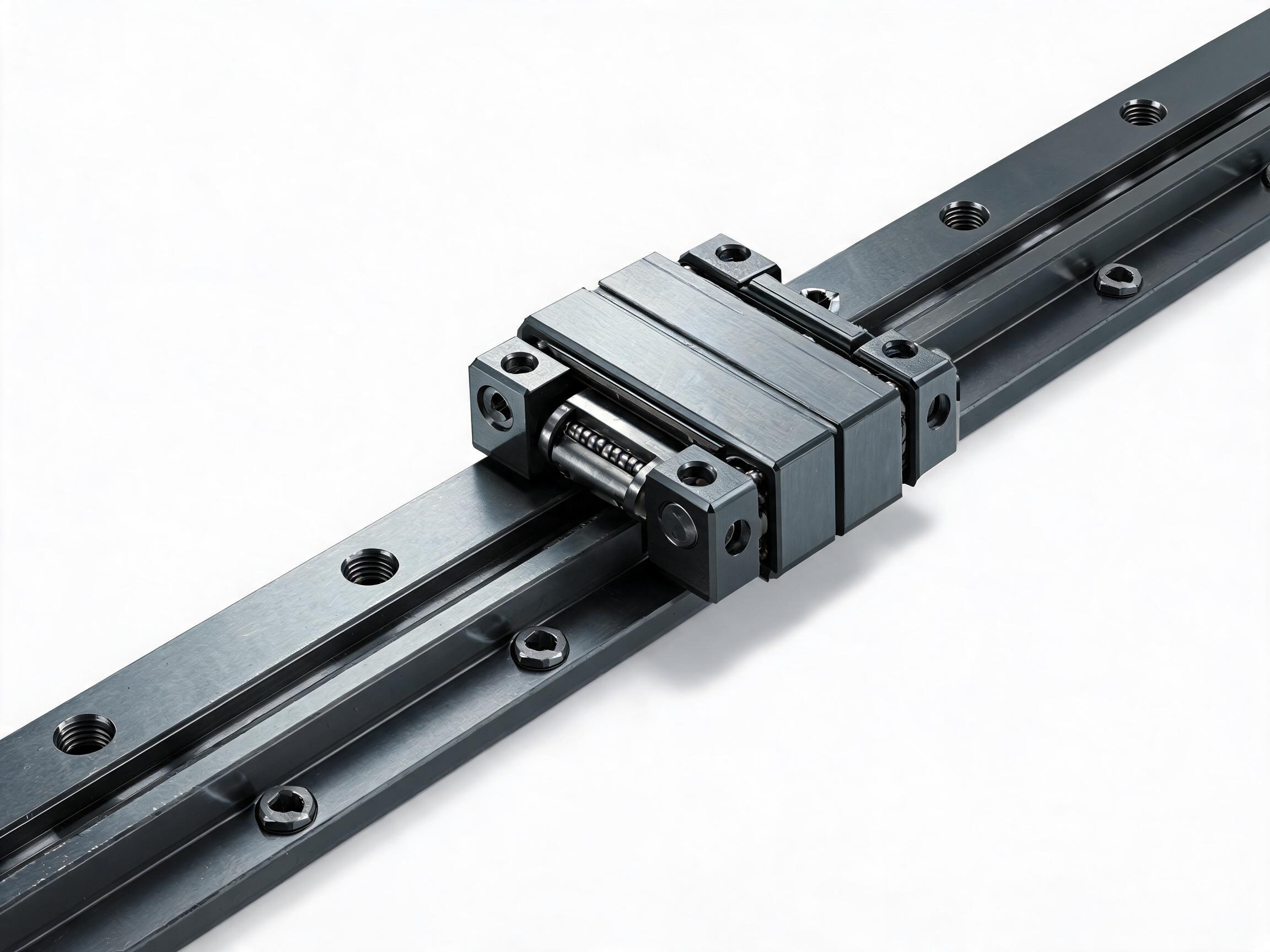
Precision Linear Guide: Positioning Systems and Selection Criteria
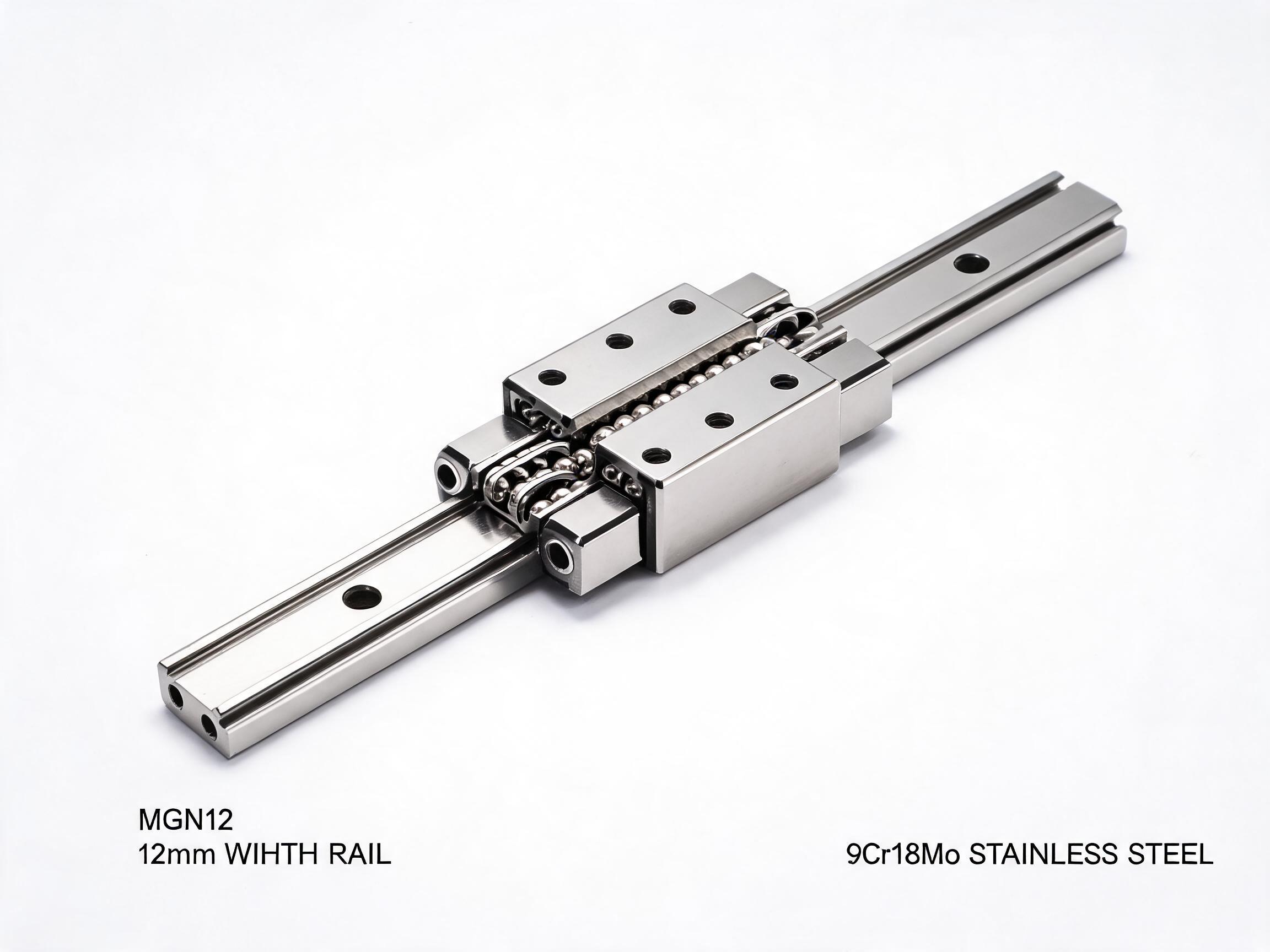
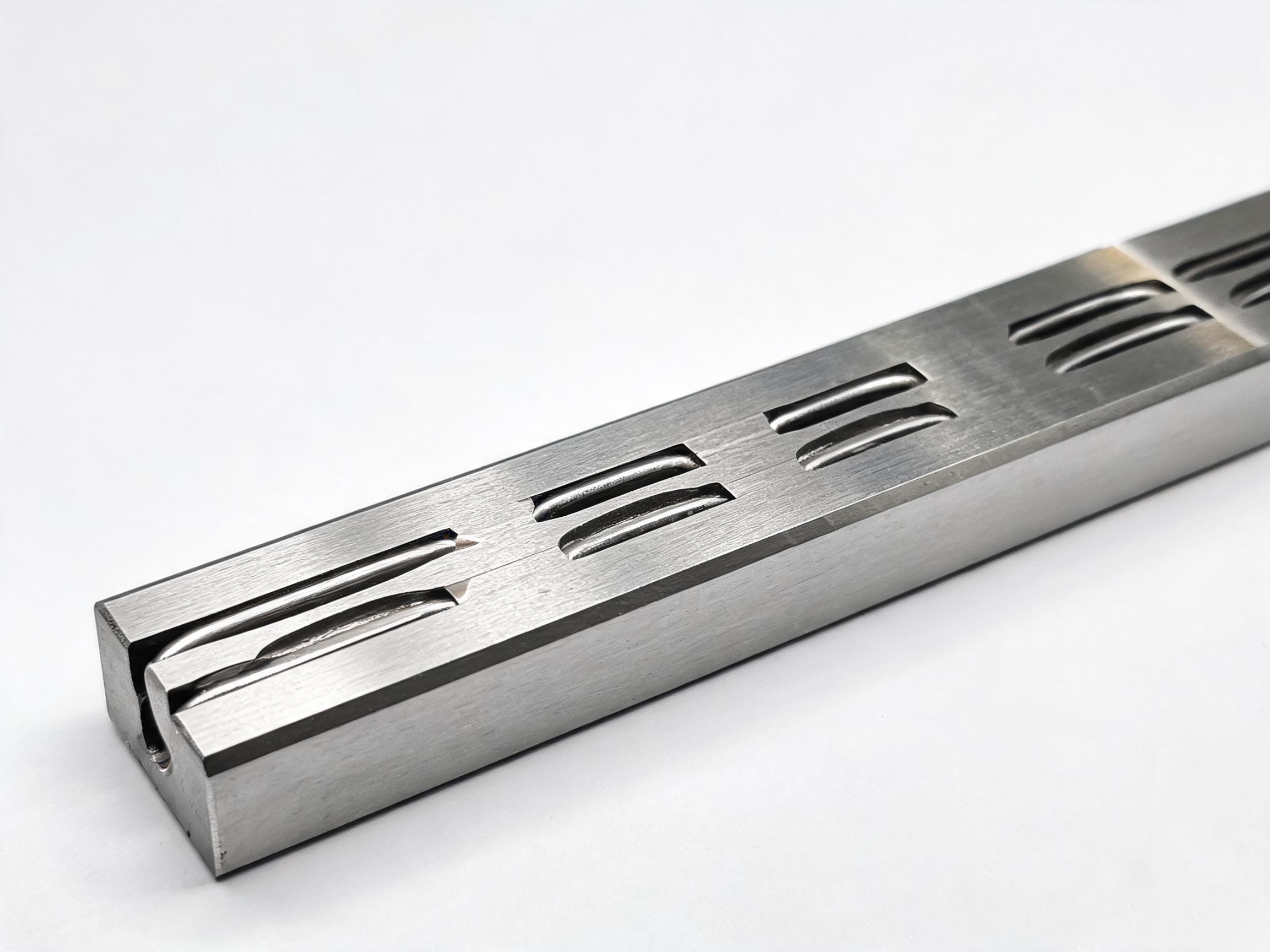
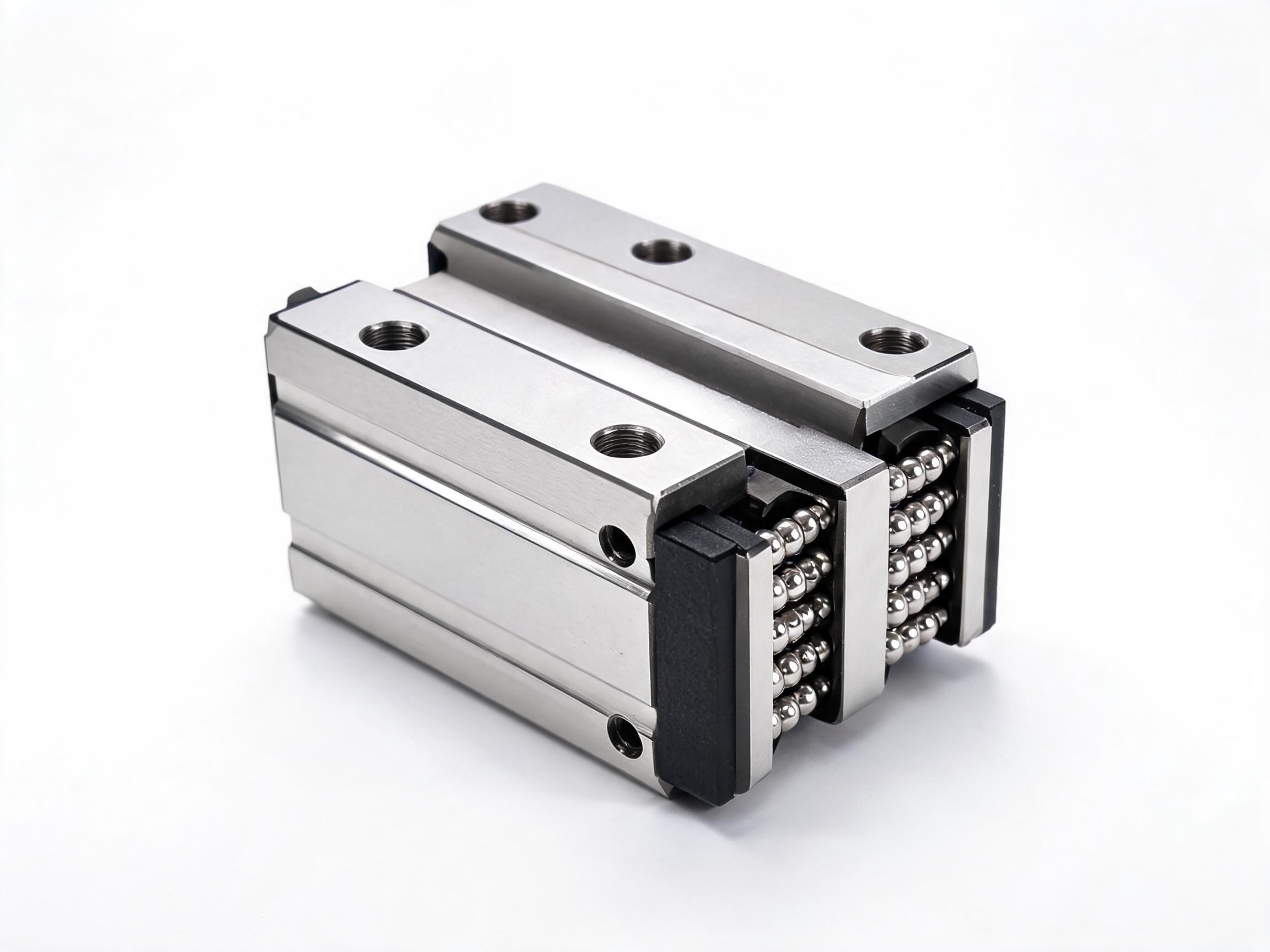
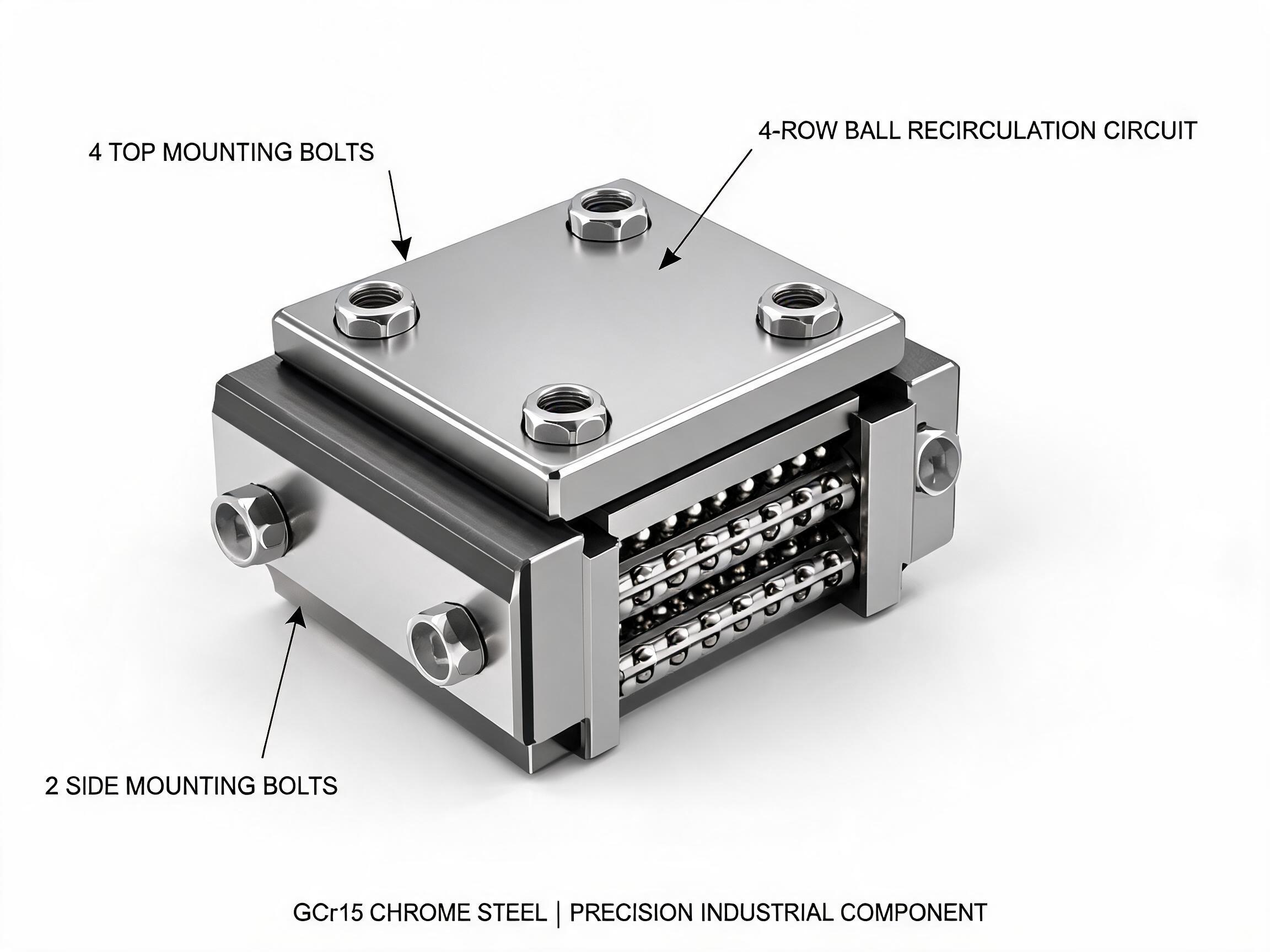
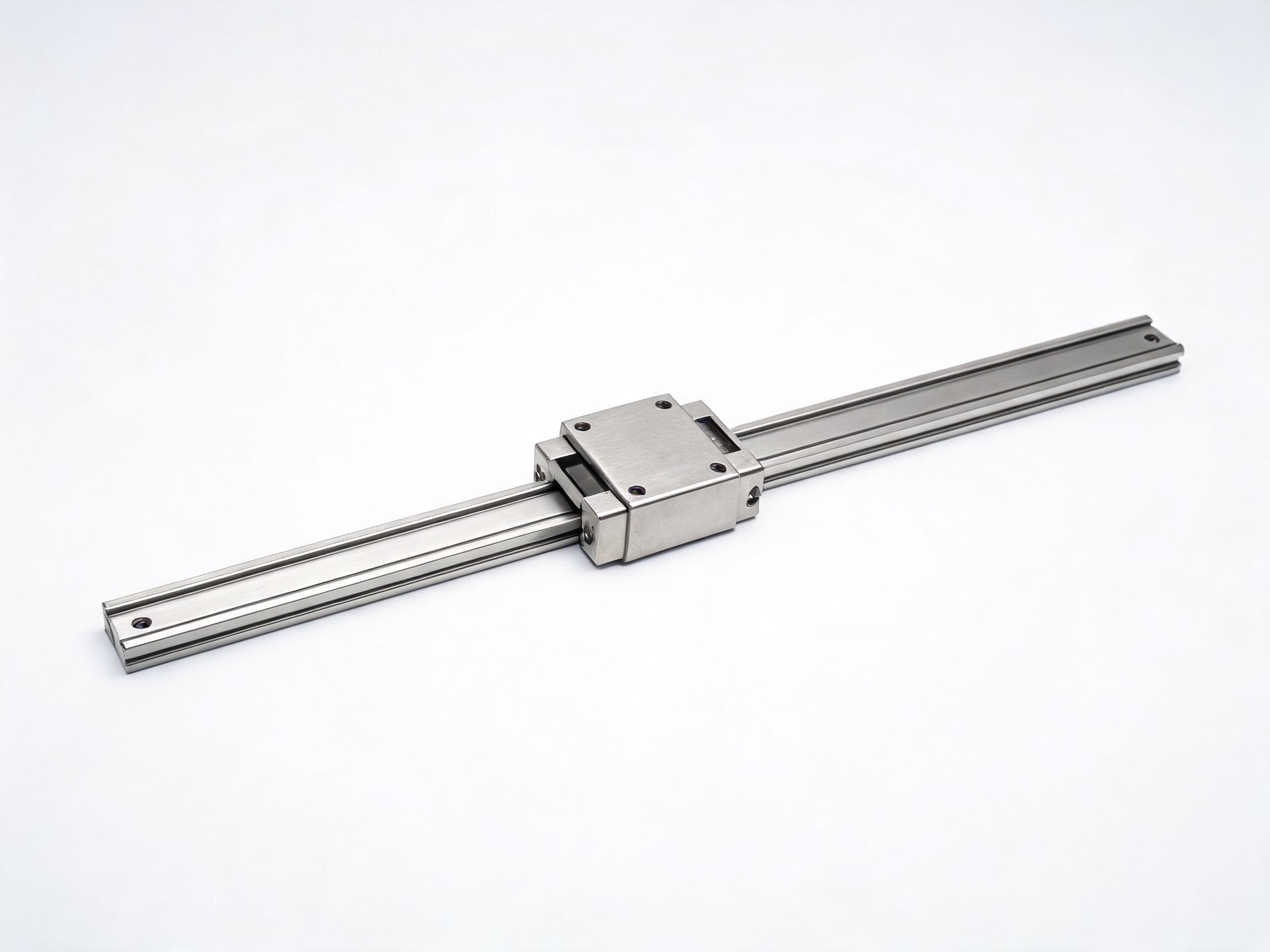
A precision linear guide is a guideway system selected and configured for applications where positioning accuracy, repeatability, and motion smoothness are the primary performance criteria, rather than load capacity alone. Dongfeng Bearing supplies precision linear guides in HGR (15-45 mm), EGH (15-20 mm), and MGN (9-15 mm) series with accuracy grades from H through P to SP, serving coordinate measuring machines, semiconductor wafer handling, medical robotics, optical positioning, precision dispensing, and laboratory automation. The defining characteristics of a precision linear guide application are sub-10-micron positioning requirements, tight repeatability specifications, and sensitivity to friction variation, thermal effects, and mounting errors that would be acceptable in general automation.
Precision in linear motion is determined by the combined effect of rail accuracy grade, carriage preload, drive system resolution, mounting surface quality, thermal stability, and lubrication consistency. A P-grade rail (0.006 mm per 300 mm) with ZB preload on a properly prepared mounting surface achieves positioning repeatability of 2-5 microns with a ball screw drive and 5-micron encoder resolution. Upgrading to SP-grade (0.003 mm per 300 mm) with matched carriages and a linear encoder improves repeatability to 1-2 microns. Beyond the guide itself, the drive system, encoder, controller, and structural stiffness must be matched to the guide precision level.
| Precision Level | Guide Grade | Repeatability | Drive System | Typical Application |
|---|---|---|---|---|
| Standard precision | H | 10-20 microns | Belt drive | Packaging, handling |
| Medium precision | P | 2-5 microns | Ball screw C7 | CNC, automation |
| High precision | P | 1-3 microns | Ball screw C5 | Metrology, medical |
| Ultra precision | SP | 0.5-2 microns | Linear motor | Semiconductor, optics |
Positioning Accuracy vs Repeatability in Linear Guides
Positioning accuracy is the maximum deviation between commanded and actual position across the full travel, determined by rail straightness, ball screw lead accuracy, and encoder resolution. Repeatability is the spread of positions achieved when approaching the same point from the same direction, determined by carriage backlash, preload consistency, and friction variation. For precision linear guides, repeatability is typically 5-10 times better than positioning accuracy. A P-grade HGR25 rail with C7 ball screw achieves plus-minus 0.02 mm positioning accuracy and plus-minus 0.003 mm repeatability. Upgrading to C5 ball screw with linear encoder improves positioning to plus-minus 0.005 mm and repeatability to plus-minus 0.001 mm.
Drive System Matching for Precision Applications
The drive system must match the guide precision level. Ball screw C7 grade (lead accuracy 0.05 mm per 300 mm) pairs with H-grade or P-grade guides for general CNC. C5 grade (0.018 mm per 300 mm) pairs with P-grade for precision automation and metrology. C3 grade (0.008 mm per 300 mm) pairs with SP-grade for semiconductor and optics. Linear motors eliminate mechanical drive errors entirely, achieving positioning to 0.1 microns with sub-micron repeatability when paired with SP-grade guides and laser interferometer feedback. The drive coupling must minimize backlash; precision couplings with zero backlash (bellows or disc type) are essential for sub-micron applications.
Encoder and Feedback Systems for Precision Guides
Rotary encoders on the motor shaft provide indirect position feedback through the ball screw, introducing lead error and backlash into the measurement. Linear encoders mounted directly on the moving carriage provide direct position feedback, eliminating drive errors from the measurement loop. For P-grade applications, linear encoders with 5-micron resolution suffice. For SP-grade, 0.1-micron resolution encoders with reference marks for homing are standard. The encoder scale must be mounted parallel to the guide rail within 0.05 mm to avoid Abbe error, where angular deviation of the carriage creates a position measurement error proportional to the offset distance.
Friction Variation and Stick-Slip Elimination
At very low speeds (below 1 mm per second), rolling friction can transition to sliding friction (stick-slip), causing jerky motion that compromises positioning accuracy. Gothic arch geometry minimizes stick-slip through two-point contact that maintains rolling. Preload selection affects low-speed smoothness: Z0 (clearance) minimizes friction but allows carriage play; ZA (light preload) provides the smoothest motion for precision positioning; ZB introduces more friction but improves rigidity. For sub-micron positioning, ZA preload with low-viscosity lubricant (NLGI 0) minimizes friction variation. Lubricant choice is critical: high-viscosity grease creates a damping effect that smooths motion but increases torque ripple at low speeds.
Thermal Management in Precision Linear Guide Systems
In precision applications, thermal expansion of the guide rail, ball screw, and machine structure causes positioning drift. A 1-degree temperature rise on a 500 mm steel rail causes 5.75 microns of expansion. Strategies include: controlling ambient temperature within plus-minus 0.5 degrees, using materials with lower expansion coefficients (invar, ceramic), implementing coolant channels in the rail mounting surface, measuring rail temperature with sensors and applying real-time compensation, and allowing thermal stabilization time before precision operations. For ball screw drives, ball screw cooling or preloading with a dual-nut system minimizes thermal growth from friction heat.
| Thermal Factor | Effect on 500 mm Rail | Mitigation Strategy |
|---|---|---|
| 1-degree ambient rise | 5.75 microns growth | Plus-minus 0.5 degree control |
| 10-degree drive heat | 57.5 microns growth | Coolant channels, compensation |
| Structural bending | Position drift | Symmetric design, invar |
| Lubricant drag heat | Localized expansion | Low-viscosity grease |
Mounting Surface Requirements for Precision Guides
Precision guide performance depends on mounting surface quality. For P-grade guides, mounting surface flatness must be 0.005 mm per 300 mm with roughness Ra 0.8. For SP-grade, 0.003 mm per 300 mm with Ra 0.4. The reference shoulder must be ground straight within 0.003 mm per 500 mm and perpendicular to the mounting surface within 0.005 mm per 100 mm. For multi-rail systems, rail-to-rail parallelism within 0.005 mm per 300 mm. After installation, measure carriage motion straightness with a laser interferometer; any deviation exceeding 50 percent of the rail tolerance indicates mounting surface deficiency requiring rework.
Semiconductor and Metrology Application Case Studies
In semiconductor wafer handling robots, SP-grade MGN12 stainless steel guides with ZA preload achieve 1-micron repeatability for wafer alignment. Cleanroom-compatible PTFE solid lubricant eliminates particle generation. In coordinate measuring machines, SP-grade HGR25 rails with linear encoders achieve 0.5-micron measurement uncertainty over 500 mm travel. The guide rail straightness directly determines the measurement axis straightness, making SP-grade essential. In optical lens grinding machines, SP-grade HGR20 rails with linear motor drives achieve 0.1-micron positioning for sub-wavelength surface finish. Thermal management with coolant channels maintains rail temperature within plus-minus 0.1 degrees during continuous grinding.
Vibration Damping and Structural Stiffness
Precision linear guide systems are sensitive to vibration from external sources (floor, adjacent machinery) and internal sources (drive motor, ball screw rotation). Vibration causes carriage micro-motion that compromises positioning and surface finish. Mitigation strategies include: using vibration isolation pads or pneumatic isolators under the machine base, increasing structural stiffness so the first natural frequency is above the excitation frequency, adding damping materials (constrained layer damping, polymer filled castings), and selecting ZB or ZC preload to increase carriage-to-rail coupling stiffness. For ultra-precision applications, active vibration cancellation systems counteract measured vibration in real time.
Quality Assurance and Traceability for Precision Guides
For precision linear guide orders, Dongfeng Bearing provides extended quality documentation including: CMM inspection of rail parallelism at five points, carriage height variation within plus-minus 0.005 mm for P-grade and plus-minus 0.002 mm for SP-grade, friction torque measurement at three positions, ball diameter sorting certificates, material traceability from steel mill to finished product, and thermal expansion coefficient documentation. Each precision rail and carriage set is serialized and shipped with individual inspection reports. CE conformity, SGS material test reports, RoHS, and REACH compliance are standard. 24-month warranty covers precision-related defects including parallelism degradation and preload loss under rated conditions.
Frequently Asked Questions
What positioning accuracy can precision linear guides achieve?
P-grade with C7 ball screw: plus-minus 0.02 mm positioning, plus-minus 0.003 mm repeatability. SP-grade with C5 ball screw and linear encoder: plus-minus 0.005 mm positioning, plus-minus 0.001 mm repeatability. Linear motor with SP-grade: 0.1-micron positioning.
What is the difference between positioning accuracy and repeatability?
Positioning accuracy is the maximum deviation from commanded position across full travel. Repeatability is the spread when approaching the same point from the same direction. Repeatability is typically 5-10 times better than positioning accuracy.
What drive system should I pair with precision guides?
C7 ball screw for H-grade or P-grade (general CNC). C5 ball screw for P-grade (precision automation). C3 or linear motor for SP-grade (semiconductor, optics). Use zero-backlash couplings for sub-micron applications.
How do I eliminate stick-slip at low speeds?
Use gothic arch geometry (standard in Dongfeng guides), ZA light preload for smoothest motion, low-viscosity lubricant (NLGI 0), and maintain proper mounting surface flatness. Avoid Z0 clearance preload which can cause play.
What encoder resolution do I need for precision guides?
5-micron linear encoder for P-grade applications. 0.1-micron linear encoder with reference marks for SP-grade. Mount the encoder scale parallel to the rail within 0.05 mm to avoid Abbe error.
How does temperature affect precision guide performance?
Steel expands 11.5 microns per meter per degree Celsius. Control ambient within plus-minus 0.5 degrees, use coolant channels for drive heat, allow thermal stabilization time, or apply real-time compensation based on rail temperature sensors.
What mounting surface flatness is required?
0.005 mm per 300 mm for P-grade, 0.003 mm per 300 mm for SP-grade. Reference shoulder straightness within 0.003 mm per 500 mm. Rail-to-rail parallelism within 0.005 mm per 300 mm for multi-rail systems.
Can precision guides be used in cleanrooms?
Yes. MGN stainless steel guides with PTFE solid lubricant are suitable for ISO Class 5 cleanrooms. Used in semiconductor wafer handling with 1-micron repeatability. Low particle generation confirmed through testing.
What documentation is provided with precision guide orders?
CMM inspection at five points, carriage height variation data, friction torque measurements, ball sorting certificates, material traceability, thermal expansion coefficients, serialized identification, CE, SGS, RoHS, REACH. 24-month warranty.
How do I select the right precision level for my application?
Standard precision (H-grade) for packaging and handling. Medium precision (P-grade) for CNC and automation. High precision (P-grade with linear encoder) for metrology and medical. Ultra precision (SP-grade) for semiconductor and optics below 10-micron features.