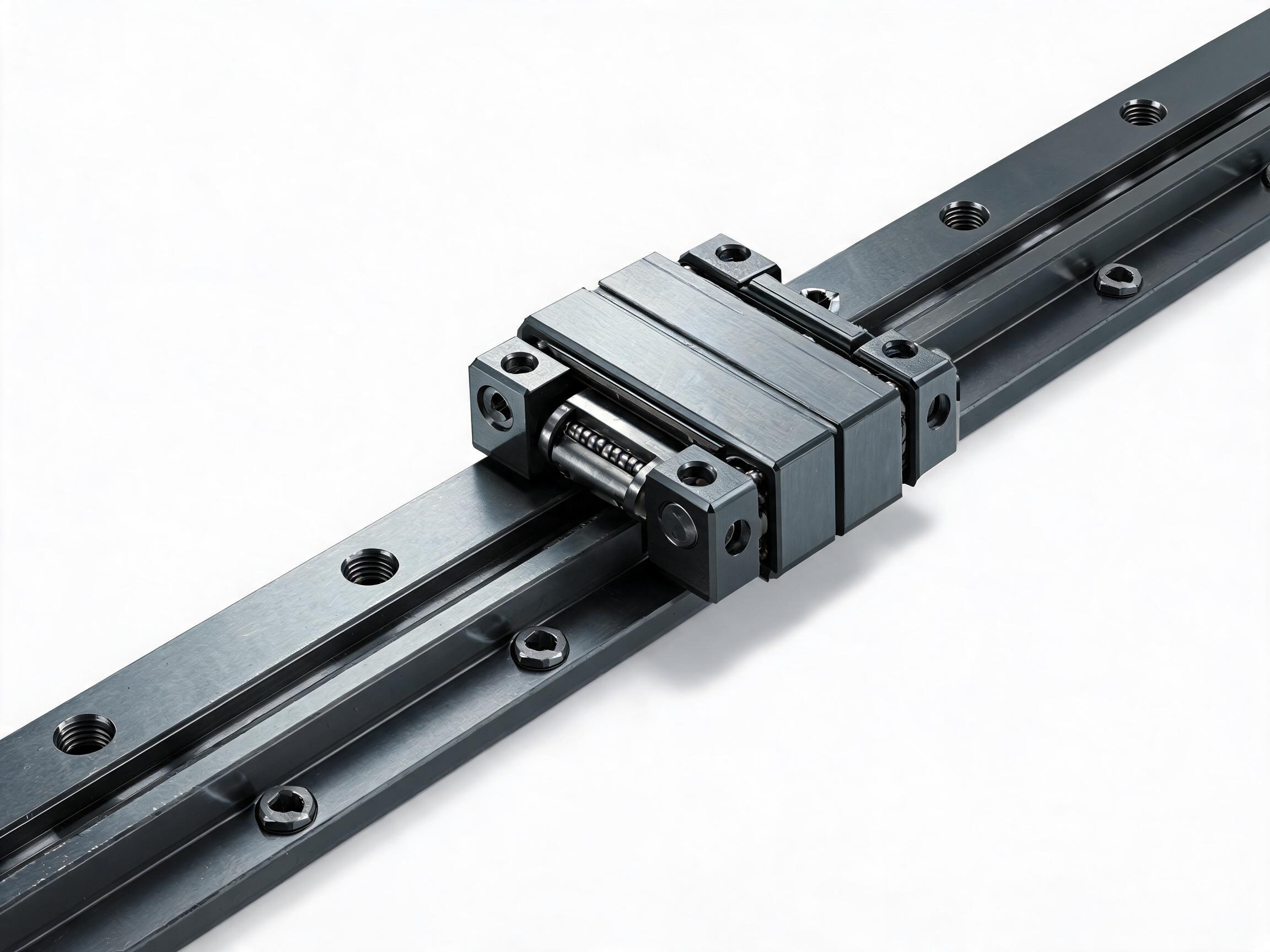
Ball Bearing Linear Guide: Rolling Contact Technology and Applications
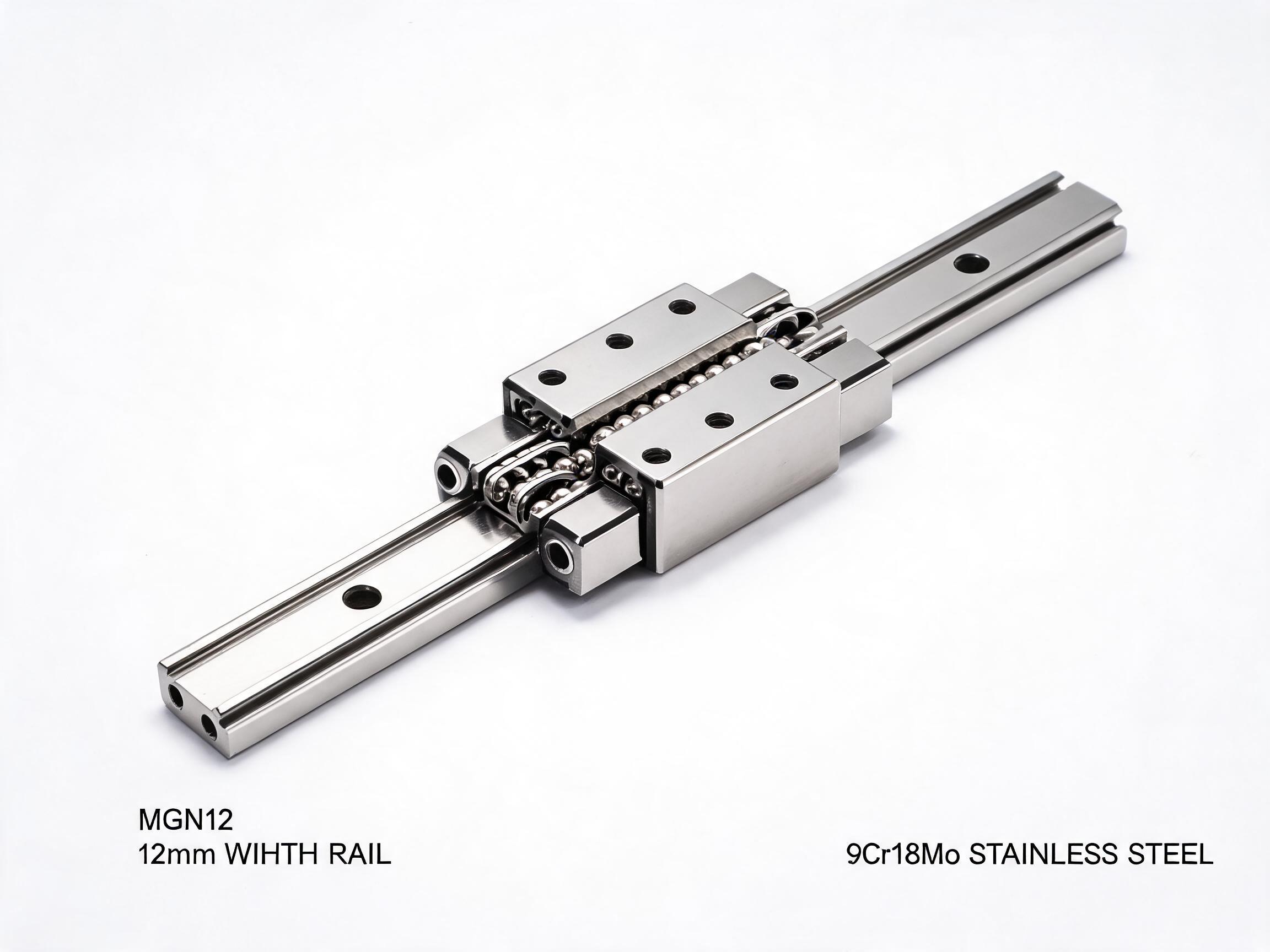
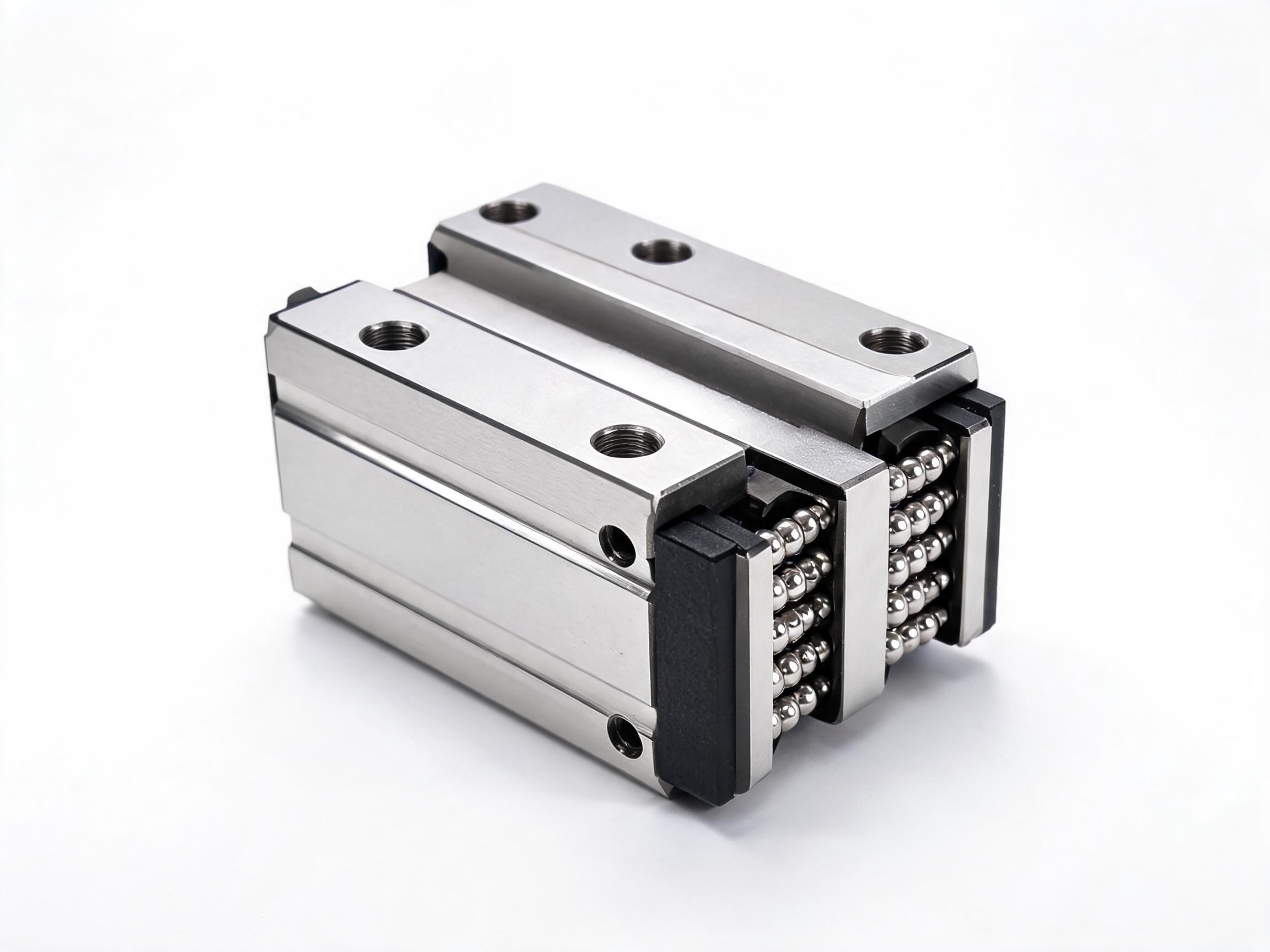
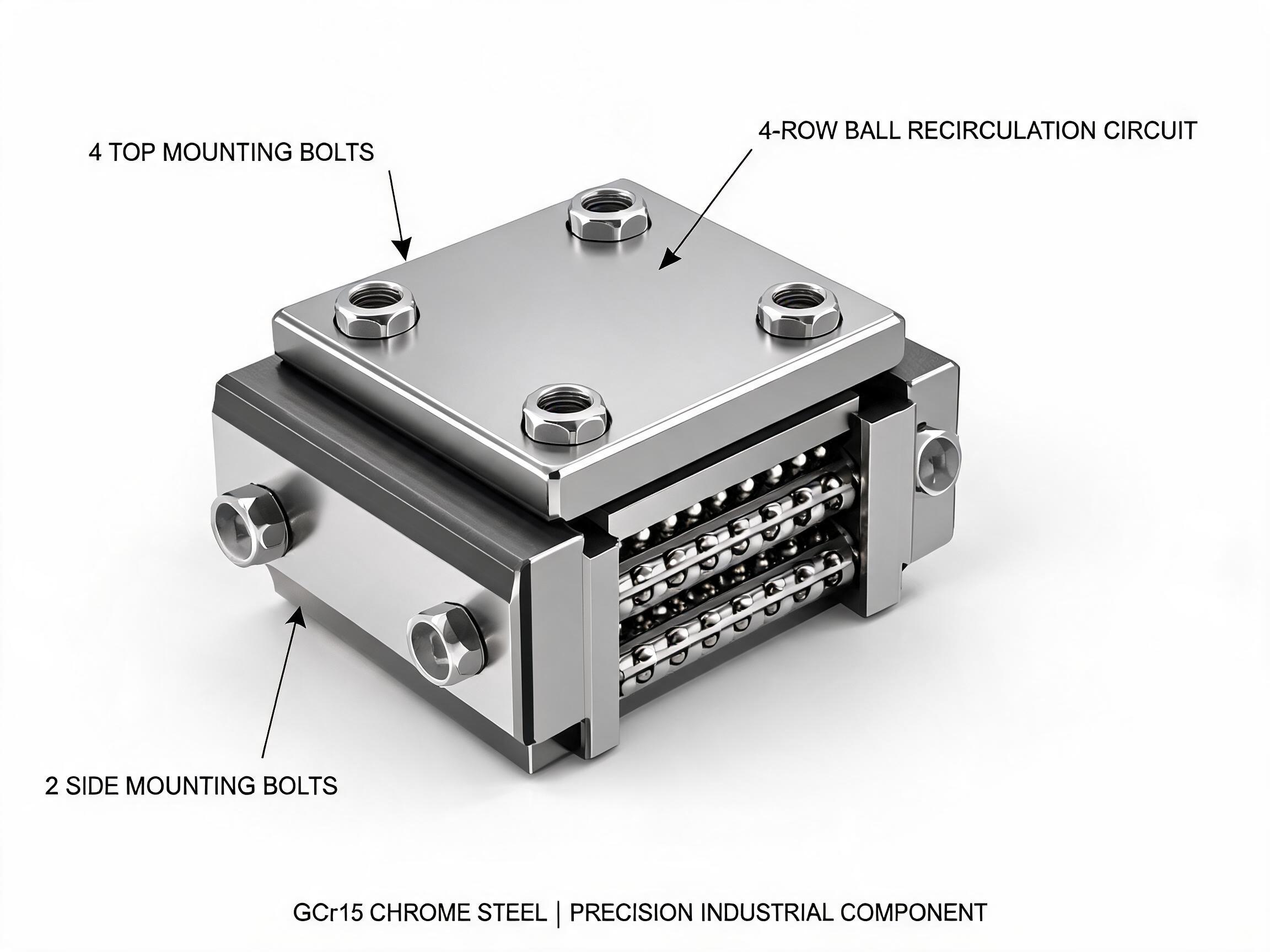
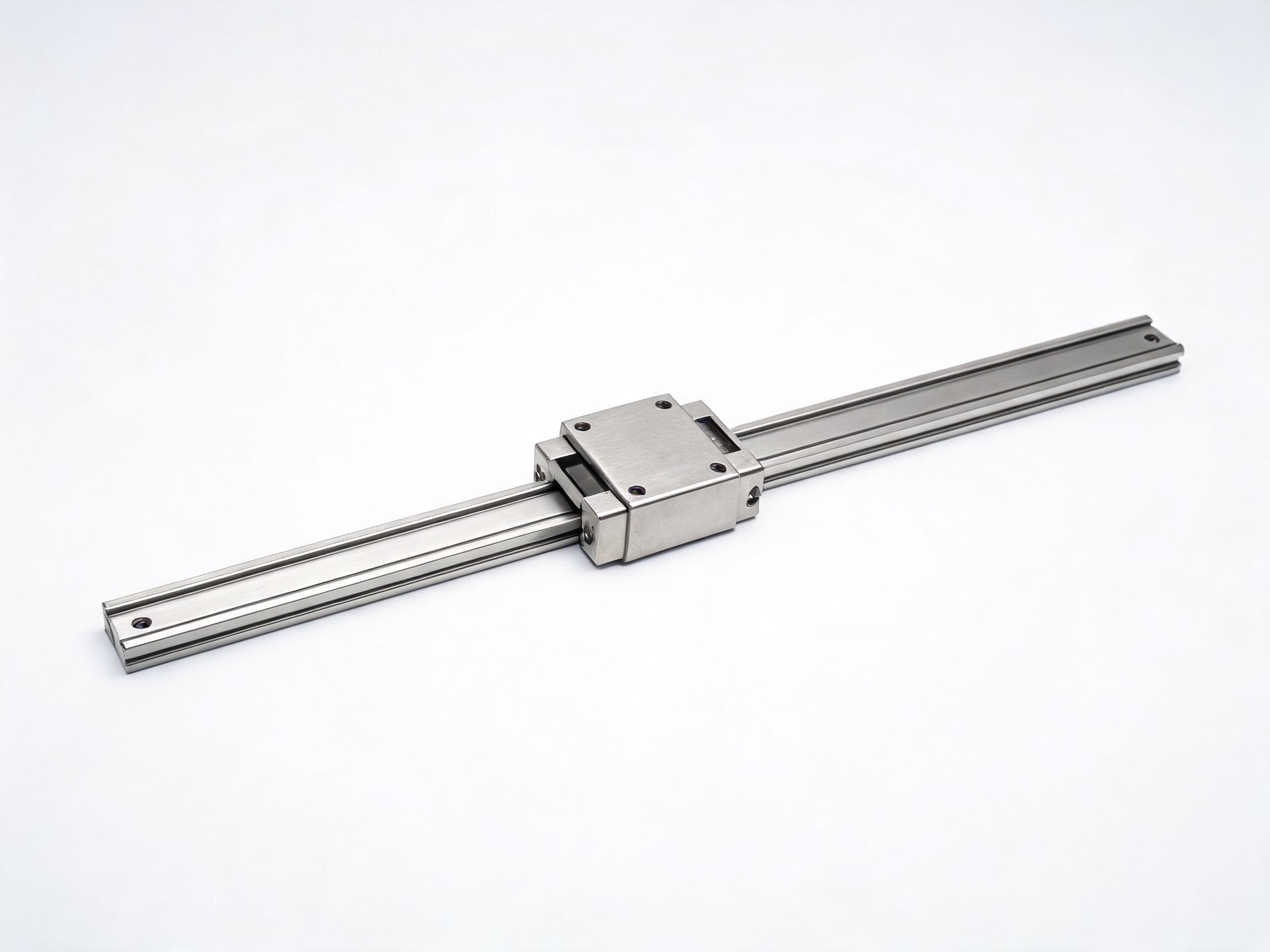
A ball bearing linear guide is a linear motion system that uses recirculating steel balls as the rolling element between carriage and rail, distinguishing it from roller-type guides that use cylindrical rollers. The ball bearing design provides low friction, smooth motion, high speed capability, and equal load capacity in all four directions through gothic arch geometry. Dongfeng Bearing manufactures ball bearing linear guides across the HGR, EGH, and MGN series, with ball diameters ranging from 1.5 mm in MGN9 miniature guides to 9.525 mm in HGR45 heavy-duty guides. Each ball circuit uses hardened chrome steel balls (GCr15, 58-62 HRC) sorted to sub-micron diameter tolerances for consistent preload and friction.
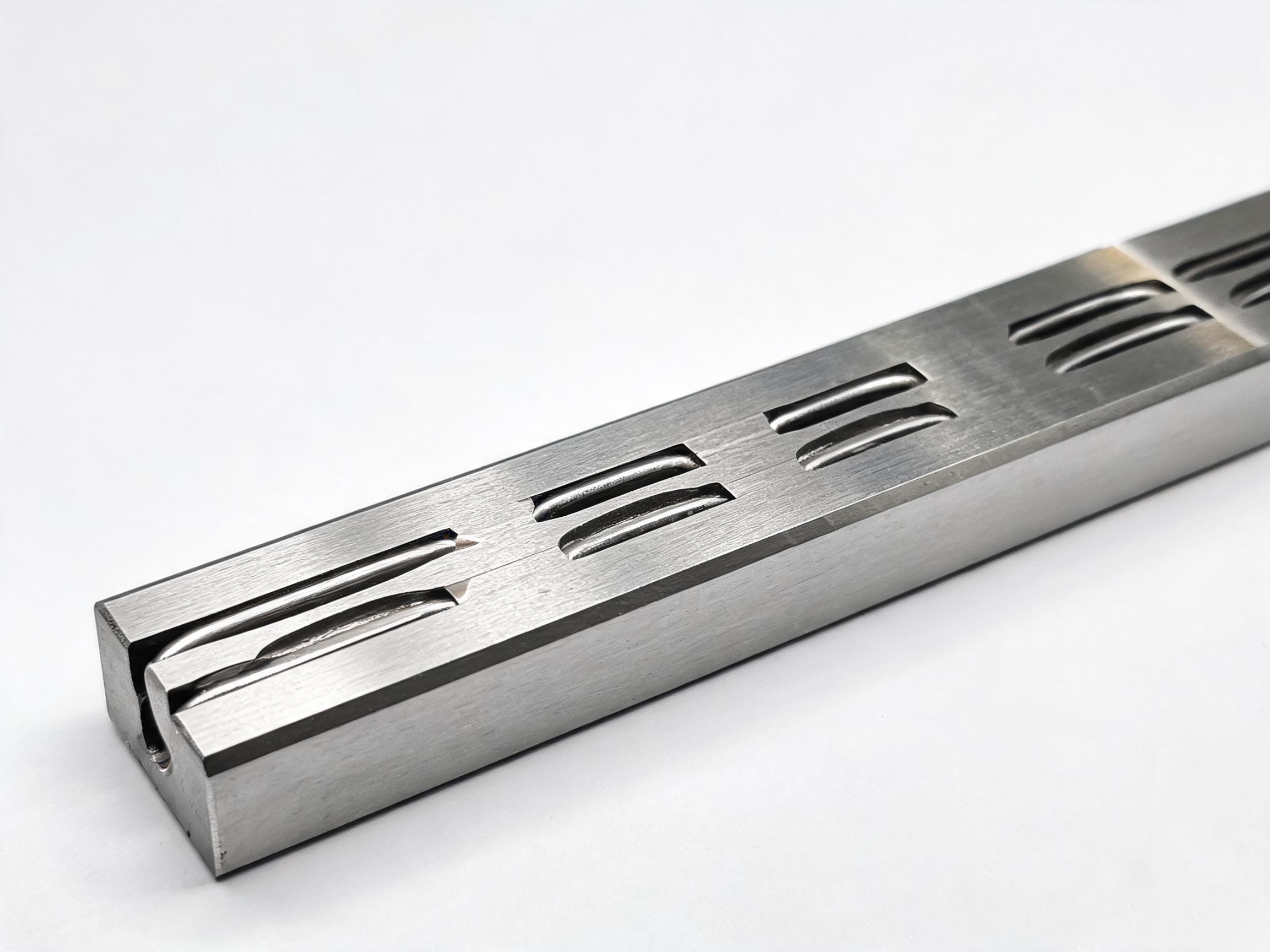
The ball bearing principle in linear guides differs from rotary ball bearings in that the balls recirculate through return circuits rather than remaining in a fixed raceway. This recirculation enables unlimited travel length while maintaining rolling contact. The gothic arch groove design creates two-point contact at a 45-degree angle, compared to circular arch designs that offer single-point contact. Two-point contact provides higher rigidity, equal four-direction load capacity, and reduced differential slip, but generates slightly higher friction than circular arch designs at low speeds.
| Guide Series | Ball Diameter | Balls per Circuit | Dynamic Load | Max Speed |
|---|---|---|---|---|
| MGN9 | 1.5 mm | approx 12 | 1.7 kN | 60 m/min |
| MGN12 | 2.0 mm | approx 15 | 3.2 kN | 60 m/min |
| HGR20 | 3.175 mm | approx 13 | 14.7 kN | 120 m/min |
| HGR25 | 4.0 mm | approx 15 | 22.4 kN | 120 m/min |
| HGR35 | 6.0 mm | approx 13 | 52.6 kN | 100 m/min |
| HGR45 | 9.525 mm | approx 15 | 84.5 kN | 90 m/min |
Ball Recirculation Mechanics and Circuit Design
Inside each carriage block, balls travel through a continuous loop consisting of four zones: the loaded zone where balls contact rail raceways, the return zone where balls travel through return tubes, and two transition zones where balls enter and exit the loaded zone. The return tubes are precision-formed steel channels embedded in the carriage body, polished to minimize ball-to-tube friction. Ball retainers between adjacent balls prevent direct ball-to-ball contact, which would cause friction, noise, and uneven wear. The retainer design is critical: too much clearance allows ball bunching, too little clearance causes retainer-to-ball friction that increases running resistance.
Gothic Arch vs Circular Arch Geometry
Dongfeng Bearing uses gothic arch groove geometry in all series. Gothic arch creates two-point contact at a 45-degree angle, providing equal load capacity in radial, reverse radial, and lateral directions. The two-point contact minimizes differential slip (the difference between rolling and sliding motion at the contact point), reducing friction and heat generation. Circular arch geometry, used by some competitors, offers single-point contact with lower friction at low speeds but unequal directional load capacity and higher differential slip at high loads. The gothic arch trade-off is slightly higher friction at very low speeds, mitigated by proper lubrication and preload selection.
| Parameter | Gothic Arch (Dongfeng) | Circular Arch |
|---|---|---|
| Contact type | Two-point | Single-point |
| Load direction | Equal 4-direction | Unequal |
| Differential slip | Lower | Higher |
| Friction at low speed | Slightly higher | Lower |
| Rigidity | Higher per unit size | Lower |
Ball Material and Hardness Specifications
All balls in Dongfeng Bearing linear guides are manufactured from GCr15 high-carbon chromium bearing steel (SUJ2/52100), hardened to 58-62 HRC through martensitic quenching and tempering. Ball surface roughness is Ra 0.025 or better after super-finishing. Diameter tolerance for standard grade balls is plus-minus 0.001 mm; for P-grade carriages, balls are sorted to plus-minus 0.0005 mm; for SP-grade, plus-minus 0.0002 mm. The ball sorting process involves measuring every ball and grouping by actual diameter, then selecting balls within the tolerance band for each carriage assembly. This selective assembly ensures consistent preload across all four ball circuits.
Friction Analysis and Drive Force Calculation
The friction coefficient for ball bearing linear guides is typically 0.003-0.005, significantly lower than plain bushings (0.1-0.2) and roller guides (0.005-0.01). Actual friction force equals the coefficient times (dynamic load plus preload force plus seal friction). For HGR25 with ZB preload (1.12-1.57 kN) and 5 kN applied load, friction force equals 0.004 times (5 plus 1.35 plus 0.5) equals 27 millinewtons, requiring a drive force of approximately 30-40 N including safety margin. This low friction enables smaller drive motors, reduced heat generation, and higher efficiency compared to sliding contact systems.
Speed Limitations and Dynamic Performance
Maximum speed for ball bearing linear guides is limited by ball recirculation dynamics. At high speeds, centrifugal force in the return tubes can cause ball-to-tube impact, increasing noise and wear. HGR series supports speeds up to 120 m/min for sizes 15-25, decreasing to 90 m/min for HGR45 due to larger ball mass. MGN miniature guides are limited to 60 m/min due to smaller ball circuit geometry. Acceleration limits depend on preload and load: with ZB preload and rated load, acceleration up to 50 m per second squared is achievable. Higher acceleration requires ZC preload to prevent ball skidding in the loaded zone.
Noise and Vibration Characteristics
Ball bearing linear guides generate noise from ball recirculation through return tubes and transition zones. Typical noise levels are 58-68 dB at 10 m/min measured at 1 meter distance. Noise increases with speed, preload, and ball diameter. MGN miniature guides are quieter (55-60 dB) due to smaller ball size and lower recirculation velocity. Noise reduction strategies include using ball retainers to prevent ball-to-ball contact, optimizing return tube geometry for smooth transitions, applying low-noise grease with damping additives, and selecting ZA preload when rigidity permits. Vibration at low speeds (stick-slip) is minimized by gothic arch geometry and proper lubrication.
Comparison: Ball Bearing Guides vs Roller Guides
Ball bearing guides use spherical balls with point contact, providing low friction, high speed, and equal directional load capacity. Roller guides use cylindrical rollers with line contact, offering higher load capacity per unit size but lower speed capability, higher friction, and unequal directional loading. For most automation and CNC applications, ball bearing guides provide the best balance of speed, precision, load capacity, and cost. Roller guides are preferred only for extremely high load applications where the rail cross-section must be minimized.
| Parameter | Ball Bearing Guide | Roller Guide |
|---|---|---|
| Contact type | Point (ball) | Line (roller) |
| Load capacity per size | Lower | Higher |
| Friction coefficient | 0.003-0.005 | 0.005-0.01 |
| Max speed | 120 m/min | 80 m/min |
| Directional load | Equal 4-direction | Unequal |
| Cost | Lower | Higher |
Maintenance and Ball Circuit Inspection
Ball bearing linear guides require regular lubrication to maintain the ball-raceway oil film and prevent metal-to-metal contact. Relubricate HGR systems every 500-1000 hours with lithium grease NLGI 2. For MGN miniature guides, use low-viscosity grease NLGI 0 or 1 every 100-300 km. Inspect ball circuits during seal replacement: look for ball surface spalling, raceway flaking, or discoloration indicating lubrication failure. Measure carriage running resistance periodically; a 20 percent increase over baseline indicates ball circuit wear. Full carriage replacement is recommended when individual ball spalling is detected, as mixed-condition balls cause uneven loading and accelerated wear.
Quality Assurance for Ball Bearing Guide Systems
Each ball bearing guide shipment includes CMM inspection of rail raceway geometry, carriage height and parallelism, ball diameter verification, and friction torque testing. Ball hardness is verified at 58-62 HRC (GCr15) or 56-58 HRC (9Cr18Mo stainless) through random sampling per batch. SGS material test reports confirm ball and rail steel composition. CE conformity, RoHS, and REACH compliance are standard. 24-month warranty covers ball circuit defects, raceway failure, and dimensional non-conformance under rated load conditions.
Frequently Asked Questions
What is a ball bearing linear guide?
A linear motion system using recirculating steel balls as rolling elements between carriage and rail. Balls circulate through return circuits, enabling unlimited travel with low friction (0.003-0.005) and equal four-direction load capacity through gothic arch geometry.
How does a ball bearing linear guide differ from a roller guide?
Ball guides use spherical balls with point contact for low friction and high speed (120 m/min). Roller guides use cylindrical rollers with line contact for higher load per size but lower speed (80 m/min) and higher friction. Ball guides are preferred for most applications.
What ball material and hardness are used?
GCr15 high-carbon chromium bearing steel (SUJ2/52100), hardened to 58-62 HRC with surface roughness Ra 0.025. Stainless steel variants use 9Cr18Mo at 56-58 HRC. Balls are sorted to plus-minus 0.001 mm (standard), 0.0005 mm (P-grade), or 0.0002 mm (SP-grade).
What is the friction coefficient of ball bearing linear guides?
0.003-0.005, which is 20-50 times lower than plain bushings. For HGR25 with ZB preload at 5 kN load, friction force is approximately 27 millinewtons, enabling smaller drive motors and higher efficiency.
What is the maximum speed for ball bearing guides?
HGR15-25: up to 120 m/min. HGR35: 100 m/min. HGR45: 90 m/min (limited by larger ball mass). MGN miniature: 60 m/min. Acceleration up to 50 m/s squared with ZB preload at rated load.
Why does Dongfeng use gothic arch geometry?
Gothic arch provides two-point contact at 45 degrees, giving equal load capacity in all four directions, higher rigidity per unit size, and lower differential slip. Circular arch offers lower friction at very low speeds but unequal directional loading.
How noisy are ball bearing linear guides?
58-68 dB at 10 m/min measured at 1 meter. MGN miniature guides are quieter at 55-60 dB. Noise reduction strategies include ball retainers, optimized return tube geometry, low-noise grease, and ZA preload where rigidity permits.
How often should ball bearing guides be lubricated?
HGR systems: every 500-1000 hours with NLGI 2 grease. MGN miniature: every 100-300 km with NLGI 0 or 1. Inspect ball circuits during seal replacement for spalling, flaking, or discoloration.
When should I replace a ball bearing guide carriage?
Replace when individual ball spalling is detected, when running resistance increases by 20 percent over baseline, or at 70-80 percent of L10 life. Mixed-condition balls cause uneven loading and accelerated wear of the entire system.
What quality inspections are performed on ball bearing guides?
CMM raceway geometry inspection, ball diameter verification, hardness testing (58-62 HRC), friction torque testing, SGS material reports, CE conformity, RoHS, and REACH compliance. 24-month warranty from shipment date.