
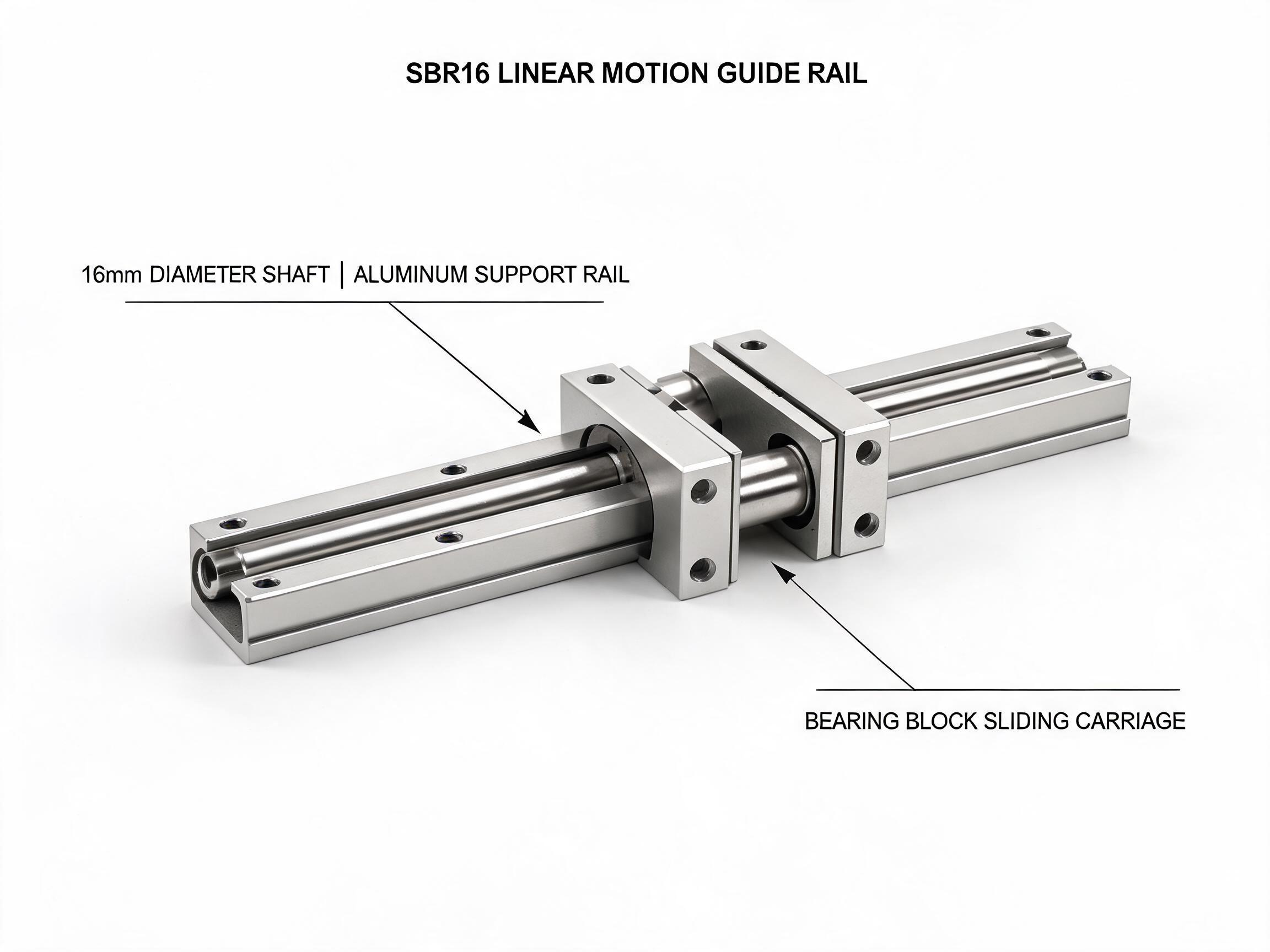
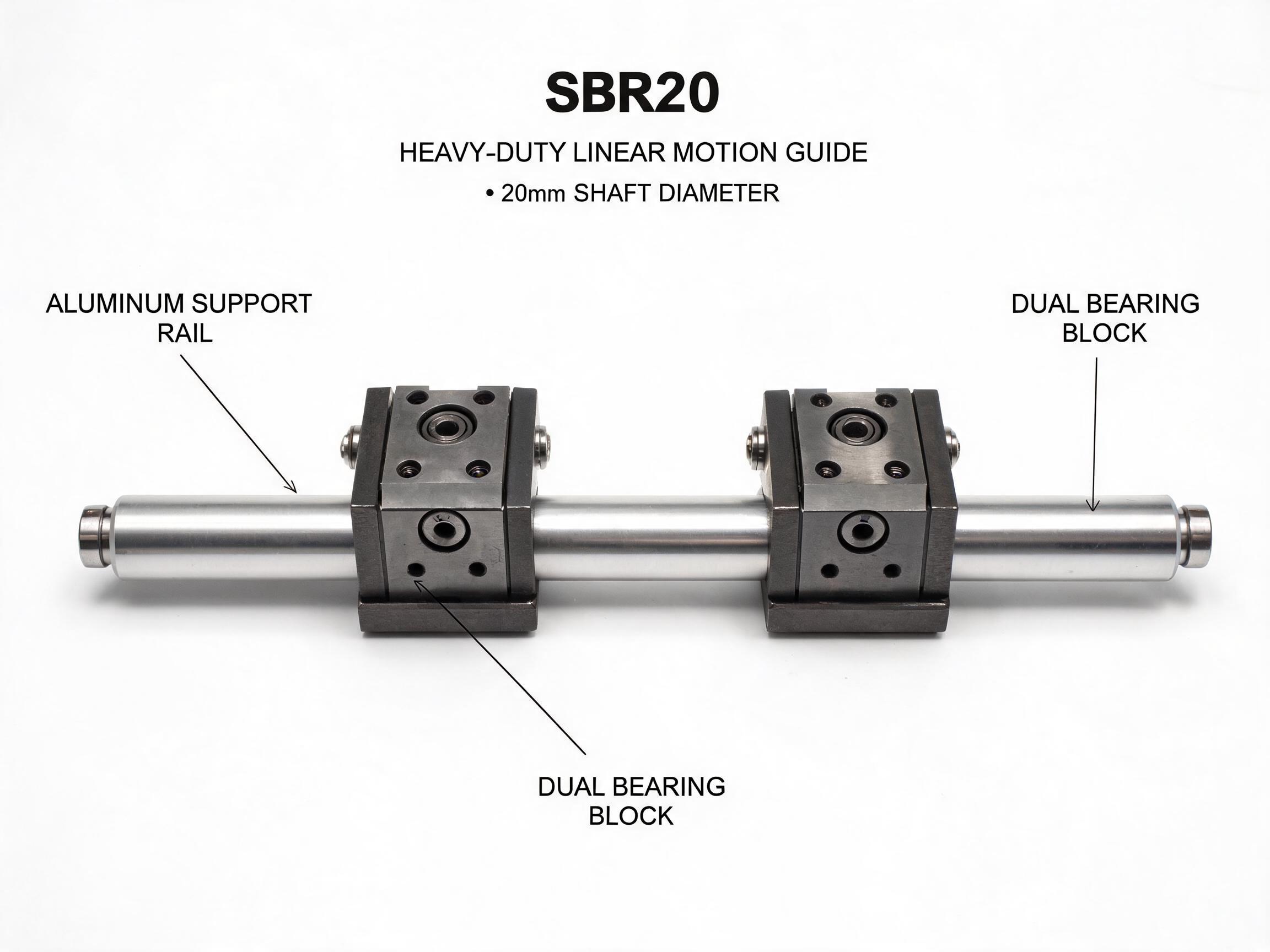
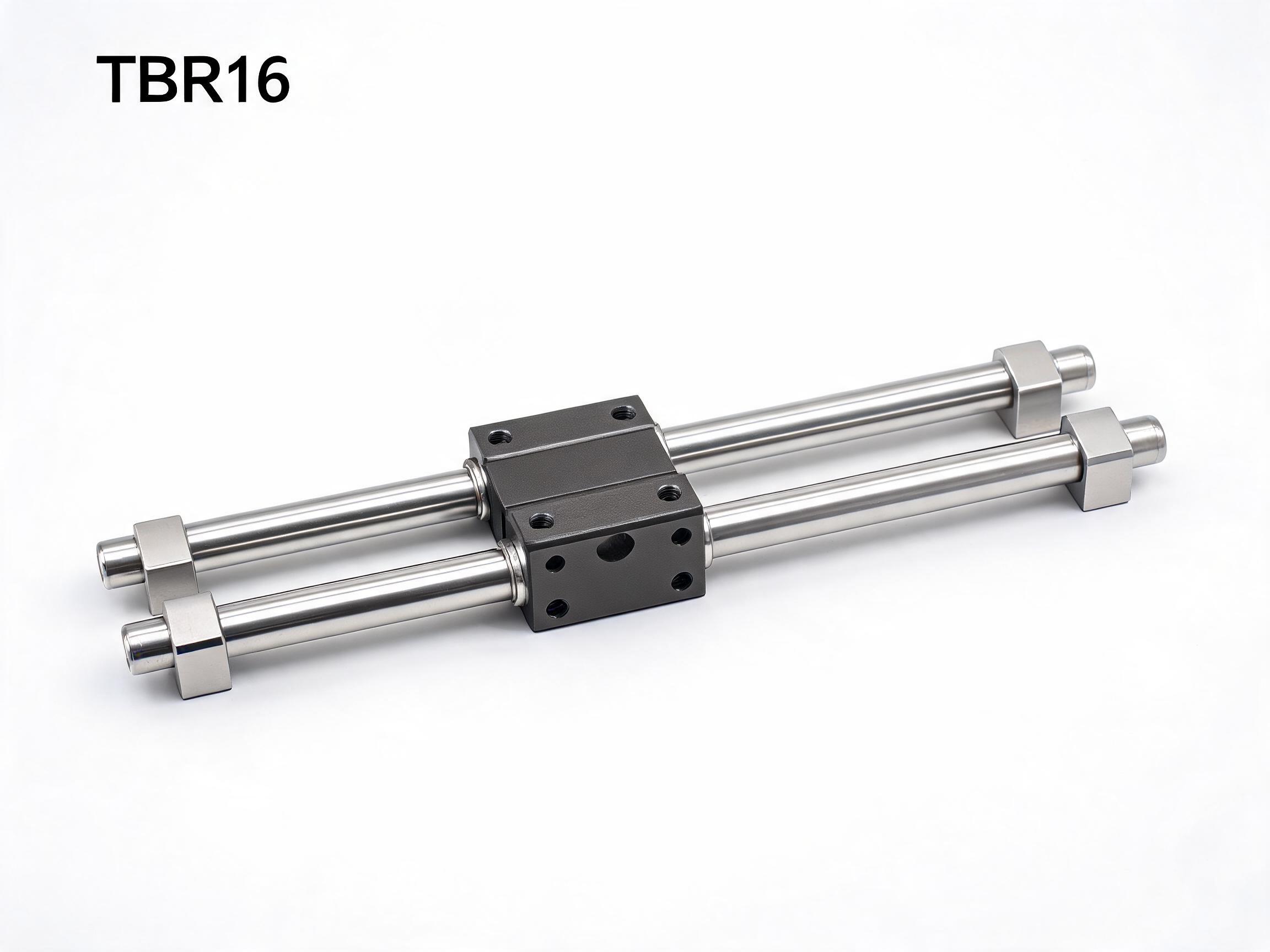
Cross Slide Table Product Range
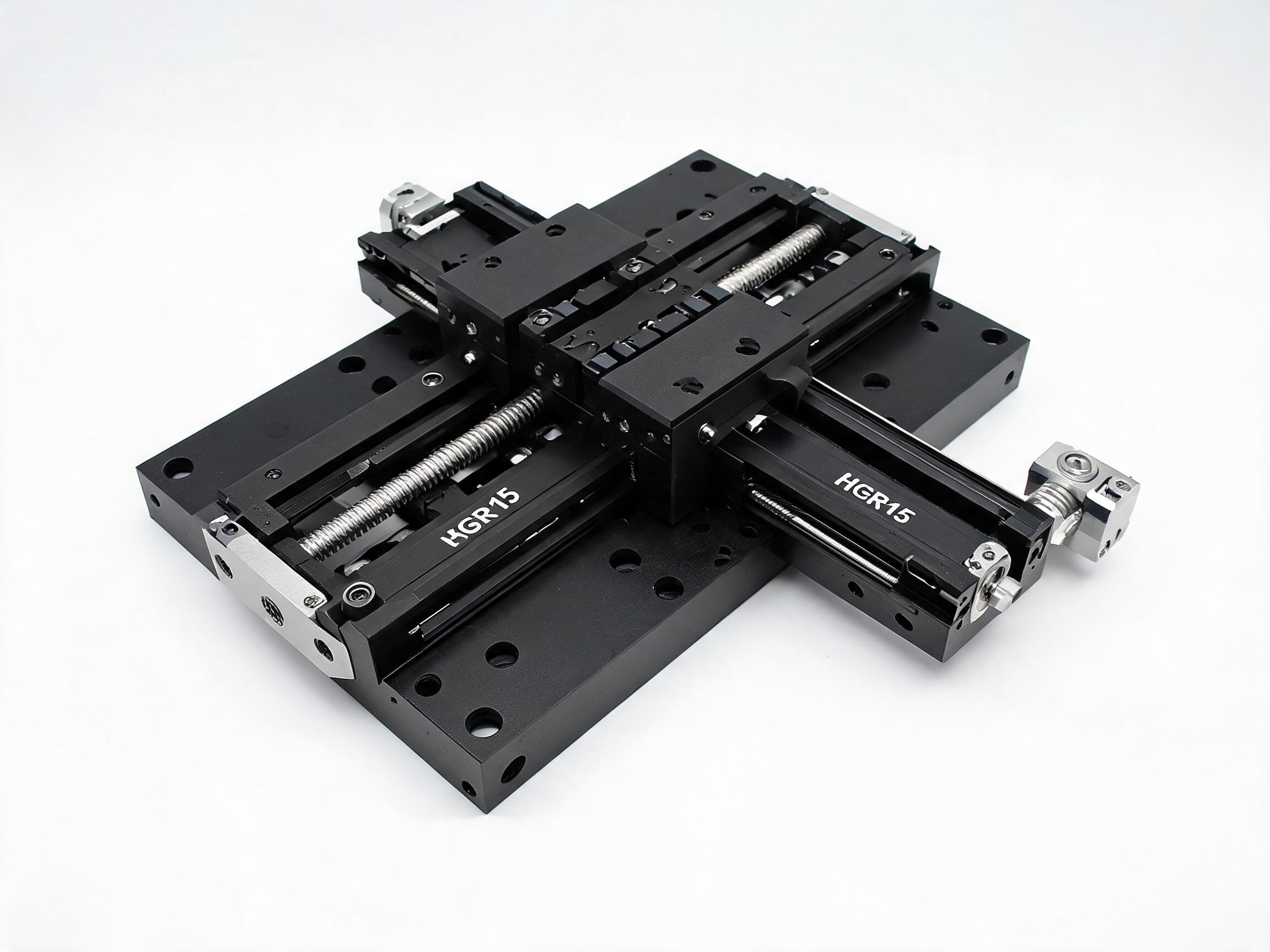
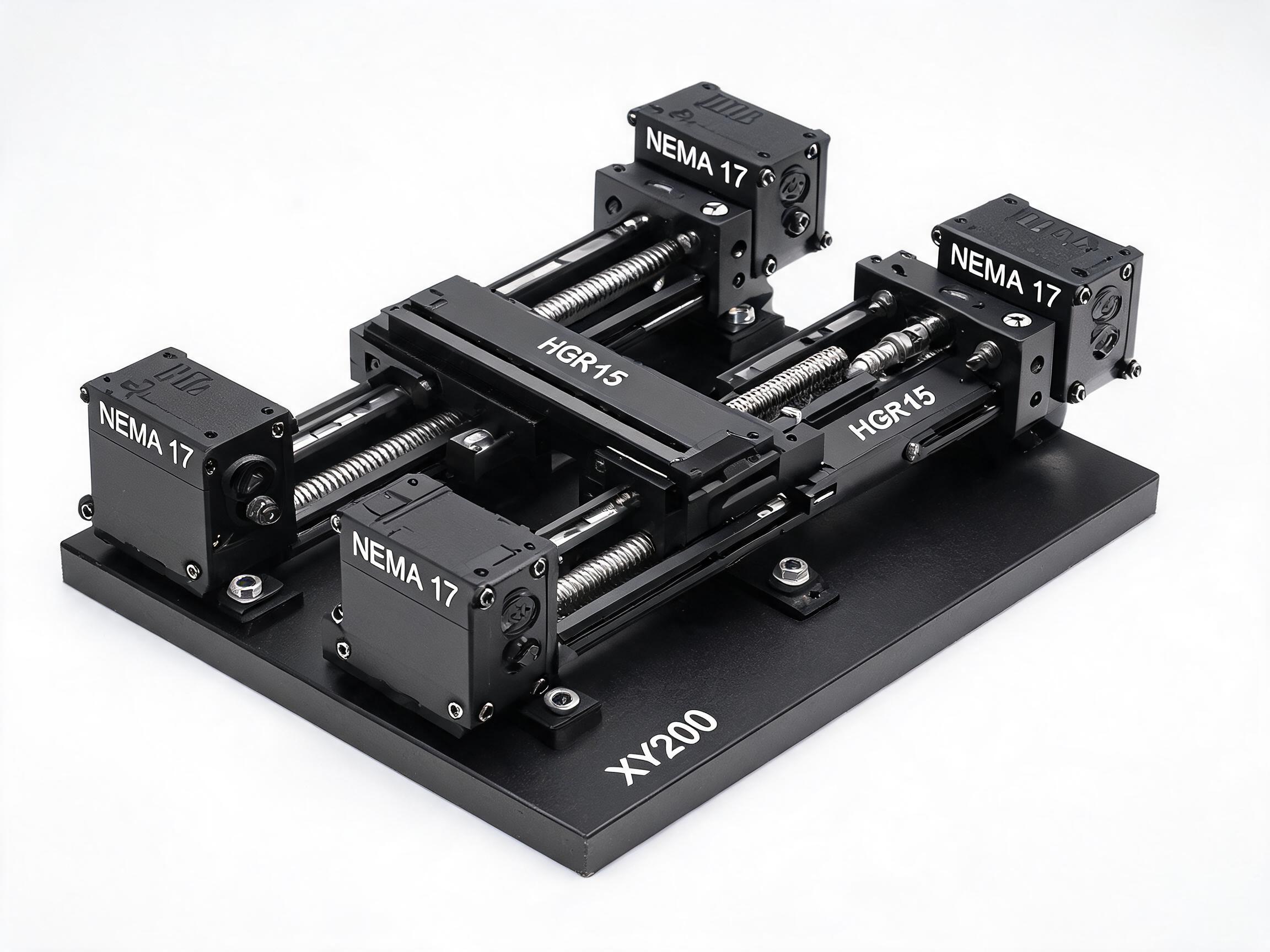
Dongfeng Bearing manufactures the XY200 precision cross slide table with dual ball screw drive, designed for applications requiring precise two-axis positioning in a compact, integrated platform. The XY200 combines two perpendicular linear axes, each driven by a ball screw with precision guideway rails and carriage blocks, into a single table assembly with a flat working surface for mounting workpieces, fixtures, or inspection equipment.
The XY200 is engineered for applications where a standard single-axis slide cannot provide the required X-Y positioning capability, and where a full custom machine build would be cost-prohibitive. The cross slide table provides a turnkey two-axis positioning solution that can be integrated into CNC machines, inspection stations, assembly equipment, and measurement systems.
| Parameter | XY200 Specification |
|---|---|
| Table size | 200 x 200 mm working surface |
| Travel per axis | 50 mm (X and Y) |
| Drive type | Ball screw (SFU1605, 5 mm lead) |
| Guidance | Linear guideway (HGR15 or equivalent) |
| Positioning accuracy | 0.02 mm (C7 ball screw) |
| Repeatability | 0.01 mm |
| Load capacity | 50 kg (evenly distributed) |
| Material | Aluminum alloy table, steel base |
How a Cross Slide Table Works
A cross slide table consists of two stacked linear motion axes: a lower (base) axis that provides X-direction travel and an upper (cross) axis that provides Y-direction travel. Each axis is driven by a ball screw that converts rotary input from a handwheel, stepper motor, or servo motor into precise linear displacement.
The lower axis is mounted on the base frame and carries the upper axis on its table. When the lower ball screw rotates, the entire upper axis moves in the X direction. When the upper ball screw rotates, the upper table moves in the Y direction relative to the lower axis. The two axes are perpendicular, allowing the workpiece mounted on the upper table to be positioned at any point within the travel envelope.
Each axis uses linear guideway rails and carriage blocks for smooth, low-friction guidance. The ball screw provides accurate positioning with efficiency exceeding 90%, enabling smooth manual operation with a handwheel or precise motor-driven positioning. Graduated dials on the handwheel provide position readout for manual operation; for motor-driven operation, the position is determined by the motor encoder or a linear scale.
Applications of Cross Slide Tables
Cross slide tables are used in applications requiring precise two-dimensional positioning:
- Drill press and milling machine X-Y tables: The XY200 provides precise workpiece positioning for drilling, milling, and boring operations. The ball screw drive enables both manual fine-adjustment and motor-driven CNC operation.
- Inspection and measurement: Optical comparators, measuring microscopes, and coordinate measuring setups use cross slide tables to position the workpiece under the measurement head. The 0.01 mm repeatability ensures accurate positioning for dimensional inspection.
- Assembly and pick-and-place: Small-parts assembly stations use motorized cross slide tables to position components for automated assembly. The compact footprint fits within standard workstation enclosures.
- Laboratory and research: Sample positioning for microscopy, spectroscopy, and materials testing. The manual handwheel operation provides tactile feedback for fine positioning.
- Welding and marking: Positioning of small workpieces under welding heads, laser markers, or engraving spindles. The ball screw drive provides smooth, backlash-free motion for precise path following.
Selecting a Cross Slide Table: Key Parameters
When selecting a cross slide table, consider the following parameters:
- Travel length per axis: Determine the required travel in both X and Y directions. The XY200 provides 50 mm per axis. For longer travel, custom configurations are available.
- Load capacity: Calculate the total weight of the workpiece, fixture, and any tooling mounted on the table. Verify it is within the rated load capacity (50 kg for XY200, evenly distributed).
- Positioning accuracy: The C7 ball screw provides 0.05 mm/300 mm lead accuracy. For higher precision, C5 ground ball screws are available, achieving 0.018 mm/300 mm.
- Drive type: Manual (handwheel) for inspection and lab applications; motorized (stepper or servo) for CNC and automated applications. Specify the motor type, coupling, and mounting requirements.
- Table size: Verify the working surface is large enough for the workpiece and fixture. Custom table sizes are available.
- Mounting: Determine how the table will be mounted (benchtop, machine bed, vertical surface). Specify mounting hole pattern and interface.
Ball Screw Drive vs. Manual Lead Screw Drive
| Parameter | Ball Screw Drive (XY200) | Manual Lead Screw Drive |
|---|---|---|
| Efficiency | 90%+ | 30-50% |
| Backlash | 0.01-0.05 mm (single nut) or ~0 (double nut) | 0.05-0.15 mm |
| Positioning accuracy | 0.02 mm (C7) | 0.1-0.2 mm |
| Smoothness | Excellent (rolling contact) | Good (sliding contact) |
| Manual feel | Light, smooth (high efficiency) | Heavier, more tactile |
| Self-locking | No (requires brake for vertical) | Yes (back-drive resistant) |
| Cost | Higher | Lower |
Ball screw drive is recommended for applications requiring precise positioning, smooth motion, or motor-driven operation. Manual lead screw drive is suitable for applications where coarse positioning is sufficient and the tactile feedback of a higher-friction screw is preferred.
Guidance Systems in Cross Slide Tables
The guidance system determines the table's load capacity, rigidity, and smoothness:
- Linear guideway (HGR series): Gothic arch groove with recirculating ball circuits. High rigidity, high load capacity, smooth motion. Used in the XY200 for both axes. Provides 0.01 mm repeatability.
- Dowel pin + linear shaft: Simpler and lower-cost, using precision shafts with flange bearings. Lower rigidity and load capacity than guideways. Used in economy cross slide tables.
- Box way (sliding contact): Highest rigidity and damping, used in heavy-duty machine tools. Higher friction, requires more maintenance. Not used in compact cross slide tables.
The XY200 uses linear guideways for both axes, providing the optimal balance of rigidity, precision, and compact size for general-purpose cross slide table applications.
Motorization Options
The XY200 cross slide table can be motorized for CNC and automated applications:
- Stepper motor: NEMA 17 or NEMA 23 stepper motors provide cost-effective positioning with open-loop control. Resolution depends on motor step angle and ball screw lead (e.g., 1.8° motor with 5 mm lead = 0.025 mm/step, or 0.0025 mm/step with 10x microstepping).
- Servo motor: AC or DC servo motors with encoders provide closed-loop positioning with higher speed and torque. Recommended for applications requiring high dynamic performance or where missed steps are unacceptable.
- Manual handwheel: Graduated dials with 0.01 mm resolution for manual positioning. Suitable for inspection, lab, and light-duty applications.
- Coupling: Flexible couplings (bellows or disk type) connect the motor to the ball screw, accommodating slight misalignment without backlash.
Installation and Setup
- Mounting surface: The mounting surface must be flat within 0.02 mm per 300 mm. Uneven surfaces cause table distortion, affecting accuracy.
- Bolting: Use the specified bolts and torque pattern. Verify all mounting bolts are tight and the table is stable.
- Squareness check: Verify the X and Y axes are perpendicular within 0.02 mm per 50 mm of travel. Use a precision square or dial indicator to check.
- Backlash check: Measure backlash by positioning in one direction, then reversing. The position difference is the backlash. For double-nut ball screws, backlash should be near zero.
- Lubrication: Apply grease to ball screws and guideways before initial operation. Relubricate every 3-6 months or per usage.
Maintenance and Calibration
Regular maintenance ensures long-term accuracy and smooth operation:
- Lubrication: Ball screws and guideways require grease (NLGI 2 lithium-based). Relubricate every 3-6 months under normal use, more frequently in contaminated environments.
- Cleaning: Keep the table surface and ball screw areas clean. Use a soft cloth to remove dust and debris. Avoid compressed air which can force contaminants into bearings.
- Accuracy verification: Periodically verify positioning accuracy and repeatability using a dial indicator or laser interferometer. If accuracy degrades, check for ball screw wear, guideway damage, or loose mounting bolts.
- Backlash monitoring: If backlash increases over time, the ball screw nut may be wearing. For preloaded double-nut assemblies, preload loss indicates nut wear and may require replacement.
Quality Control and Compliance
Each XY200 cross slide table undergoes:
- Travel accuracy measurement (lead deviation per 50 mm travel)
- Repeatability test (bidirectional, 10 cycles per axis)
- Squareness verification between X and Y axes
- Backlash measurement
- Smoothness test (manual and motorized)
- Component-level inspection (ball screw, guideway, table flatness)
Products carry CE conformity marking, SGS material test reports, RoHS compliance, and REACH registration. A 24-month warranty applies against manufacturing defects.
Frequently Asked Questions
What is the travel range of the XY200 cross slide table?
The XY200 provides 50 mm travel per axis (X and Y). Custom travel lengths are available on request. For applications requiring longer travel, larger cross slide table models can be manufactured to specification.
Can the cross slide table be motorized?
Yes. The XY200 accepts NEMA 17 or NEMA 23 stepper motors or servo motors on both axes. Flexible couplings connect the motor to the ball screw. Specify motor type, mounting requirements, and coupling type when ordering.
What is the positioning accuracy of the cross slide table?
With C7 ball screws, positioning accuracy is 0.05 mm per 300 mm and repeatability is 0.01 mm. With optional C5 ground ball screws, accuracy improves to 0.018 mm per 300 mm and repeatability to 0.005 mm.
What is the load capacity of the XY200?
The XY200 is rated for 50 kg evenly distributed load on the table surface. For higher loads, larger models with heavier-duty guideways and ball screws are available. Concentrated or offset loads may reduce the rated capacity.
Are the ball screws zero-backlash?
Standard configuration uses single-nut ball screws with 0.01-0.05 mm backlash. For zero-backlash operation, double-nut preloaded ball screws (DFU series) are available. Specify zero-backlash requirement when ordering.
Can I order a custom table size?
Yes. OEM/ODM services cover custom table dimensions, travel lengths, drive configurations, and mounting interfaces. Contact us with your specifications for a custom quotation.
What is the difference between a cross slide table and an XY stage?
The terms are often used interchangeably. A cross slide table typically refers to a manual or motorized two-axis table with ball screw or lead screw drive. An XY stage may refer to higher-precision positioning stages used in semiconductor or optical applications. The XY200 is suitable for both general-purpose and precision applications.
How is the table mounted?
The XY200 has mounting holes on the base for benchtop or machine bed installation. Specify vertical or horizontal mounting orientation. For vertical mounting, ensure the ball screws can support the table weight (ball screws are not self-locking).
What certifications are provided?
CE conformity marking, SGS material test reports, RoHS compliance, and REACH registration. Full inspection documentation including travel accuracy and repeatability data is included. 24-month warranty applies.
What is the lead time for a cross slide table?
Standard XY200 production lead time is 15-25 working days. Custom configurations (size, travel, drive type) require 25-35 working days. Sample orders for qualification can typically be shipped within 10-15 working days.