Flange Linear Bearing Product Range
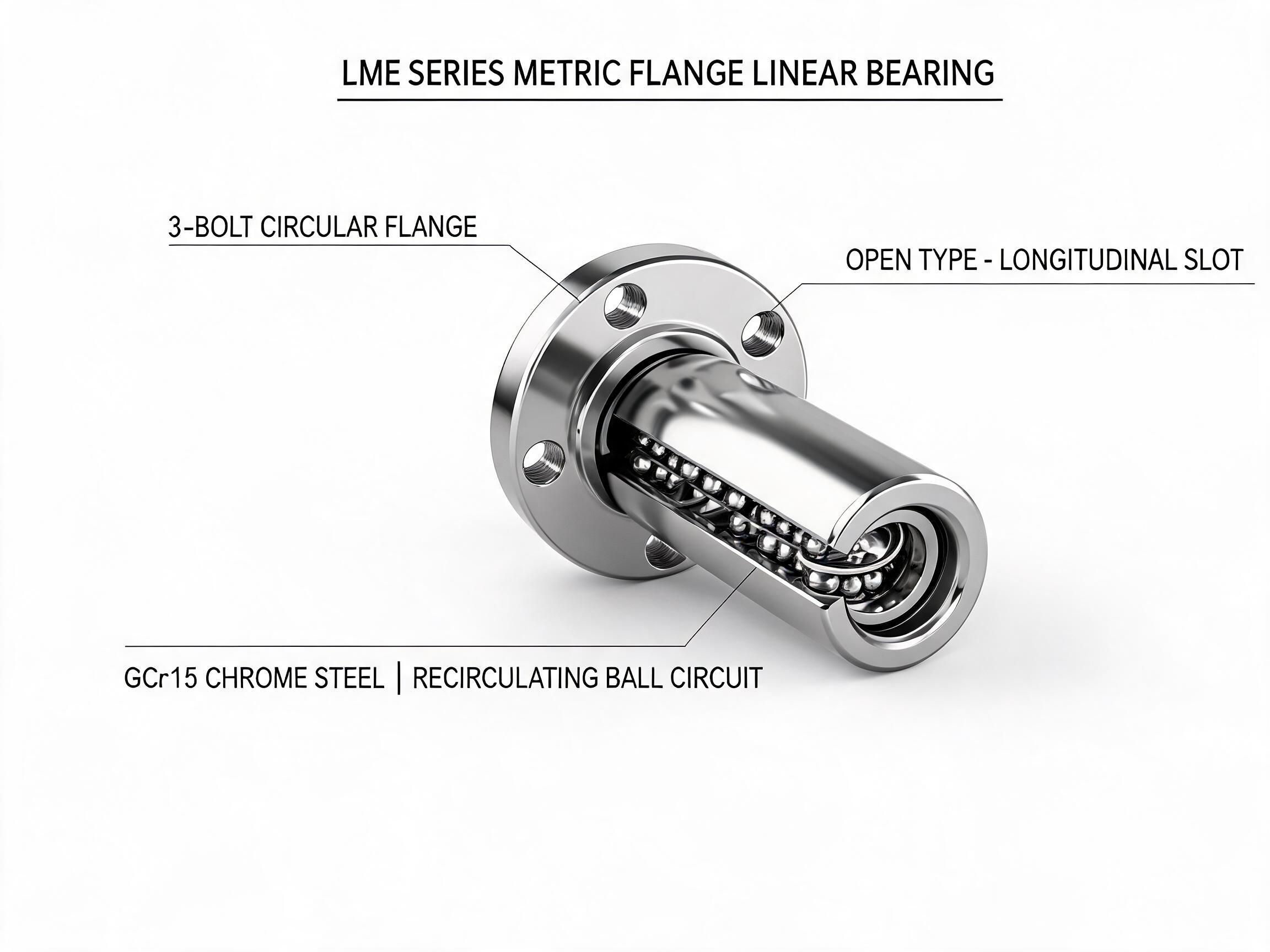
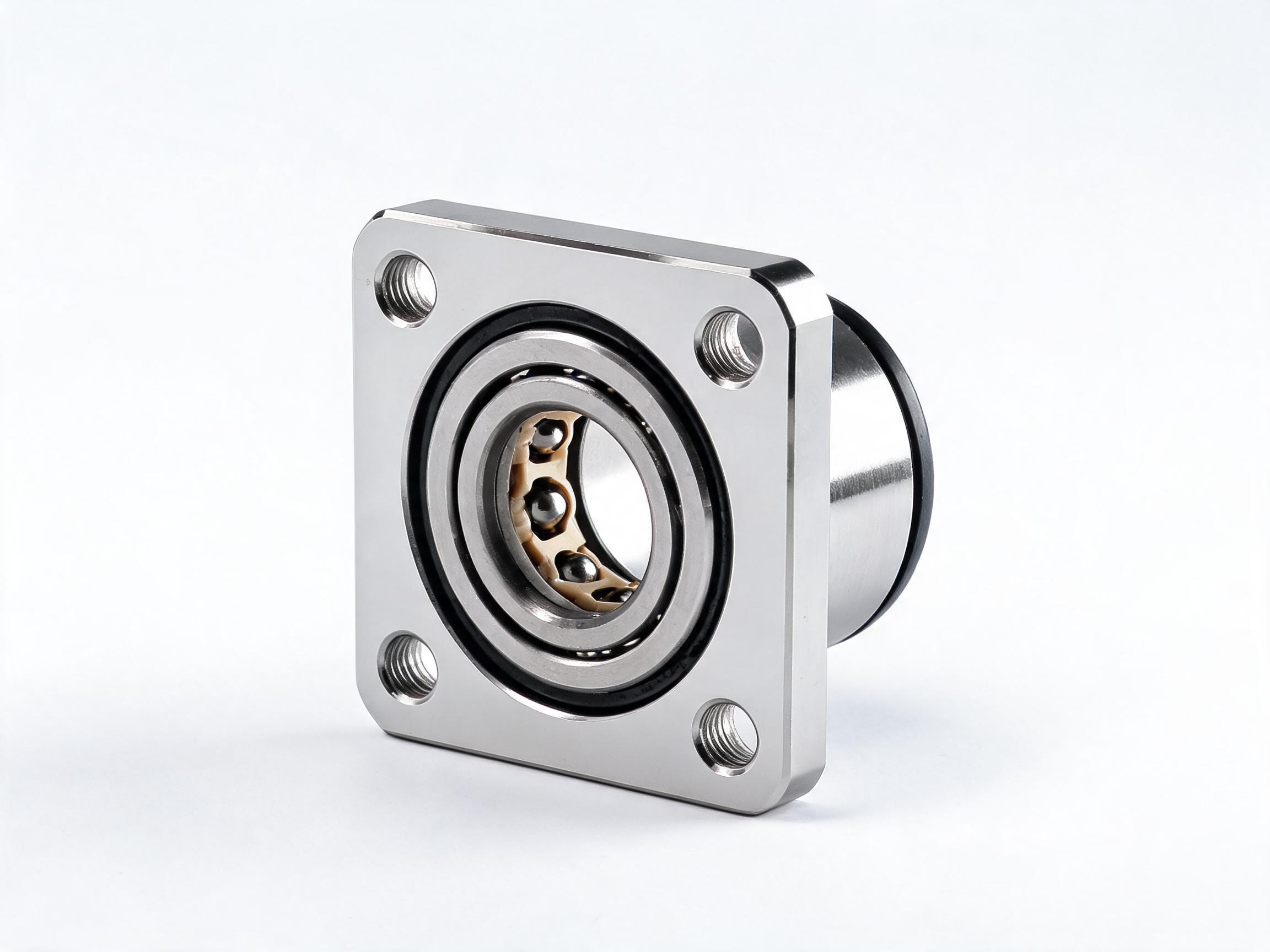
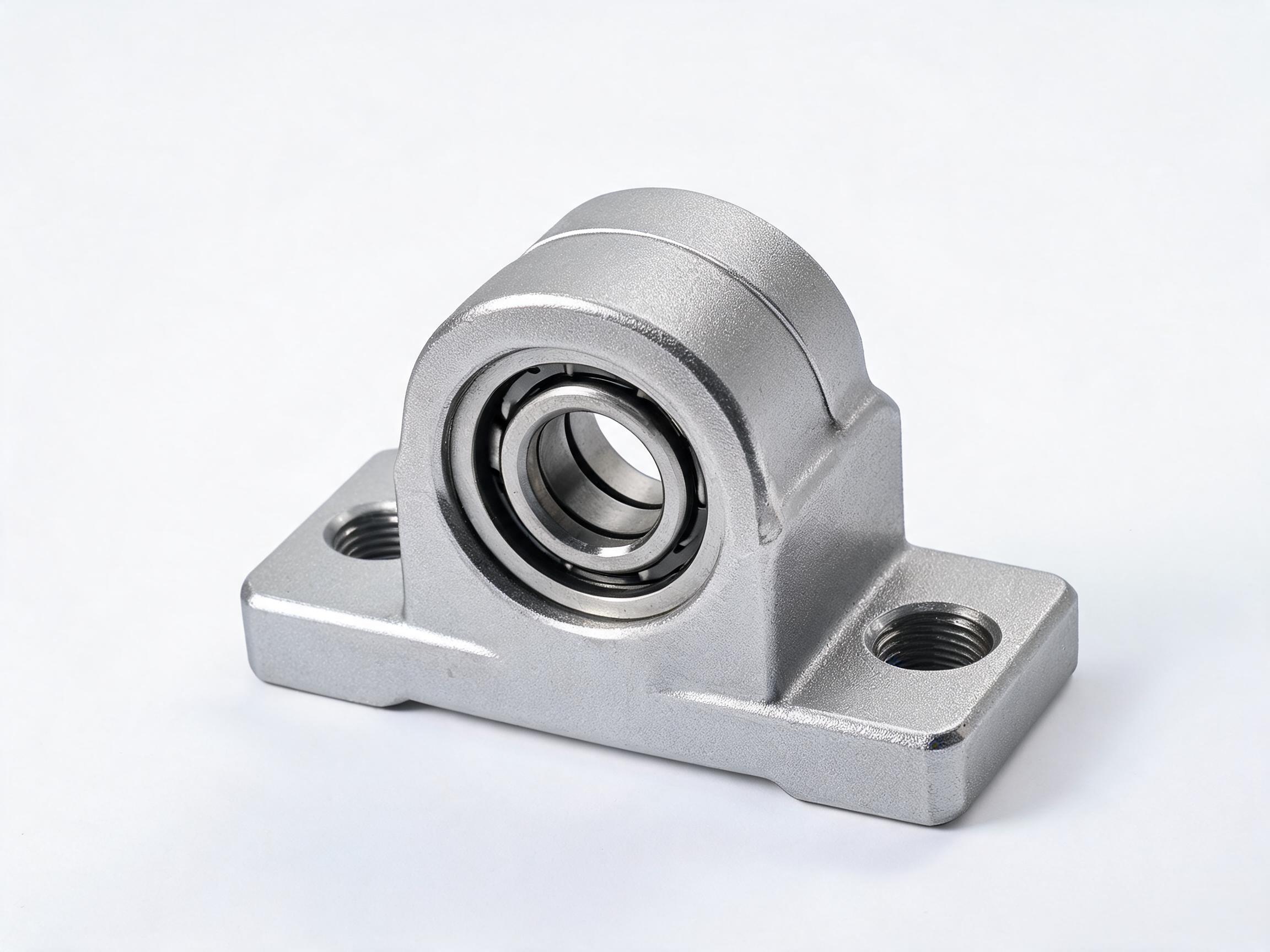
Dongfeng Bearing manufactures flange linear bearings in two primary configurations: LME metric flange bearings with a round flange and LMF square flange bearings. Both types use recirculating ball circuits to provide smooth, low-friction linear motion along precision shafts. The flange provides a flat mounting surface with bolt holes, enabling direct attachment to carriage plates, brackets, and housings without requiring a separate bearing housing.
Flange linear bearings are available for shaft diameters from 6 mm to 60 mm. The LME series features a circular flange with 2-4 mounting holes, while the LMF series uses a square flange with 4 mounting holes for higher mounting stability. Both series use steel or polymer ball retainers that prevent ball-to-ball contact, reducing friction variation and noise while enabling smooth motion at speeds up to 60 m/min.
| Model | Shaft Dia. | Flange Type | Dynamic Load | Static Load |
|---|---|---|---|---|
| LME6 | 6 mm | Round, 2 holes | 0.36 kN | 0.55 kN |
| LME12 | 12 mm | Round, 2 holes | 0.88 kN | 1.45 kN |
| LME16 | 16 mm | Round, 4 holes | 1.55 kN | 2.65 kN |
| LME20 | 20 mm | Round, 4 holes | 2.45 kN | 4.20 kN |
| LMF12 | 12 mm | Square, 4 holes | 0.88 kN | 1.45 kN |
| LMF16 | 16 mm | Square, 4 holes | 1.55 kN | 2.65 kN |
| LMF20 | 20 mm | Square, 4 holes | 2.45 kN | 4.20 kN |
| LMF25 | 25 mm | Square, 4 holes | 3.65 kN | 6.30 kN |
How Flange Linear Bearings Work
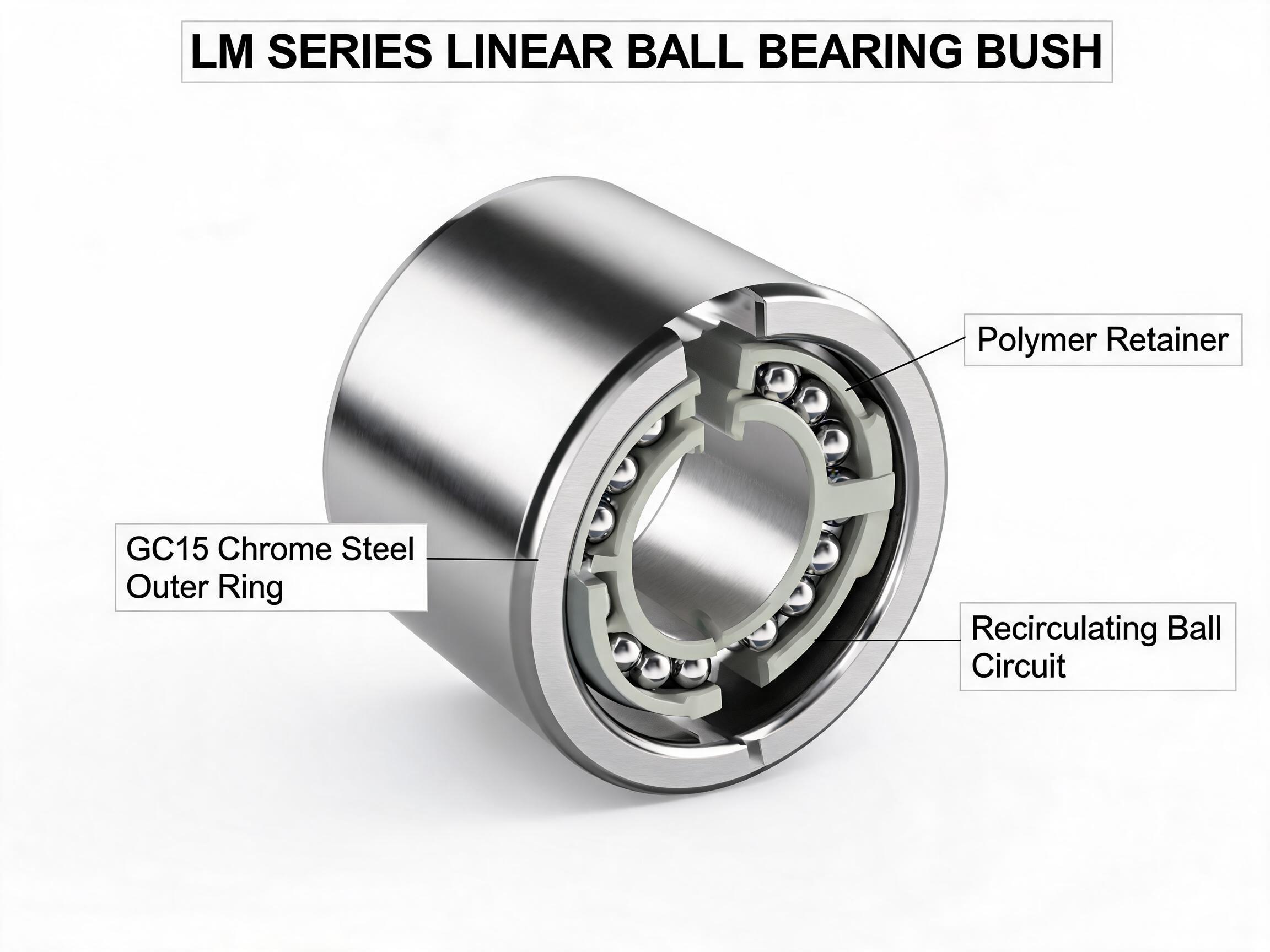
A flange linear bearing consists of an outer cylinder, ball retainer, balls, and seals. The balls are arranged in multiple circuits within the retainer. As the bearing moves along the shaft, balls in the load zone roll between the shaft surface and the bearing inner raceway. At the end of the load zone, balls pass through return channels back to the beginning, creating continuous recirculation.
The ball retainer is a critical component that separates balls, preventing ball-to-ball contact. Without a retainer, balls would rub against each other, causing friction, noise, and rapid wear. Retainer materials include steel for high-load applications and polymer for low-noise applications.
LME Round Flange vs. LMF Square Flange
| Parameter | LME (Round Flange) | LMF (Square Flange) |
|---|---|---|
| Flange shape | Circular | Square |
| Mounting holes | 2 (small) or 4 (large) | 4 always |
| Mounting stability | Standard | Higher (larger footprint) |
| Space requirement | Compact | Larger |
| Common application | General automation, 3D printers | CNC machines, heavy automation |
When to choose LME: When space is limited or the mounting surface is circular. Common in 3D printers, lab automation, and small XY tables.
When to choose LMF: When maximum mounting stability is required or the bearing carries heavy loads. The square flange provides a larger mounting footprint, reducing the risk of bearing rotation under side loads.
Applications of Flange Linear Bearings
- CNC router and engraving machines: LME16 and LME20 flange bearings guide X, Y, and Z axes along precision shafts.
- 3D printers: LME8 and LME12 bearings guide the print head and build platform with low-friction ball circuits.
- Automation and packaging: LME20 and LME25 bearings are used in transfer systems, sorting mechanisms, and packaging lines.
- Medical equipment: Stainless steel LME bearings (6-16 mm) are used in syringe pumps and sample handlers.
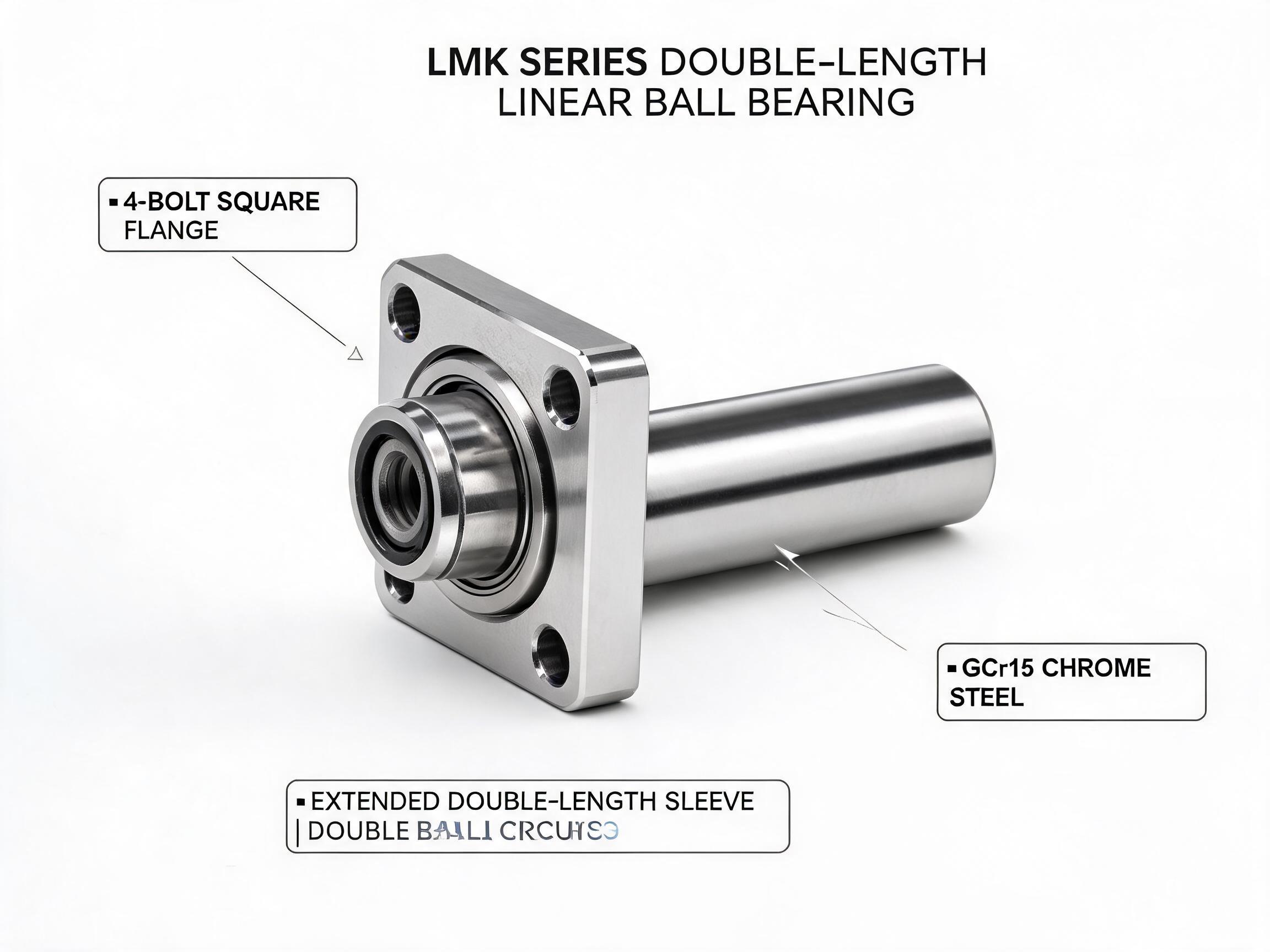
- Textile and woodworking: LMK double-length flange bearings provide higher load capacity for textile guide mechanisms.
Ball Retainer Types and Performance
| Retainer Type | Material | Friction | Noise | Load Capacity |
|---|---|---|---|---|
| Steel retainer | Carbon steel | Standard | Standard | Highest |
| Polymer retainer | POM or PEEK | Lower | Quieter | Lower (approx. 85%) |
| Resin shell | Aluminum with resin liner | Lowest | Quietest | Lower |
For industrial applications, steel retainers provide the best load capacity. Polymer retainers are preferred for low-noise applications.
Sealed vs. Open Flange Bearings
- Open: Used in clean environments or enclosed housings. Lowest friction.
- Standard lip seals (NBR): Contact seals wiping the shaft surface. Add 10-15% to friction.
- Double seals: For heavy contamination environments.
- Felt seals: Low-friction for miniature bearings (6-12 mm).
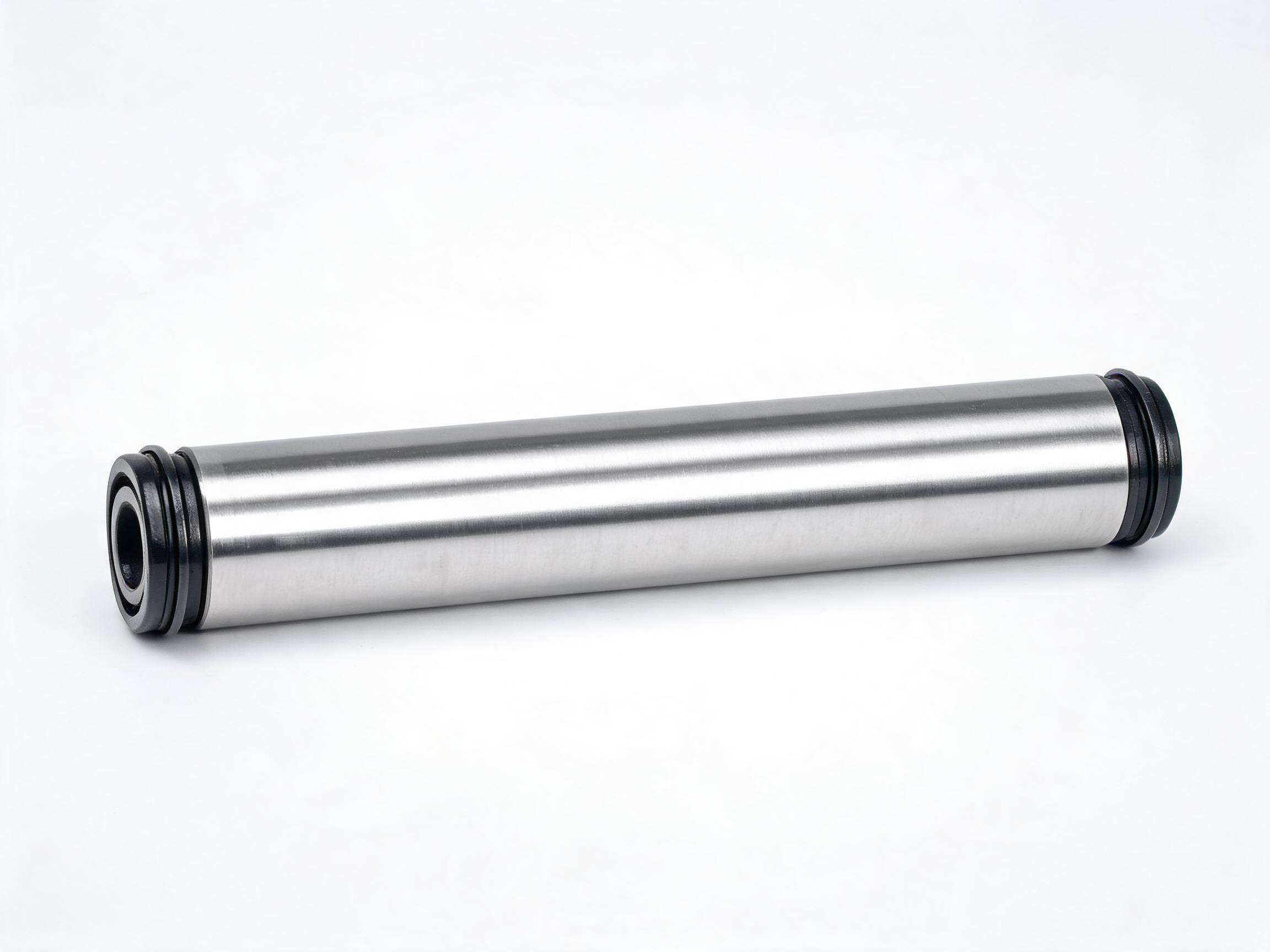
The LMUU sealed extended-length series features double seals and a longer bearing body with more ball circuits.
Shaft Requirements for Flange Bearings
| Shaft Parameter | Requirement | Impact if Non-Conforming |
|---|---|---|
| Material | GCr15 bearing steel, hardened | Premature wear, reduced life |
| Hardness | 58-62 HRC (carbon), 56-58 HRC (stainless) | Brinelling, surface damage |
| Surface finish | Ra 0.4 μm or better | Increased friction, noise, wear |
| Diameter tolerance | h5 or h6 (per ISO) | Excessive clearance or interference |
| Straightness | 0.1 mm per 1000 mm | Bearing binding, uneven wear |
Installation and Alignment Best Practices
- Shaft preparation: Clean the shaft thoroughly. Remove burrs, rust, or debris. Apply lubricant.
- Bearing installation: Slide the bearing onto the shaft gently. Do not force it.
- Flange mounting: Bolt the flange using specified torque in a diagonal pattern.
- Alignment: For dual-shaft installations, align shafts parallel within 0.05 mm per 300 mm.
- Break-in: Run through several full travel cycles at low speed to distribute lubricant.
Lubrication and Maintenance
- Initial lubrication: Most bearings ship pre-lubricated. Relubricate if stored over 6 months.
- Grease type: Lithium-based grease, NLGI 2, viscosity 100-200 cSt at 40°C.
- Relubrication interval: Every 50-100 km or every 2-3 months. More frequently in contaminated environments.
- Oil lubrication: For high-speed or continuous-duty applications.
Comparing Flange Bearings to Linear Guideways
| Parameter | Flange Linear Bearing | Linear Guideway |
|---|---|---|
| Load capacity | Lower (point contact) | Higher (gothic arch) |
| Rigidity | Lower | Higher |
| Cost | Lower | Higher |
| Moment load capacity | Low (needs 2 bearings) | High (single carriage) |
| Speed | Up to 60 m/min | Up to 120 m/min |
| Typical application | 3D printers, light automation | CNC machines, heavy automation |
Flange bearings are preferred for light-load, cost-sensitive applications. Linear guideways are preferred for high-load, high-precision applications.
Frequently Asked Questions
What is the difference between LME and LMF flange bearings?
LME has a round flange with 2-4 mounting holes for compact installations. LMF has a square flange with 4 mounting holes for higher stability with heavy loads.
Can flange linear bearings handle moment loads?
Single flange bearings have low moment load capacity. Use two bearings per shaft spaced apart, or use LMK double-length bearings.
What shaft tolerance is required for flange bearings?
Shafts should be h5 or h6 tolerance per ISO. Hardness must be 58-62 HRC for carbon steel or 56-58 HRC for stainless steel.
Are stainless steel flange bearings available?
Yes, 9Cr18Mo stainless steel flange bearings are available for shaft diameters 6-25 mm. FDA food-grade compliance documentation is available.
What is the maximum speed for flange linear bearings?
Up to 60 m/min with steel retainers and up to 80 m/min with resin shell retainers.
How often should flange bearings be relubricated?
Every 50-100 km of travel or every 2-3 months. In contaminated environments, every 20-50 km or monthly.
What is the difference between standard and double-length (LMK) bearings?
LMK double-length bearings have twice the body length with more ball circuits, providing higher load capacity and moment capacity.
Can flange bearings be used with guideway rails?
No. Flange linear bearings are designed for precision cylindrical shafts, not guideway rails.
What certifications are provided?
All products carry CE, SGS, RoHS, and REACH compliance. FDA food-grade compliance available. 24-month warranty applies.
What is the lead time for flange linear bearings?
10-15 working days for common sizes. Custom dimensions or special materials require 15-25 working days.