
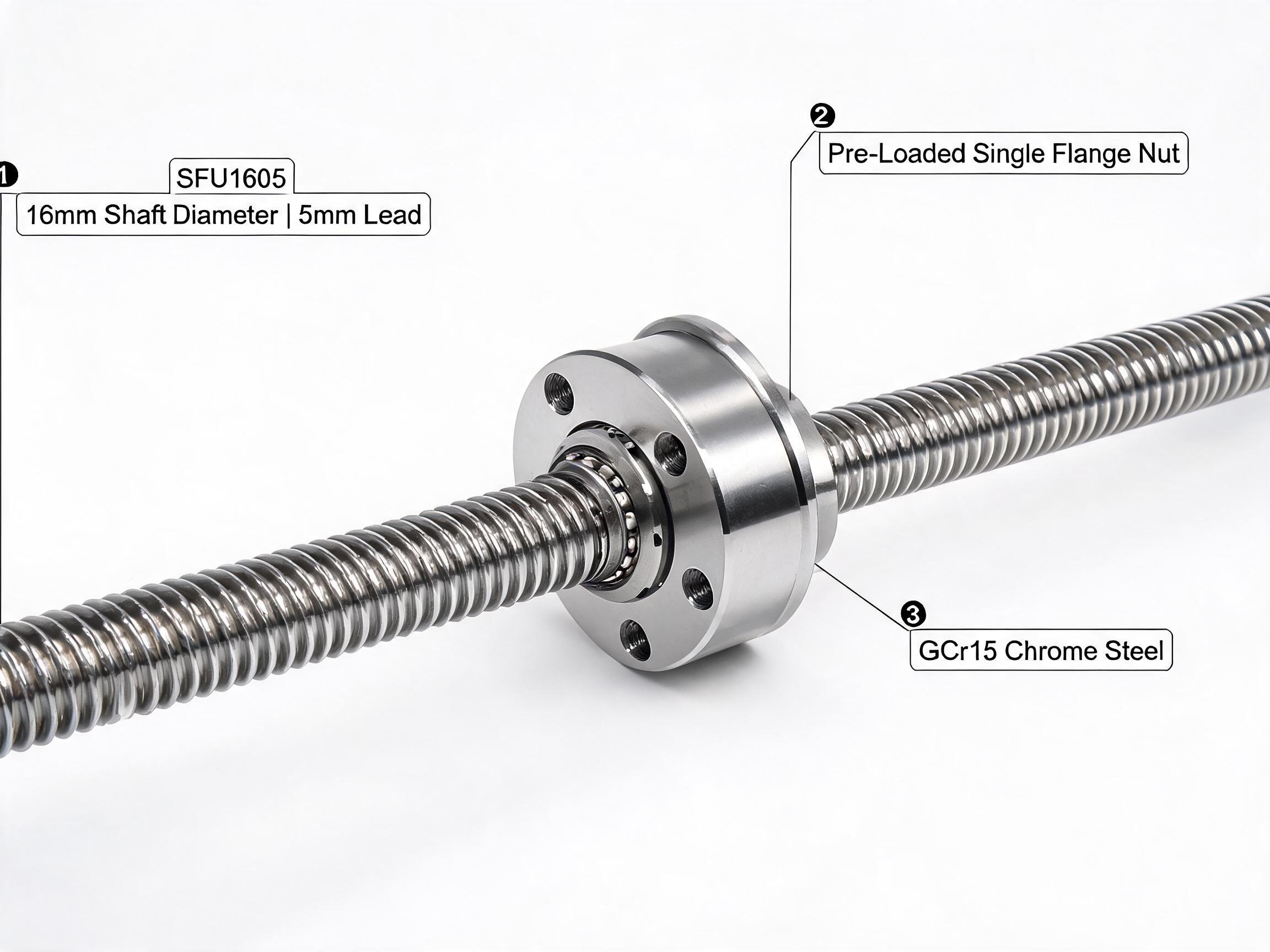
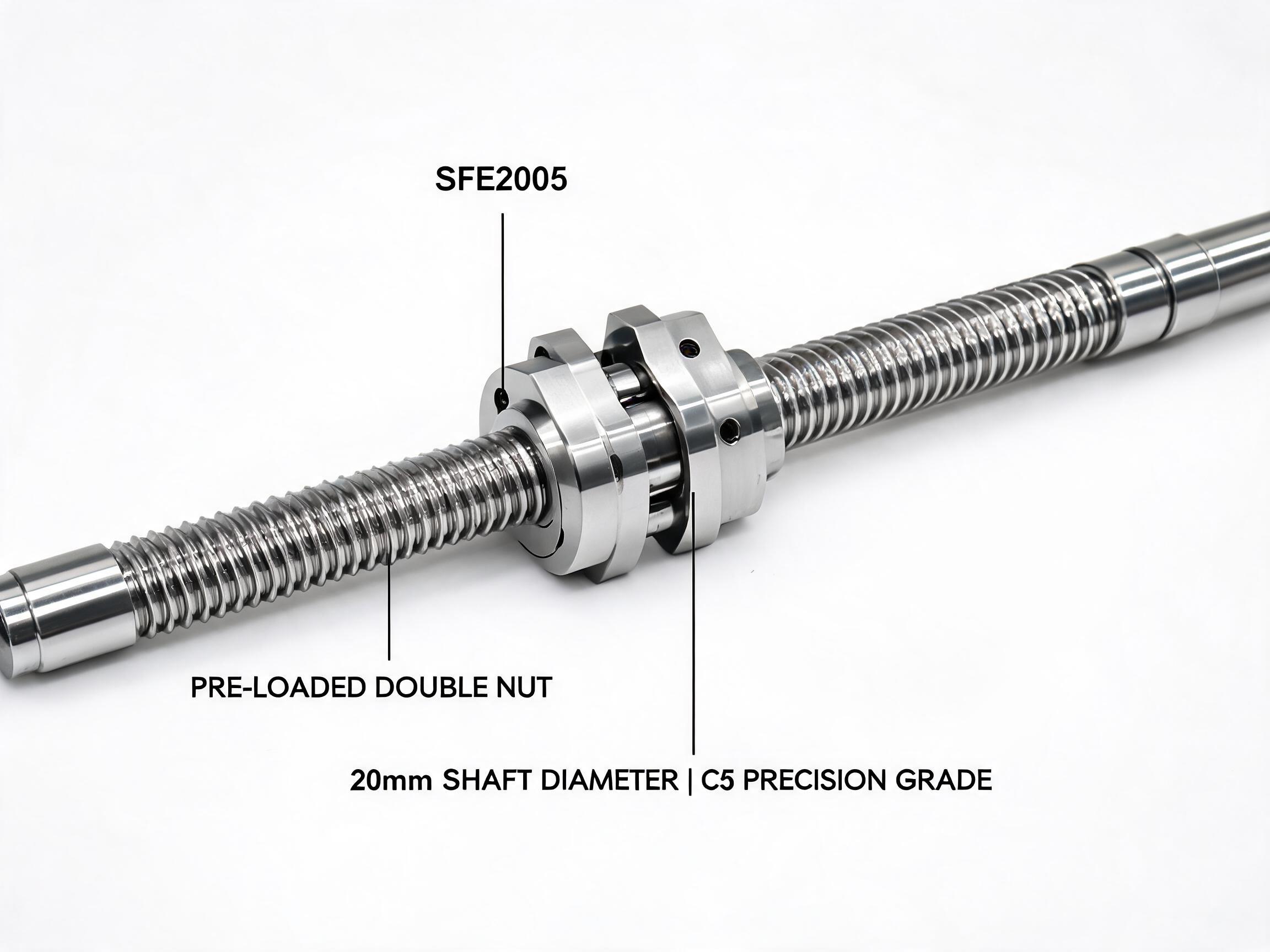
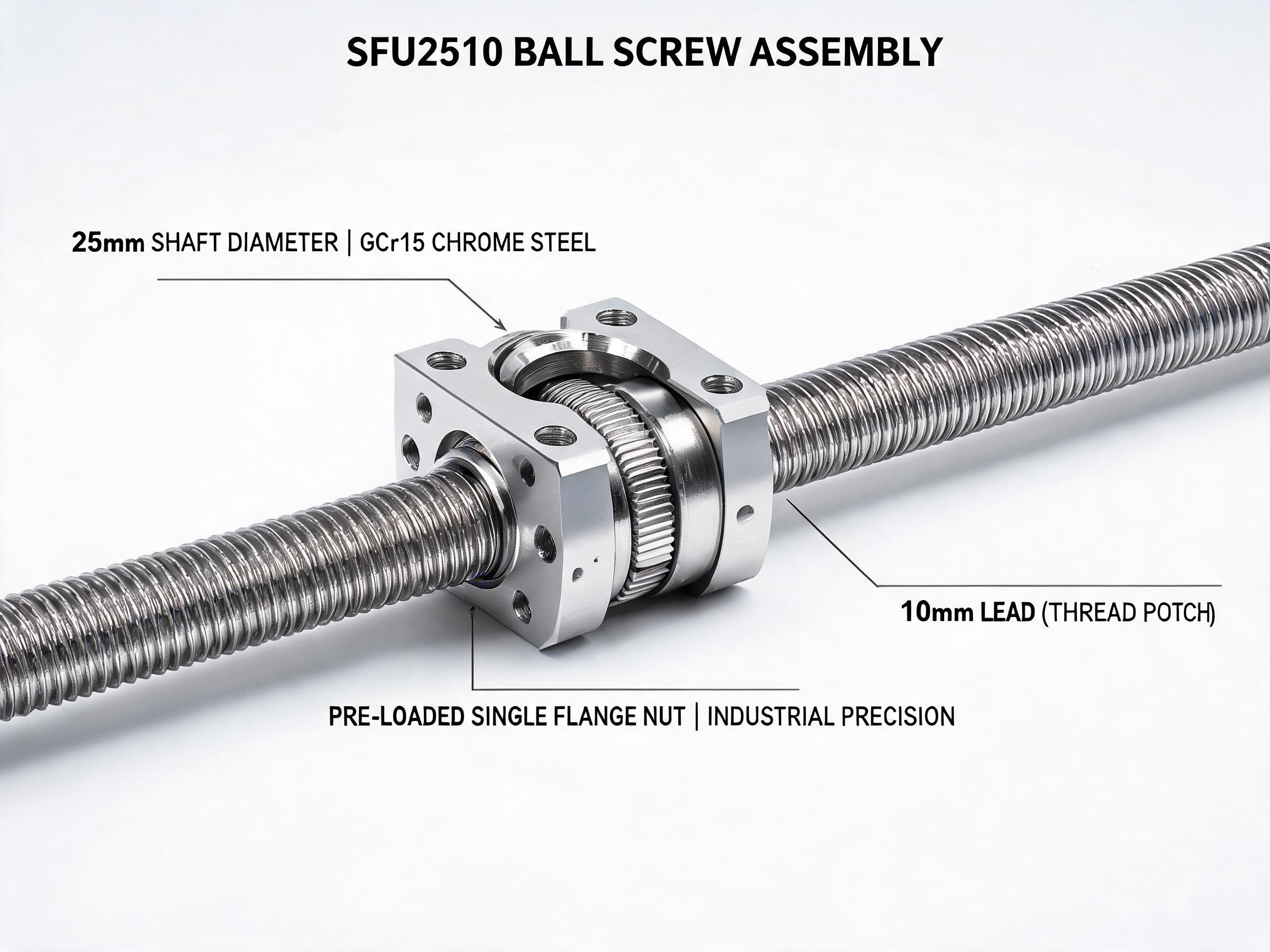
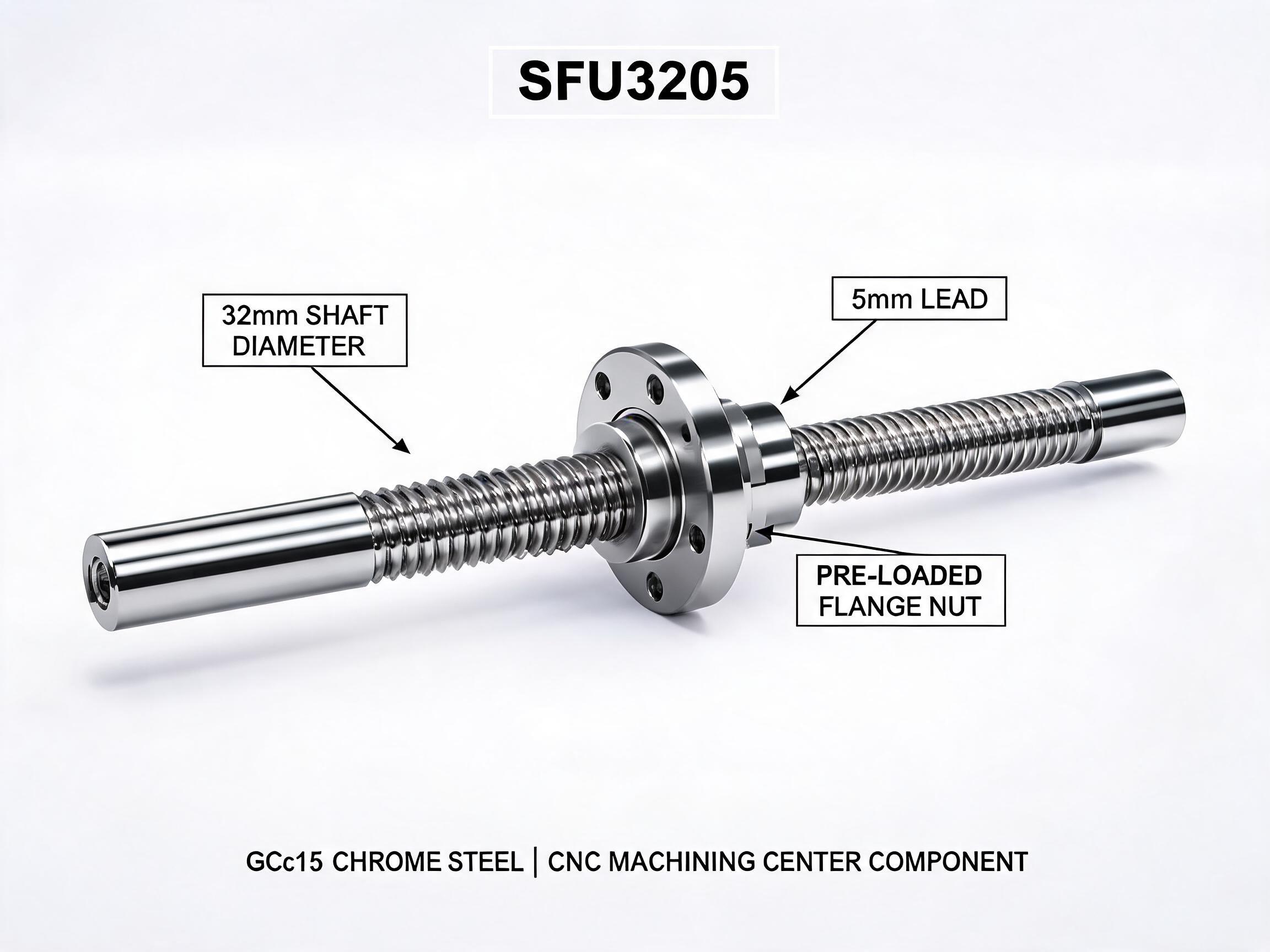
Ground Ball Screw Product Range
Dongfeng Bearing's ground ball screw series includes the SFE (ground C5) and BSH (miniature ground C5) product lines. These screws are manufactured through a precision grinding process that produces the helical raceway by removing material with a dressed grinding wheel, achieving C5 lead accuracy (0.018 mm deviation per 300 mm of travel) with superior surface finish and geometric precision. The SFE series covers shaft diameters from 12 mm to 32 mm for CNC machine tools and precision automation, while the BSH series provides miniature ground screws (6-12 mm diameter) for instruments and medical devices.
Ground ball screws are specified when positioning accuracy better than 0.02 mm per 300 mm is required. The grinding process produces a mirror-finish raceway surface (Ra 0.2-0.4 μm) that reduces friction variation, enables smoother motion at low speeds, and extends travel life compared to rolled screws of the same size. The through-hardened raceway (58-62 HRC throughout, not just surface induction hardened) provides uniform hardness distribution that maintains accuracy over millions of cycles.
| Model | Shaft Dia. | Lead | Lead Accuracy | Surface Finish | Dynamic Load | Max Length |
|---|---|---|---|---|---|---|
| SFE1204 | 12 mm | 4 mm | C5 (0.018/300mm) | Ra 0.2 μm | 5.4 kN | 2000 mm |
| SFE1605 | 16 mm | 5 mm | C5 (0.018/300mm) | Ra 0.2 μm | 7.6 kN | 3000 mm |
| SFE2005 | 20 mm | 5 mm | C5 (0.018/300mm) | Ra 0.2 μm | 12.5 kN | 3000 mm |
| SFE2510 | 25 mm | 10 mm | C5 (0.018/300mm) | Ra 0.3 μm | 21.6 kN | 3000 mm |
| BSH0601 | 6 mm | 1 mm | C5 (0.018/300mm) | Ra 0.2 μm | 2.1 kN | 500 mm |
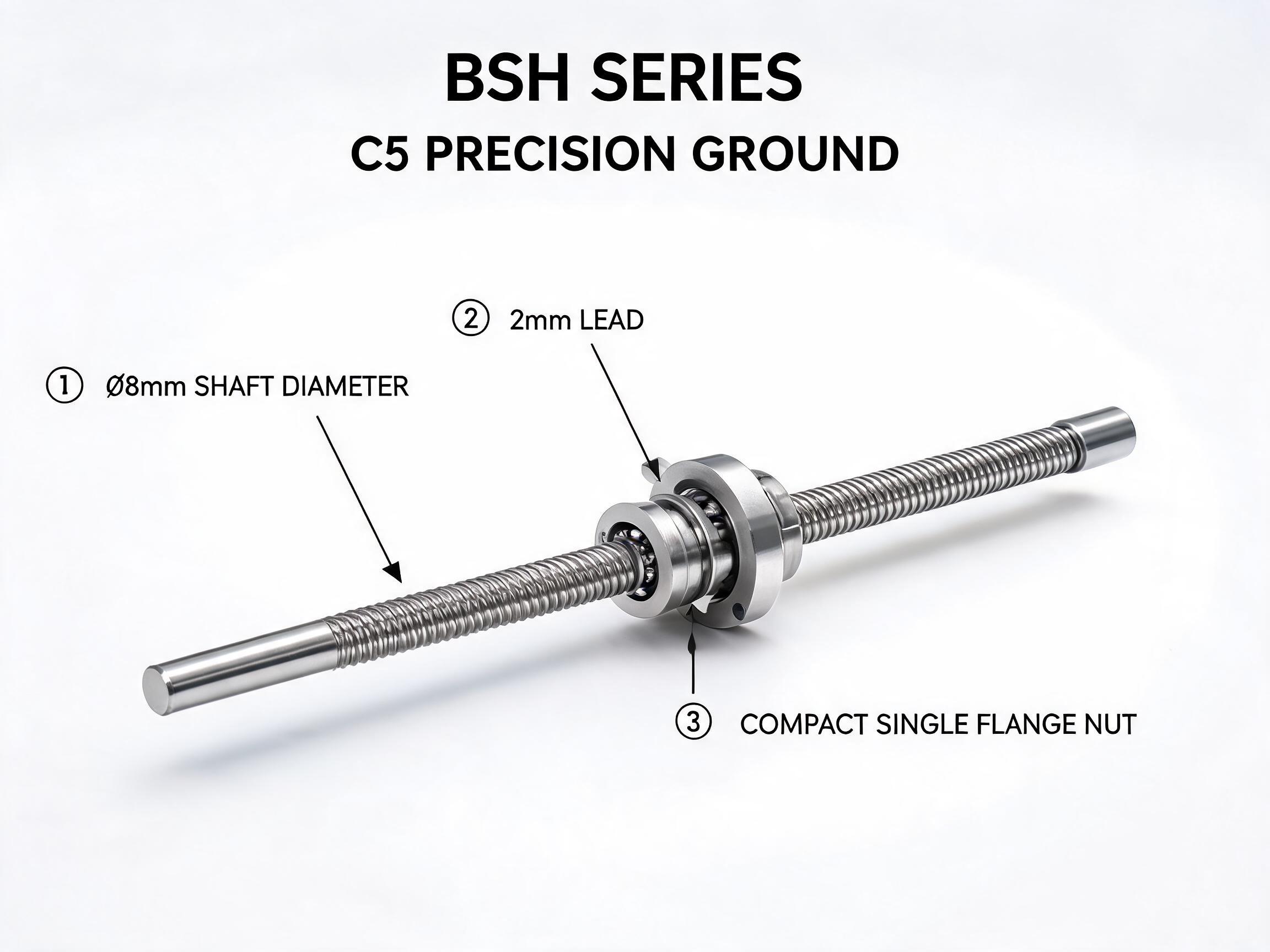
| BSH0802 | 8 mm | 2 mm | C5 (0.018/300mm) | Ra 0.2 μm | 3.2 kN | 800 mm |
The Grinding Process and Its Advantages
Ground ball screws are manufactured through a fundamentally different process than rolled screws, and understanding this difference is essential for buyers making precision sourcing decisions:
- Material and hardening: GCr15 bearing steel bar is cut, turned to blank diameter, and through-hardened to 58-62 HRC via overall quenching and tempering. Unlike rolled screws (induction surface hardening), ground screws have uniform hardness throughout the raceway cross-section, not just a surface layer.
- Thread grinding: The hardened shaft is mounted between centers on a precision thread grinding machine. A dressed vitrified grinding wheel with the reverse helical profile removes material in multiple passes (roughing, semi-finishing, finishing) to form the gothic arch raceway groove. The grinding process achieves surface finish of Ra 0.2-0.4 μm and groove geometry accuracy of 2-5 μm.
- Lead correction: During finishing passes, the grinding machine compensates for residual lead error based on measurement feedback, achieving C5 accuracy (0.018 mm/300 mm) or better. This is not possible with the rolling process, which cannot selectively correct lead error.
- Nut grinding: The nut internal raceway is also ground (not bored) to match the shaft groove profile. This ensures consistent ball contact geometry and load distribution, reducing friction variation and extending life.
- Measurement and sorting: Finished shafts are measured for lead accuracy using laser interferometer, raceway profile using optical comparator, and surface finish using profilometer. Balls are sorted to sub-micron diameter groups for preload consistency.
The key advantages of grinding over rolling are: (1) higher lead accuracy (C5 vs. C7), (2) superior surface finish (Ra 0.2 vs. Ra 0.8 μm), (3) uniform through-hardness vs. surface-only hardening, (4) the ability to correct lead error during manufacture, and (5) tighter geometric tolerance on groove profile.
When Ground Ball Screws Are Necessary
Ground ball screws are specified in applications where C7 rolled screws cannot meet the accuracy, smoothness, or life requirements:
- Precision CNC machine tools: Grinding machines, jig borers, and precision lathes require positioning accuracy of 0.005-0.01 mm. C5 ground screws with double-nut preload achieve this with zero backlash and high rigidity.
- Semiconductor and electronics manufacturing: Wafer stage positioning, wire bonding, and die attach equipment require sub-micron repeatability. Ground screws with linear encoder feedback achieve positioning accuracy of 1-5 μm.
- Metrology and inspection equipment: Coordinate measuring machines (CMM), optical comparators, and surface profilometers use ground screws for precise axis positioning. The smooth, low-friction raceway enables consistent motion at very low speeds without stick-slip.
- Medical and laboratory instruments: BSH miniature ground screws (6-12 mm) are used in syringe pumps, micro-manipulators, and automated analyzers where smooth motion and precise positioning are critical in a compact envelope.
- Aerospace and defense: Flight control surface actuators, antenna positioning systems, and optical targeting mechanisms use ground screws for their combination of accuracy, rigidity, and reliability under demanding conditions.
Comparing Ground vs. Rolled Ball Screws: Detailed Analysis
| Parameter | Ground (C5) | Rolled (C7) |
|---|---|---|
| Lead accuracy per 300mm | 0.018 mm | 0.05 mm |
| Arbitrary 300mm error | 0.07 mm | 0.21 mm |
| Surface finish (Ra) | 0.2-0.4 μm | 0.6-1.0 μm |
| Hardness distribution | Through-hardened (uniform) | Surface induction (1.5-2.5mm case) |
| Friction variation | Low (consistent contact) | Higher (surface irregularities) |
| Low-speed smoothness | Excellent (no stick-slip) | Good (may exhibit stick-slip) |
| Travel life at same load | 1.3-1.5x longer | Baseline |
| Cost | 1.5-2x of rolled | Baseline |
| Production lead time | 20-30 working days | 10-15 working days |
The higher cost of ground screws is justified when the application requires C5 accuracy, smooth low-speed motion, or extended travel life. For general CNC and automation where C7 accuracy is sufficient, rolled screws provide better value. In some cases, a rolled screw with a linear encoder can achieve positioning accuracy comparable to a ground screw, though the smoothness and life benefits of grinding remain.
Miniature Ground Ball Screws (BSH Series)
The BSH series provides ground ball screws in small diameters (6-12 mm) for precision instrument applications. These screws combine the accuracy of grinding (C5) with the compact size needed for medical devices, optical equipment, and miniaturized positioning stages:
- BSH0601 (6mm dia, 1mm lead): Designed for micro-positioning in syringe pumps, micro-manipulators, and optical fiber alignment stages. The 1 mm lead provides 0.005 mm resolution with a 1.8° stepper motor.
- BSH0802 (8mm dia, 2mm lead): Used in compact laboratory automation, sample handlers, and adjustable focusing mechanisms. The 2 mm lead balances resolution and speed.
- BSH1002 (10mm dia, 2mm lead): Provides higher load capacity for desktop CNC, 3D scanner positioning, and medical imaging equipment.
- BSH1204 (12mm dia, 4mm lead): The largest miniature series, used in precision desktop machines and compact automation axes requiring higher loads with C5 accuracy.
BSH series screws use stainless steel (9Cr18Mo) construction for corrosion resistance in medical and food-processing applications. Nuts are compact flange-type or cylindrical, with internal ball return for quiet operation. Despite their small size, BSH screws achieve the same C5 lead accuracy as larger SFE series ground screws.
Preload Options for Ground Ball Screws
Ground ball screws are available with several preload configurations to eliminate backlash and increase rigidity:
| Preload Method | Backlash | Rigidity | Friction | Application |
|---|---|---|---|---|
| Single nut, no preload | 0.005-0.02 mm | Standard | Low | Low-speed, light load |
| Single nut, oversized balls | ~0.002 mm | Medium | Medium | General precision |
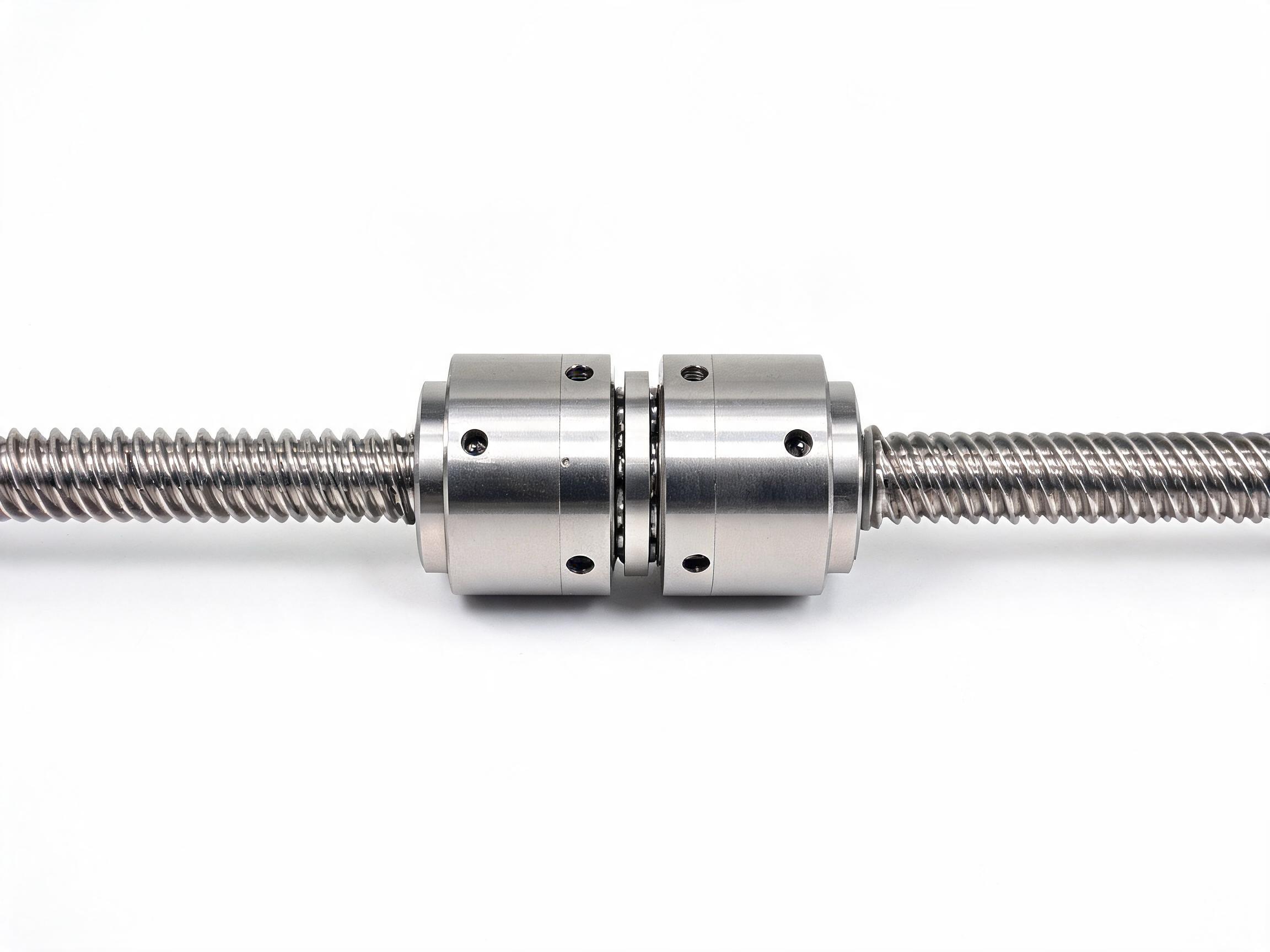
| Double nut, spacer preload | ~0 (zero) | High | Higher | CNC machine tools |
| Double nut, heavy preload | ~0 (zero) | Very high | High | Heavy cutting, high rigidity |
For ground ball screws, the double-nut spacer preload is the most common configuration, as it provides true zero backlash with predictable preload force. The spacer is ground to the exact dimension that creates the desired preload when the two nuts are clamped together. This method is more stable than oversized-ball preload, which can lose preload over time as balls wear.
Surface Finish and Its Impact on Performance
The mirror-finish raceway surface (Ra 0.2-0.4 μm) achieved by grinding has several performance benefits beyond lead accuracy:
- Reduced friction variation: The smooth surface eliminates micro-irregularities that cause friction fluctuations. This is critical at low speeds where friction variation causes stick-slip, a jerky motion that degrades positioning accuracy and surface finish quality in machining applications.
- Lower running torque: Smoother ball-raceway contact reduces rolling resistance, lowering the required motor torque and heat generation. This allows smaller motors or higher feed rates for the same motor.
- Extended travel life: The smooth surface reduces contact stress concentration and surface fatigue, extending the L10 travel life by 30-50% compared to rolled screws at the same load. The through-hardened raceway maintains this surface quality over millions of cycles.
- Better lubricant retention: The fine surface finish creates a more uniform lubricant film, improving boundary lubrication and reducing wear during start-stop operation.
- Cleaner operation: The smooth surface generates fewer wear particles, important in cleanroom and semiconductor applications where particulate contamination must be minimized.
Quality Control for Ground Ball Screws
Ground ball screws undergo more extensive quality verification than rolled screws due to their higher accuracy requirements:
- Laser interferometer lead accuracy measurement (per 300 mm, per arbitrary 300 mm, and cumulative over full length)
- Raceway profile inspection using optical comparator or contour measuring machine (groove radius, contact angle, gothic arch geometry)
- Surface finish measurement using profilometer (Ra, Rz values per ISO 4287)
- Shaft straightness measurement (within 0.02 mm per meter for ground screws vs. 0.05 mm for rolled)
- Hardness test with depth profiling (through-hardened, 58-62 HRC throughout)
- Friction torque measurement across full travel ( preload consistency verification)
- Backlash measurement for preloaded assemblies (zero backlash verification)
Every shipment includes CMM inspection reports, lead accuracy charts, surface finish data, hardness test reports, and material certificates. Products carry CE, SGS, RoHS, and REACH compliance documentation. A 24-month warranty applies.
Sourcing Considerations and Supplier Evaluation
When sourcing ground ball screws, buyers should evaluate suppliers on the following criteria:
- Manufacturing capability: Verify that the supplier has precision thread grinding equipment (not just rolling equipment). Request information on grinding machine types, wheel dressing methods, and lead correction capability.
- Measurement capability: Request lead accuracy charts from actual production batches. Verify that the supplier uses laser interferometer measurement, not mechanical dial indicators. Ask about raceway profile inspection methods.
- Material verification: Request SGS material test reports with hardness depth profiles. For ground screws, hardness should be uniform throughout the raceway cross-section (through-hardened), not just surface hardened.
- Sample qualification: Order samples and measure lead accuracy, surface finish, backlash, and friction torque independently. Compare results to the supplier's inspection reports.
- Production consistency: For volume orders, request batch-level inspection data to verify consistency across production runs. Lead accuracy should not vary by more than 30% between batches.
Dongfeng Bearing provides all of the above: precision grinding capability, laser interferometer measurement, SGS material test reports with hardness profiling, sample qualification, and batch-level inspection documentation. Our engineering team supports selection, sizing, and application engineering from inquiry through delivery.
Frequently Asked Questions
Why are ground ball screws more expensive than rolled?
Ground screws require a multi-pass grinding process on precision machines, which is slower and more expensive than thread rolling. The process also requires through-hardening (vs. surface induction hardening for rolled), laser interferometer measurement, and more extensive quality control. The higher cost is justified by C5 accuracy, superior surface finish, and longer travel life.
Can a rolled screw achieve the same accuracy as a ground screw?
No. The rolling process cannot selectively correct lead error, limiting rolled screws to C7 accuracy. However, a rolled screw paired with a linear encoder can achieve positioning accuracy comparable to a ground screw, since the encoder compensates for lead error. The smoothness, friction, and life advantages of grinding remain.
What is the minimum diameter available for ground ball screws?
The BSH miniature series starts at 6 mm shaft diameter with 1 mm lead. These are used in micro-positioning applications such as syringe pumps, micro-manipulators, and optical fiber alignment. Despite the small size, C5 accuracy is maintained.
How does through-hardening differ from induction hardening?
Through-hardening heats the entire shaft to austenitizing temperature and quenches it, producing uniform hardness (58-62 HRC) throughout the cross-section. Induction hardening heats only the surface layer, creating a hard case (1.5-2.5 mm) over a softer core. Through-hardening provides more consistent wear resistance and accuracy retention over the screw's life.
What surface finish can I expect from a ground ball screw?
Ground raceways achieve Ra 0.2-0.4 μm (mirror finish). This is significantly smoother than rolled raceways (Ra 0.6-1.0 μm). The smooth surface reduces friction variation, enables smooth low-speed motion without stick-slip, extends travel life, and improves lubricant retention.
Are stainless steel ground ball screws available?
Yes. The BSH miniature series is available in 9Cr18Mo stainless steel (56-58 HRC) for medical, food-processing, and cleanroom applications. Larger SFE series stainless steel ground screws are available on request. FDA food-grade compliance documentation is available for stainless steel variants.
What preload is recommended for ground ball screws?
Double-nut spacer preload at 10% of dynamic load rating is standard for CNC machine tools and precision equipment. This provides zero backlash with manageable friction. For applications requiring maximum rigidity (heavy cutting), preload up to 15% can be specified, though this increases friction and reduces travel life.
How long do ground ball screws last compared to rolled?
At the same load and speed, ground ball screws typically last 30-50% longer than rolled screws due to the superior surface finish and uniform hardness. The L10 life (travel distance at which 90% of screws survive) can be calculated using ISO 3408 or JIS B1192 formulas based on dynamic load rating and equivalent load.
Can ground ball screws be repaired or reconditioned?
Minor raceway damage can sometimes be corrected by regrinding, but this requires the original grinding equipment and specifications. In most cases, replacement is more cost-effective than reconditioning. Regular lubrication and proper maintenance significantly extend screw life and delay the need for replacement.
What is the lead time for ground ball screws?
Standard production lead time is 20-30 working days for SFE series (12-32 mm) and 15-25 working days for BSH miniature series (6-12 mm). Custom lengths, special end machining, or non-standard lead pitches may require additional time. Sample orders can typically be shipped within 10-15 working days.