Linear Motion Slide Product Range
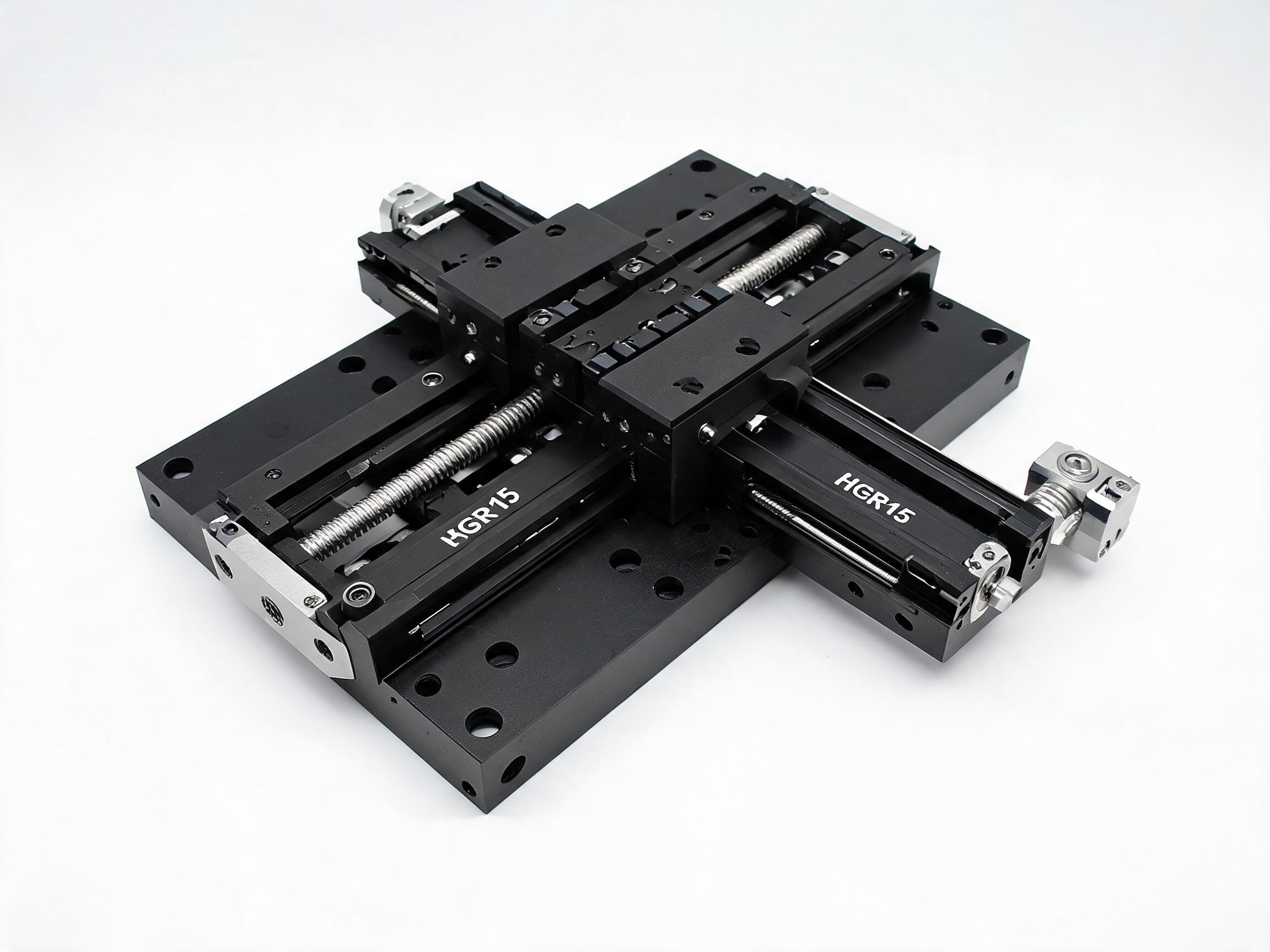
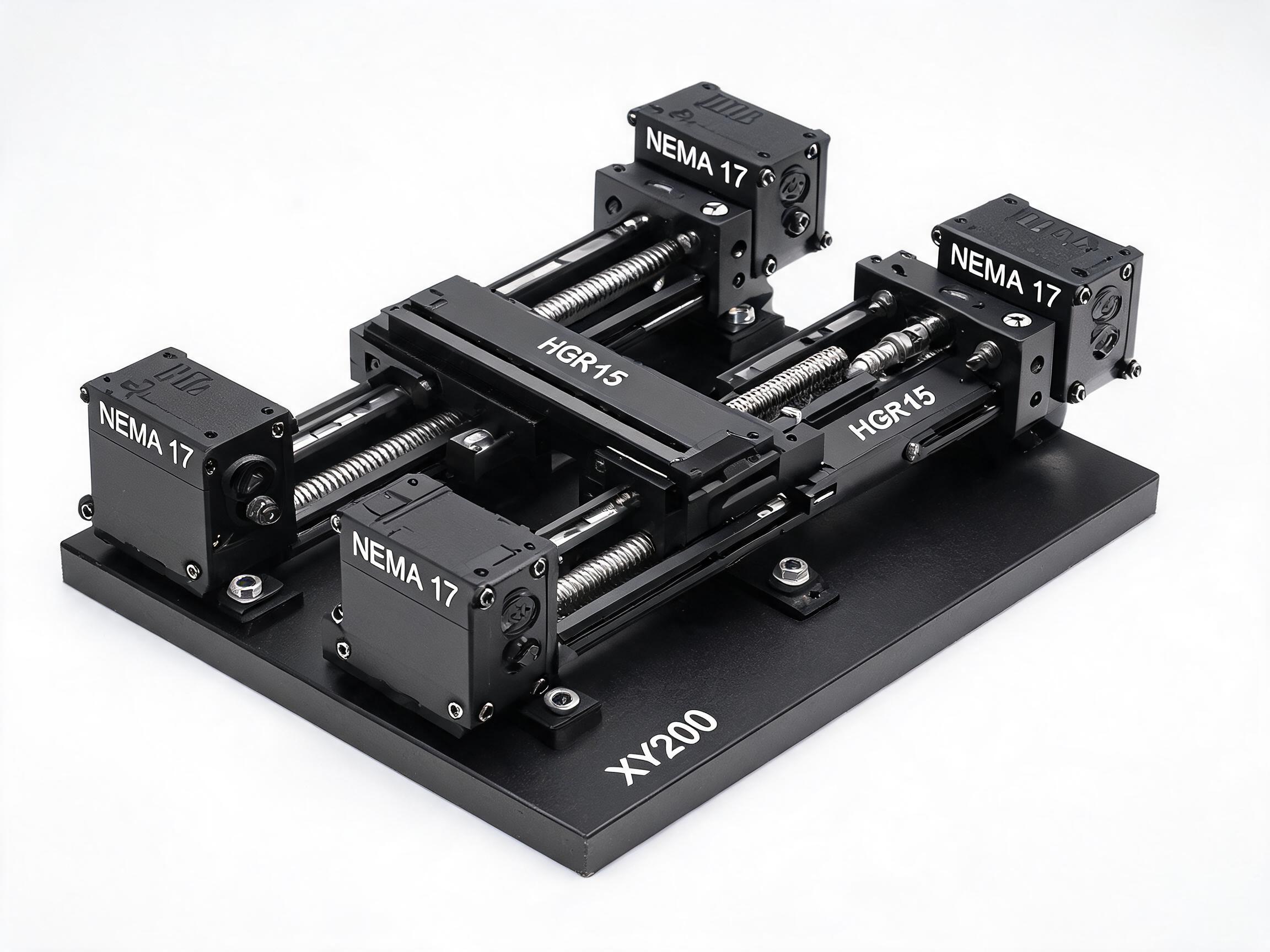
Dongfeng Bearing manufactures linear motion slide modules that integrate linear guidance, drive, and carriage into a single ready-to-install unit. The product line includes the SKF20 aluminum profile slide module, TBR16 synchronized dual-shaft guide system, and SBS16 single-axis slide unit with low-profile carriage. These modules provide pre-engineered linear motion solutions that eliminate the need for separate component selection and assembly, reducing design time and installation complexity.
Linear motion slides differ from individual components (rails, bearings, ball screws) in that they come pre-assembled, pre-aligned, and ready for mounting. The guidance system, drive mechanism, carriage, and mounting interfaces are integrated into a single module, ensuring proper alignment and predictable performance. This is particularly valuable for machine builders who want to reduce assembly time and avoid alignment issues.
| Model | Type | Guidance | Drive | Travel Range | Load Capacity | Key Feature |
|---|---|---|---|---|---|---|
| SKF20 | Profile slide module | Linear shaft + bearing | Belt or manual | Custom | 20 kg | Aluminum profile body, lightweight |
| TBR16 | Dual-shaft guide system | Dual precision shafts | Manual or motorized | Custom | 30 kg | Synchronized dual-rail, high stability |
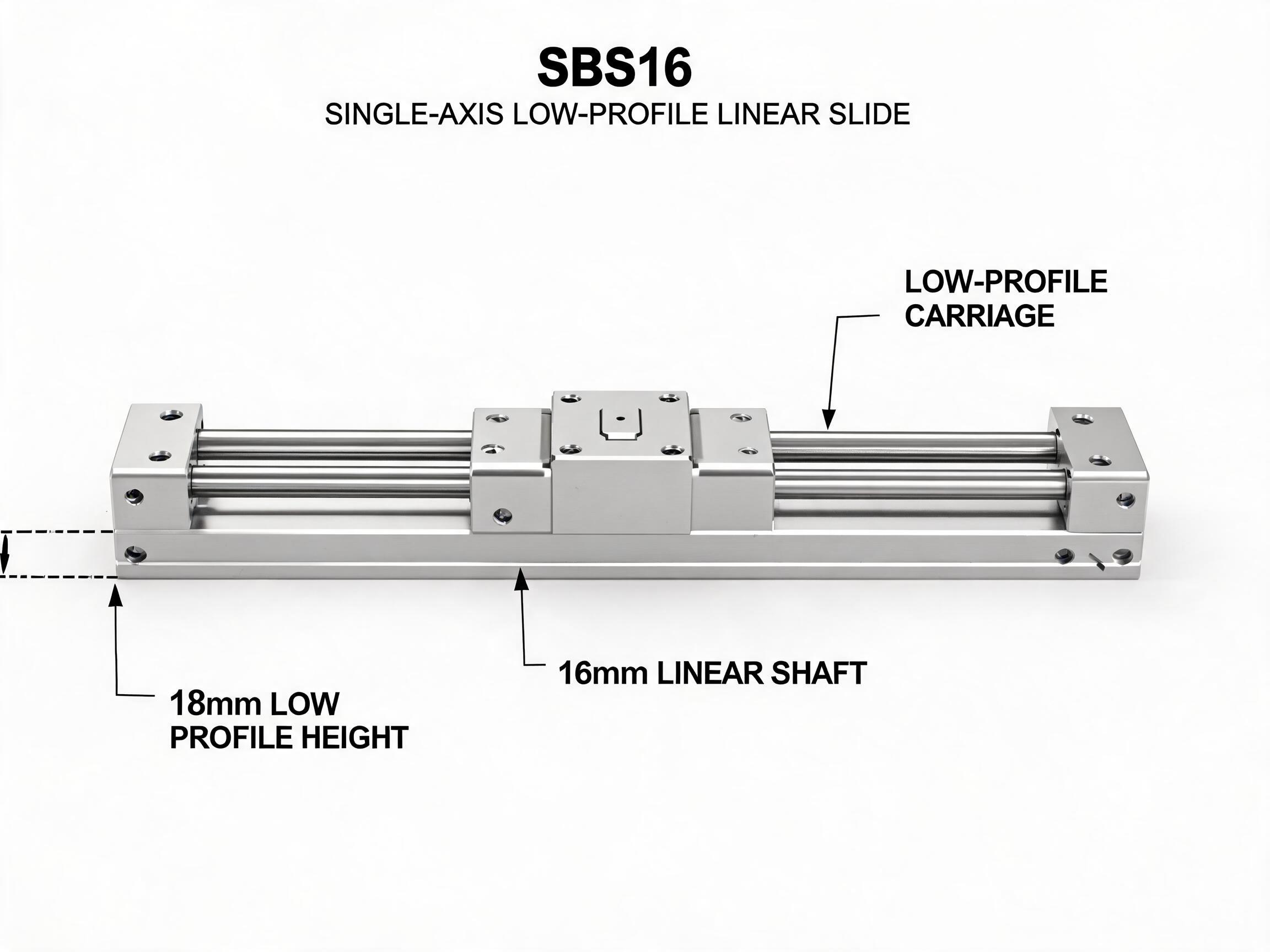
| SBS16 | Single-axis slide unit | Single shaft + bearing | Manual | Custom | 15 kg | Low-profile carriage, compact |
Types of Linear Motion Slides
Linear motion slides are categorized by their guidance system and drive mechanism:
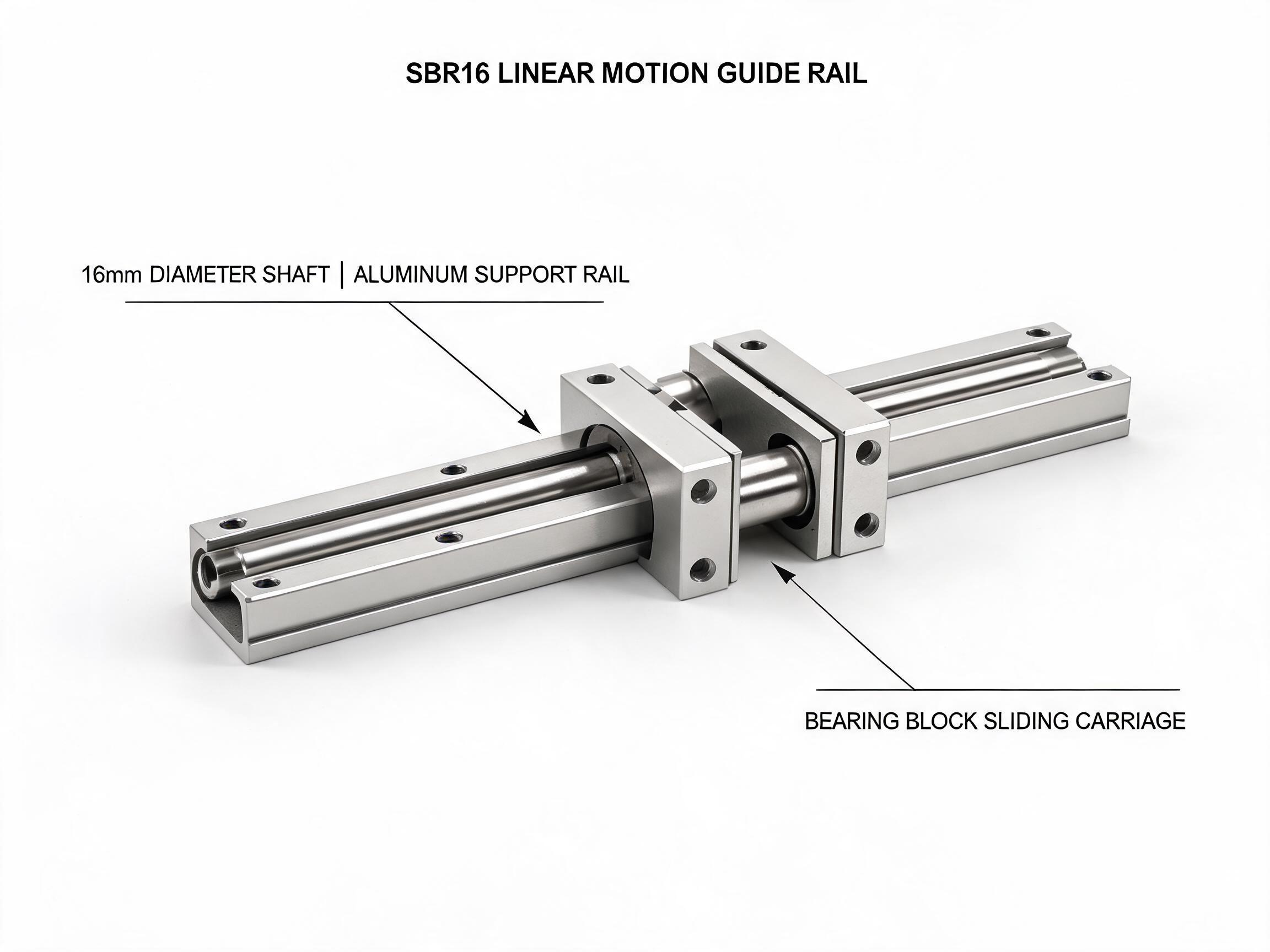
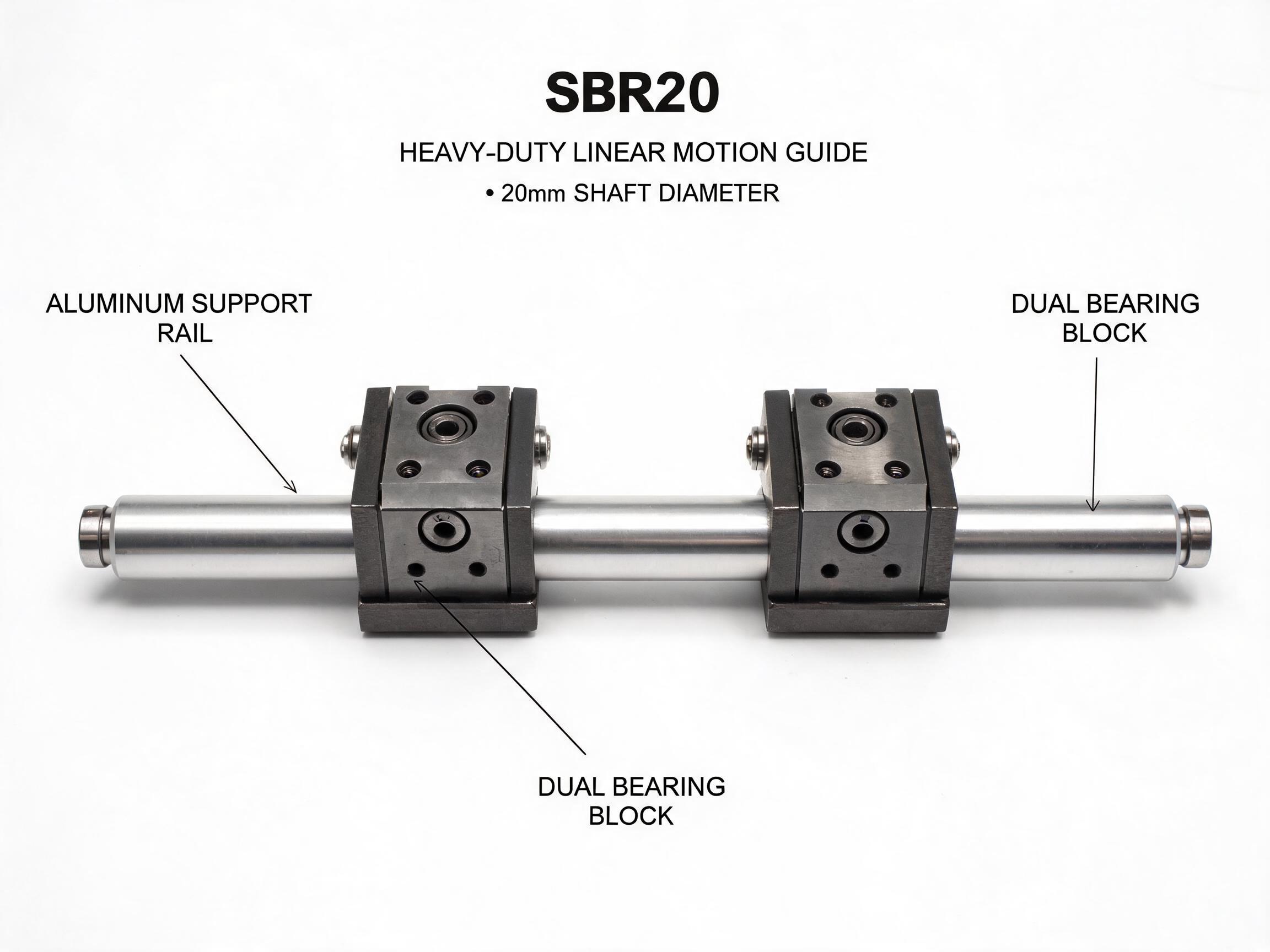
- Shaft-based slides (SKF20, TBR16, SBS16): Use precision hardened shafts with linear ball bearings for guidance. The shafts are supported at both ends by aluminum or steel support blocks. The carriage contains flange bearings that ride on the shafts. Simple, cost-effective, and suitable for light to medium loads.
- Rail-based slides: Use linear guideway rails and carriage blocks for guidance. Higher rigidity and load capacity than shaft-based slides, but more expensive. Used in CNC machines and heavy-duty automation.
- Profile-based slides (SKF20): Use aluminum extrusion profiles as the structural body, with integrated shafts or rails mounted on the profile. The profile provides a lightweight, rigid structure with T-slots for easy mounting of accessories, sensors, and stops.
How Linear Motion Slide Modules Work
A linear motion slide module integrates several components into one assembly:
- Guidance system: Precision shafts with linear bearings (or guideway rails with carriages) that constrain the carriage to move in a straight line. The guidance system determines the slide's load capacity, rigidity, and smoothness.
- Drive mechanism: Ball screw, lead screw, belt, or manual handwheel that provides the motive force. The drive determines the slide's positioning accuracy, speed, and efficiency.
- Carriage: The moving platform that carries the payload. The carriage is mounted on the guidance system and driven by the drive mechanism. It provides the mounting interface for the workpiece or tooling.
- Base structure: The fixed frame that supports the guidance system and drive. In profile slides, this is an aluminum extrusion; in shaft-based slides, it is a steel or aluminum base with shaft support blocks.
- End supports: Mounting blocks at each end of the shafts or rails that provide structural support and define the travel limits. End supports may include adjustable stops or limit switch mounting.
Applications of Linear Motion Slides
Linear motion slide modules are used in a wide range of automation and machinery applications:
- Pick-and-place systems: SKF20 profile slides provide lightweight, fast positioning for component handling in electronics assembly, packaging, and sorting. The T-slot profile allows easy mounting of grippers, sensors, and pneumatic actuators.
- 3D printers and additive manufacturing: TBR16 dual-shaft guide systems provide stable, smooth guidance for the print head axis. The dual-shaft configuration resists moment loads from the print head assembly.
- Lab automation: SBS16 low-profile slides are used in sample handlers, adjustable-height stages, and microscope positioning. The compact profile fits in space-constrained lab equipment.
- Light CNC and engraving: TBR16 with motorized drive provides stable guidance for desktop CNC routers and engraving machines. The dual-shaft system maintains parallelism under cutting loads.
- Adjustable positioning: Manual slides for camera positioning, laser alignment, sensor adjustment, and equipment calibration. The handwheel provides precise manual control.
Selecting a Linear Motion Slide
| Selection Factor | Shaft-Based (SKF20/TBR16/SBS16) | Rail-Based |
|---|---|---|
| Load capacity | Light-Medium (15-30 kg) | Medium-Heavy (50+ kg) |
| Rigidity | Standard | High |
| Cost | Lower | Higher |
| Installation simplicity | High (pre-assembled) | Medium (requires alignment) |
| Customization | Easy (cut to length) | More complex |
| Speed | Up to 60 m/min | Up to 120 m/min |
| Precision | Standard (0.05 mm) | High (0.01 mm) |
For light to medium loads and standard precision, shaft-based slides provide the best value and simplest installation. For heavy loads, high precision, or high-speed operation, rail-based slides are superior. Dongfeng Bearing manufactures both types and can recommend the optimal solution for your application.
Drive Options for Linear Motion Slides
The drive mechanism determines how the slide is powered:
| Drive Type | Accuracy | Speed | Backlash | Cost | Best For |
|---|---|---|---|---|---|
| Ball screw | 0.02-0.05 mm | Medium | 0-0.05 mm | Medium | CNC, precision positioning |
| Belt drive | 0.05-0.1 mm | High | 0.05-0.2 mm | Low | Fast transfer, long travel |
| Lead screw (ACME) | 0.1-0.2 mm | Low-Medium | 0.05-0.15 mm | Low | Manual, low-cost |
| Manual (handwheel) | 0.05-0.1 mm | Slow | Varies | Lowest | Inspection, adjustment |
| Pneumatic | N/A (end-to-end) | High | N/A | Low | Binary positioning |
Ball screw drive is recommended for applications requiring precise positioning and smooth motion. Belt drive is preferred for long travel (over 2 meters) or very high speeds. Manual drive is suitable for inspection and adjustment applications where fine manual control is needed.
TBR16 Dual-Shaft Guide System Details
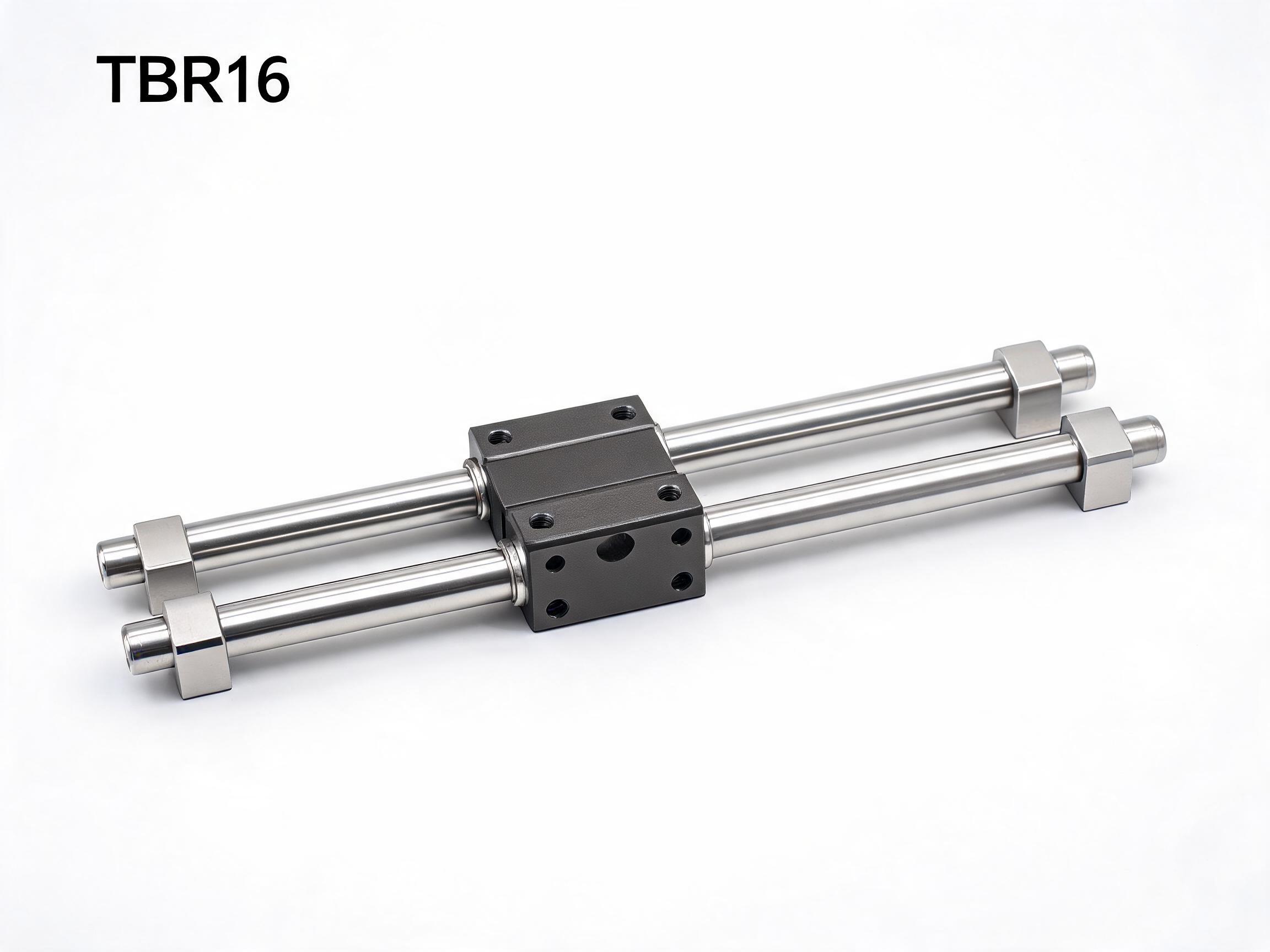
The TBR16 synchronized dual-shaft linear motion guide system uses two parallel precision shafts with synchronized bearing blocks. The dual-shaft configuration provides:
- Higher moment load resistance: Two shafts spaced apart resist pitch and yaw moments that a single shaft cannot handle. This allows the carriage to carry offset payloads without binding.
- Improved stability: The wider support base reduces carriage tilt and vibration, improving positioning consistency.
- Higher load capacity: Two sets of bearings share the load, effectively doubling the load capacity compared to a single-shaft configuration.
- Synchronized motion: The carriage block spans both shafts, ensuring parallel motion without the need for a separate synchronization mechanism.
The TBR16 is commonly used in 3D printers, light CNC machines, and automation equipment where a single shaft would be insufficient for the moment loads present.
SKF20 Aluminum Profile Slide Module
The SKF20 uses an aluminum extrusion profile as the structural body, with integrated precision shafts mounted on the profile. Key features:
- Lightweight construction: Aluminum profile is 60% lighter than equivalent steel construction, reducing moving mass and enabling higher acceleration.
- T-slot accessory mounting: The profile's T-slots allow easy mounting of sensors, stops, cable carriers, and accessories without additional machining.
- Modular design: The profile can be cut to custom lengths, and multiple modules can be joined for multi-axis configurations. Compatible with standard aluminum profile system accessories.
- Corrosion resistance: Anodized aluminum surface provides good corrosion resistance for indoor applications. Stainless steel shafts available for humid or corrosive environments.
- Belt or screw drive: The profile can accommodate either belt drive (for high speed) or ball screw drive (for precision), depending on the application requirements.
Installation and Integration
Linear motion slide modules are designed for easy installation:
- Mounting: Slide modules have pre-drilled mounting holes on the base. Mount to a flat surface (flatness 0.05 mm per 300 mm) using the specified bolts.
- Alignment: For single-slide installations, align the slide parallel to the machine axis. For dual-slide installations, maintain parallelism between the two slides within 0.05 mm per 300 mm.
- Motor installation: If motorized, install the motor using a flexible coupling. Align the motor shaft and screw shaft within 0.05 mm radial and angular misalignment.
- Lubrication: Apply grease to shafts or guideways and ball screws before initial operation. Follow the manufacturer's relubrication schedule.
- End stops: Install mechanical or electronic end stops to prevent carriage overtravel. Adjust travel limits to match the application requirements.
Quality Control and Compliance
Each linear motion slide module undergoes:
- Travel smoothness test (manual and motorized)
- Positioning accuracy and repeatability measurement
- Backlash measurement (for ball screw drive)
- Carriage parallelism and straightness verification
- Component-level inspection (shafts, bearings, ball screw, profile)
- Load test at rated capacity
Products carry CE conformity marking, SGS material test reports, RoHS compliance, and REACH registration. A 24-month warranty applies against manufacturing defects.
Frequently Asked Questions
What is the difference between a linear motion slide and individual linear components?
A linear motion slide is a pre-assembled module that integrates guidance, drive, and carriage into one unit. Individual components (rails, bearings, ball screws) must be selected, purchased, and assembled separately. Slides are easier to install and pre-aligned, but offer less customization flexibility.
Can the travel length of a slide module be customized?
Yes. Shaft-based slides can be cut to any custom length by cutting the shafts and profile to the required dimension. Specify the desired travel length when ordering. For very long travel (over 2 meters), intermediate shaft support may be required.
What is the maximum speed of linear motion slides?
Shaft-based slides with ball bearings are rated for speeds up to 60 m/min. Belt-driven slides can achieve higher speeds. For speeds above 60 m/min, rail-based slides with guideway bearings are recommended.
Can linear motion slides be motorized?
Yes. All slide modules can be motorized with stepper or servo motors. The drive end is machined to accept a coupling. Specify the motor type, size, and coupling requirements when ordering.
What is the difference between TBR16 and SBS16?
TBR16 is a dual-shaft system with two parallel shafts and a synchronized carriage, providing higher stability and moment load resistance. SBS16 is a single-shaft system with a low-profile carriage, more compact but with lower load capacity. TBR16 is preferred for applications with offset loads; SBS16 for compact, light-load applications.
Are stainless steel slides available?
Stainless steel shafts (9Cr18Mo, 56-58 HRC) are available for all slide modules. Stainless steel bearings and fasteners are also available. This provides corrosion resistance for medical, food-processing, and marine applications. FDA food-grade compliance documentation available.
What drive type should I choose?
Ball screw for precision (0.02-0.05 mm accuracy, zero backlash with double nut). Belt drive for speed and long travel. Manual handwheel for inspection and adjustment. Pneumatic for binary (end-to-end) positioning. Choose based on your accuracy, speed, and cost requirements.
How are slide modules mounted?
Slide modules have pre-drilled mounting holes on the base. Mount to a flat surface using bolts. For dual-slide installations, maintain parallelism within 0.05 mm per 300 mm. No special tooling is required for installation.
What certifications are provided?
CE conformity marking, SGS material test reports, RoHS compliance, and REACH registration. Full inspection documentation included. 24-month warranty against manufacturing defects.
What is the lead time for linear motion slides?
Standard production lead time is 15-25 working days. Custom lengths, special drive configurations, or stainless steel construction require 25-35 working days. Sample orders ship within 10-15 working days.